Tracking rent payments manually doesn’t scale. Once you’re past a handful of units, you’re spending hours every month figuring out who paid, who’s late, and what your actual cash flow looks like.
Modern rent tracker apps handle all of this automatically: rent collection, late fees, financial reports, and tenant communication. The challenge is picking the right one when there are dozens of options out there.
This guide compares seven solid platforms, what they do well, and which one makes sense for your situation.
What Actually Matters in Rent Tracker Apps?
Before diving into specific platforms, here’s what separates good rent tracking software from glorified spreadsheets:
- Payment flexibility means ACH transfers at a minimum, plus credit cards if your tenants want them. Automated recurring payments dramatically improve on-time payment rates. Tenants set it once, and you stop chasing rent every month.
- Financial reporting makes or breaks tax season. You need income and expense tracking by property, automatic categorization, and reports your accountant can actually use. Better platforms integrate with accounting software or have enough built-in functionality that you don’t need external tools.
- Tenant portals reduce your workload significantly. When tenants can pay rent, submit maintenance requests, and access lease documents in one place, they stop texting you for basic questions.
- Mobile functionality is non-negotiable. If you can’t check payment status, approve maintenance, or respond to tenants from your phone, you’re going to be frustrated. Look for actual mobile apps, not just mobile-responsive websites.
- Security and compliance protect you from disasters. Bank-level encryption should be standard. Make sure they’re PCI-DSS compliant for payment processing. Good document management keeps everything secure and organized.
1. Propertese
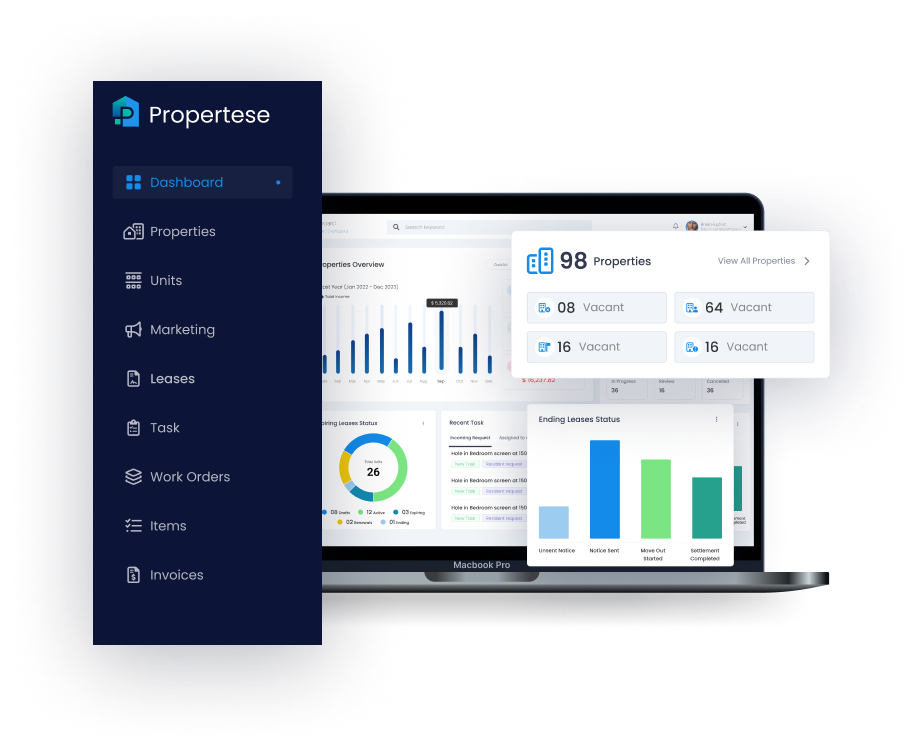
Propertese stands out because rent tracking isn’t isolated; it’s part of a complete property management ecosystem where everything works together.
The platform handles rent collection and payments with ACH and credit cards. Tenants set up automatic recurring payments, late fees are assessed automatically based on lease terms, and reminders go out before and after due dates.
Where Propertese really delivers is integration. Rent tracking connects with full property and unit management, maintenance systems, tenant portals, and financial reporting. When a tenant pays, it automatically updates your reports. When you need cash flow across your portfolio, everything’s already categorized.
Financial reporting is built for the actual use of profit and loss by property, expense tracking, and the reports your accountant needs. According to IREM standards, accurate reporting is essential for portfolio performance. Propertese delivers without requiring accounting expertise.
Maintenance and operations: Comprehensive work order management lets tenants submit requests through their portal. You assign to vendors or staff, and everyone tracks progress in real-time. The tenant portal consolidates everything: payments, maintenance, leases, documents, and communication.
Best for: Property managers handling residential and commercial portfolios who need professional-grade tools without unnecessary complexity. Particularly strong for affordable housing, residential properties, commercial properties, and community associations.
Setup time: A few hours to configure everything properly, then it runs smoothly.
2. Buildium
Buildium has been around for over twenty years, and that maturity shows in its reliability and depth.
Tenants pay via ACH or credit cards through an online portal. Recurring payments and automated reminders work as expected. Late fees are assessed automatically. According to Capterra reviews, users consistently praise Buildium’s accounting features and reliability.
Strengths: Financial reporting is comprehensive with rent rolls, payment histories, and tax-friendly reports. Bank reconciliation connects to thousands of financial institutions. Training resources are excellent: videos, documentation, webinars, and certification programs. Phone support during business hours matters when problems arise.
Limitations: The interface feels dated compared to newer platforms. Mobile apps exist but lack complete feature parity with desktop. Customization is somewhat limited—you work within Buildium’s structure.
Best for: Property managers with established portfolios who prioritize reliability and support over cutting-edge design. Works well for 20-500 units.
3. AppFolio
AppFolio targets professional property management companies with sophisticated needs.
Payment processing handles ACH, credit cards, and automated billing for complex fee structures. Financial reporting is advanced, detailed owner statements, investor distributions, and portfolio-level analytics. The accounting module is comprehensive enough that many users don’t need separate software.
Advanced features: Robust maintenance management with vendor portals, marketing tools with listing syndication, and well-designed tenant/owner portals. Mobile apps are polished with most desktop functionality available.
Considerations: Positioned as a premium platform with premium pricing. More to learn means a moderate to steep learning curve. Implementation support helps but adds to the initial investment.
Best for: Property management companies managing hundreds to thousands of units, particularly those handling properties for multiple owners or investors.
4. Innago
Innago takes a different approach, completely free for landlords with revenue from optional tenant-paid fees and services.
Online rent collection via ACH and credit cards, automated reminders, and late fee automation are all included. Financial tracking covers income and expenses by property with basic reports. Tenant portal, lease management with e-signatures, maintenance tracking, and document storage, all free.
The model: Innago generates revenue from optional transaction fees (typically tenant-paid) and tenant screening services. Landlords can absorb fees if preferred.
Limitations: Email-only support (no phone). Features are solid but not as comprehensive as paid platforms. Third-party integrations are limited.
Best for: Self-managing landlords with small to medium portfolios who want zero monthly fees and have straightforward rental situations.
5. Stessa
Stessa isn’t a full property management platform; it’s designed specifically for real estate investors wanting excellent financial tracking.
The platform syncs with over 10,000 financial institutions, importing transactions automatically. AI categorizes income and expenses. Portfolio analytics show cash-on-cash return, cap rate, equity growth, and net cash flow. According to Stessa’s data, TurboTax integration allows one-click Schedule E export.
What’s missing: No operational features, no tenant portal, maintenance management, or lease tracking. You can track rent payments that flow through your bank, but there’s no rent collection built in.
Best for: Real estate investors who own multiple properties and want sophisticated financial tracking. Combine with another platform for operations, Stessa for finances, and something else for tenant management.
6. TenantCloud
TenantCloud offers a free tier with paid upgrades, making it accessible at different stages.
Online rent collection with ACH and credit cards, automated reminders, late fees, and basic accounting are included in the free plan. Tenant screening, lease management, and maintenance tracking work on the free tier too.
Paid tiers unlock better transaction fees, advanced accounting, reporting, and priority support. Flat-rate pricing regardless of unit count can be cost-effective for larger portfolios. Available in 75+ countries, valuable for international properties.
Considerations: Transaction fees on the free tier are higher. The interface is functional but not polished. Support on free tier is limited.
Best for: Landlords with small portfolios looking for low-cost options, or those managing properties internationally.
7. DoorLoop
DoorLoop is newer (launched in 2021) but growing quickly with modern design and ease of use.
Rent collection covers ACH, credit cards, Apple Pay, and Google Pay. Tenant portal adoption is reportedly high. Financial management includes income/expense tracking, bank reconciliation, and owner statements. Maintenance management, lease tracking, and document storage are built in. Mobile apps are modern with regular updates.
Strengths: Contemporary interface prioritizes user experience. QuickBooks Online integration works well. Open API allows custom integrations.
Potential drawbacks: Newer platform lacks the track record of decades-old systems. Some users report inconsistent customer support. Still adding features and refining existing ones.
Best for: Property managers who value modern design and are comfortable with a platform that’s still evolving. Good for 20-200 units.
Which Platform Actually Makes Sense for You?
Start by identifying your must-have features. Look at your budget realistically, not just software cost, but time for learning and setup. Then actually try platforms. Most offer free trials. Test the features you’ll use daily and see which feels intuitive.
Propertese brings rent tracking, property management, and financial reporting together in one powerful platform:
✓ Automated rent collection with ACH and credit cards
✓ Late fee automation based on your lease terms
✓ Comprehensive financial reporting for taxes and performance
✓ Integrated maintenance management
✓ Professional tenant portals that drive adoption
✓ Mobile apps for managing anywhere
Contact Propertese today to see how it works for your portfolio.
Table of Contents
Stay Updated
Subscribe to get the latest news, industry trends, blog posts, and updates...