Rental arrears are the rent a tenant still owes after the payment due date has passed. They can begin with a single missed payment and accumulate quickly if not addressed. In the United States, arrears fall under civil, not criminal, law, which means owners pursue recovery through notices, agreements, and the courts rather than criminal penalties. For property owners, understanding how arrears form—and how to prevent and resolve them—is essential to protecting cash flow and tenant relationships. This guide breaks down the causes, impacts, and practical steps, utilizing proven practices and technology-enabled rental arrears property management to keep your portfolio stable.
Key takeaways:
- Rental arrears are a civil matter involving overdue rent under a lease; proactive, policy-driven management is essential.
- Early intervention and clear, empathetic communication prevent small delinquencies from escalating.
- Use technology for real-time visibility, automation, and self-service; learn how to automate rental income tracking.
- Strong screening and clear lease terms reduce risk before move-in.
- Balance recovery with tenant support to stabilize occupancy and cash flow.
Defining Rental Arrears for Property Owners
Rental arrears are unpaid rent that remains overdue after the date specified in the lease. You may also hear the term rent arrears or arrearage; these terms describe the same situation. Arrears can accrue in both residential and commercial leases and typically trigger late fees, notices, or other lease remedies if not cured.
In short, rental arrears are overdue rent under a lease, governed by civil processes rather than criminal law.
| Rental Arrears | On-Time Payment |
|---|---|
| Rent owed after due date | Rent paid by or before due date |
| Can start with one missed payment | Consistent, timely payments |
| May lead to legal action | No legal issues |
Common Causes of Rental Arrears
- Job loss, reduced hours, or variable income
- Illness, disability, or unexpected medical costs
- Family changes such as divorce, caregiving, or death
- Processing errors, bank issues, or administrative delays
- Broader economic shocks—during the first year of COVID-19, rent arrears doubled in some affordable housing portfolios, and 62.1% of the increase came from unsubsidized units
- Rising costs of living that outpace wages
Impact of Rental Arrears on Property Owners
- Strained cash flow that can jeopardize mortgage, insurance, and operating expense coverage (consider strategies to reduce rental property maintenance costs without sacrificing quality)
- Additional time and staffing spent on outreach, notices, and collections
- Legal fees from court filings or evictions if arrears escalate
- Lower ROI due to vacancies, turnover, and unit downtime—common “owner nightmares” when rent goes unpaid
- Portfolio-level risk, as a few missed payments compound into systemic delinquency without early action
Effective Strategies to Manage Rental Arrears
Three complementary phases work best: prevention, early intervention, and escalation. At each step, combine clear policy, empathetic communication, and technology that gives you real-time visibility and control.
Prevention and Tenant Screening
Prevention starts before move-in. Robust screening and clear agreements reduce the likelihood of arrears and set expectations that everyone can follow.
- Apply consistent credit and background checks, verify income, and confirm rental history.
- Set unambiguous lease terms on due dates, grace periods, late fees, and communication channels—then review them with tenants before signing to avoid surprises.
| Strong Screening Practices | Weak Screening Practices |
|---|---|
| Credit and background checks | No credit or background checks |
| Clear lease terms and policies | Vague or missing lease terms |
| Verified income and references | No income verification |
Early Intervention and Communication
Act as soon as a payment is missed. Timely, respectful outreach often prevents small delays from snowballing into serious arrears.
- Use early, empathetic communication to understand the cause and keep dialogue open
- Send written notices and document all conversations so expectations are clear
- Offer structured repayment plans that help tenants catch up while maintaining accountability
Step-by-step flow for arrears communication:
- Identify missed payment
- Send a polite reminder notice
- Follow up by phone or email to discuss the cause
- Offer repayment plan options with specific dates and amounts
- Document all interactions and agreements
Use of Technology to Track and Manage Arrears
Software can automate routine steps and surface risk early, so teams focus on resolution, not busywork.
- Automated reminders and payment alerts reduce accidental late payments
- Self-service tenant portals streamline payments, payment plans, and messaging
- Real-time dashboards reveal portfolio-wide arrears trends, allowing targeted action at property or tenant levels
- Pattern detection and reporting highlight recurring issues (e.g., chronic partial payments) to guide policy changes
Key technology features:
- Automated rent reminders
- Online payment portals
- Real-time arrears dashboards
- Integrated communication tools
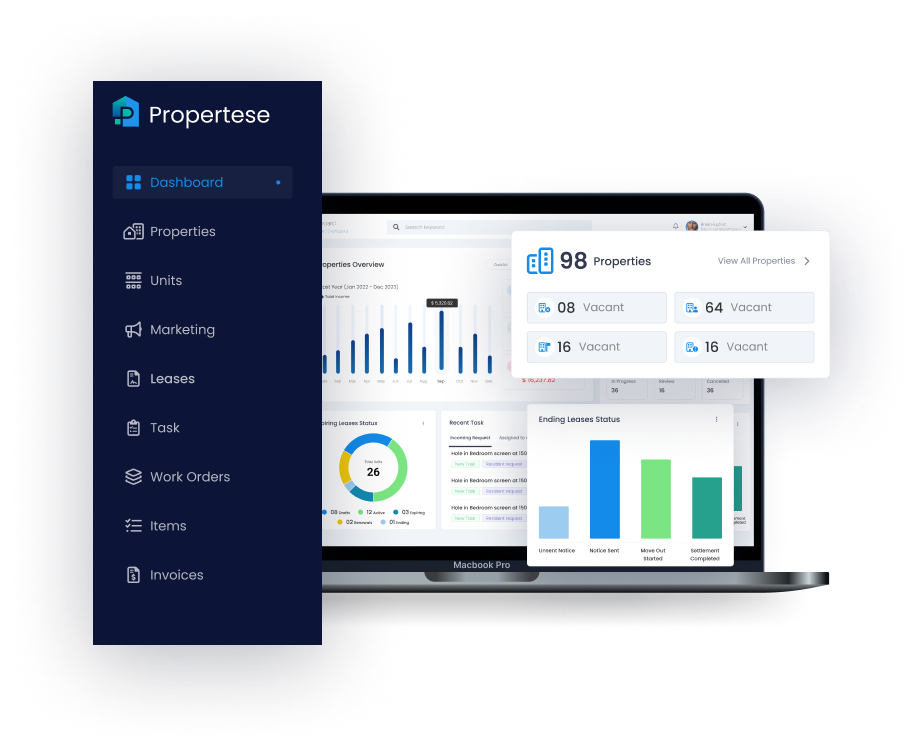
Platforms like Propertese centralize these capabilities with ERP integrations and tenant lifecycle management, providing owners a single source of truth for prevention and recovery workflows. For a practical walkthrough on improving automation, see how to automate rental income tracking.
Legal Considerations and Recovery Options
When arrears persist, follow your jurisdiction’s requirements precisely.
- Typical steps include a formal demand for payment, required notices, and filing for eviction or judgment if necessary.
- Many jurisdictions require specific notice periods before an eviction filing for nonpayment.
- Arrears collection is a civil matter; criminal penalties do not apply
- Maintain thorough documentation: ledgers, notices, correspondence, and signed repayment agreements
Balancing Rent Recovery with Tenant Support and Housing Stability
Recovering rent and maintaining housing stability are not mutually exclusive. In fact, supportive strategies can improve collections and reduce costly turnover.
- Pair repayment plans with referrals to rental assistance, hardship accommodations, or targeted arrears forgiveness, conditioned on future on-time payments.
- Keep conversations empathetic and solutions-focused; retaining a paying household is usually cheaper than vacancy and re-leasing
- Build partnerships with nonprofits and community organizations to connect tenants with emergency funds and budgeting support.
The payoff: fewer evictions, steadier cash flow, and stronger long-term portfolio health.
Practical Steps for Property Owners to Minimize Rental Arrears
- Set and communicate clear rent policies upfront.
- Use thorough tenant screening and credit checks.
- Leverage technology for tracking, reminders, and self-service payments. For related best practices, review our rental income accounting guide.
- Act early with documented communication and structured repayment plans.
- Understand and follow your local legal framework and notice requirements.
- Balance recovery efforts with tenant support to sustain housing stability.
Frequently asked questions
What are rental arrears, and how do they occur?
Rental arrears are unpaid rent that’s overdue after the due date; they begin as soon as a scheduled payment is missed.
Why do tenants fall behind on rent payments?
Common causes include income disruptions, illness, family changes, administrative errors, and broader economic shocks.
What risks do rental arrears pose to property owners?
Arrears disrupt cash flow, consume staff time for collections, and can lead to legal expenses and vacancy-related losses.
How can property owners address and recover arrears effectively?
Intervene early, document communication, offer repayment plans, use software for tracking and reminders, and pursue legal remedies when required.
Can landlords pursue arrears after a tenant has vacated?
Yes—owners can still seek recovery through post-tenancy demands and civil court processes, subject to local rules and timelines.
Table of Contents
Stay Updated
Subscribe to get the latest news, industry trends, blog posts, and updates...