Property Manager’s Guide to Rent Roll Analysis and Reporting

Are you a property manager who oversees rental properties or runs a property management firm? If yes, then you need to understand your success hinges on two things; 

  1. Maximum rental income
  2. Stay in control of your property data

But how can you achieve this? Well, you need to master the rent roll analysis.

What Is A Rent Roll?

A rent roll is a detailed report holding key information about all your rental units, income, and lease terms. With rent toll analysis, you can evaluate the performance of your properties and forecast revenue to make smarter investment decisions in the future. 

Rent roll analysis acts as a financial dashboard for your property management portfolio because it tells you:

  • Who your tenants are
  • What they are paying or not
  • When the leases expire
  • How much revenue has been generated

It doesn’t matter if you manage just five residential units or 200+ commercial units; with rent roll analysis, you can always be at the top of new income opportunities as a property manager.

Why Is Rent Roll Analysis Important For A Property Manager?

Multiple reasons explain the importance of rent roll analysis. The most important one is that it works as a management tool. It gives you a clear picture of the business with available vacancies, total monthly income, and any past due rents. So if someone asks you how your business is doing, you can instantly back up your claim with facts and figures. 

For example, if your rent roll shows a 15% vacancy across several units, you can calculate the revenue impact, compare it to market averages, and decide whether to adjust pricing or increase marketing spend.

As a property manager, you get a better picture of property pricing with rent roll analysis. This is especially true when you are managing multiple properties and can leverage the rent roll report to draw a comparison between them. 

On the other hand, rent roll analysis plays a significant role for buyers and sellers. Having an accurate and detailed rent roll will help you list and market your property in a better way. Prospective buyers are always interested to know about the history of the property, how much reliable income the property will generate for them, and its resale value. With rent rolls, you can share fact-based evidence with buyers to make them believe in the potential return on their investment.

Pro tip: Pairing rent roll insights with property management KPIs gives you an even clearer picture of financial health. of your properties.

Key Components of A Rent Roll

For proper analysis, a standard rent roll must have the following details:

  • Tenant Information: Full name and contact details.
  • Unit Identifier: Apartment or suite number, floor, or property reference.
  • Lease Dates: Start and end dates to track renewals and expirations.
  • Rent Amount: Agreed monthly rent.
  • Security Deposit: Amount collected as a safeguard.
  • Payment History: Record of on-time or late payments.
  • Outstanding Balance: Any unpaid rent or charges.
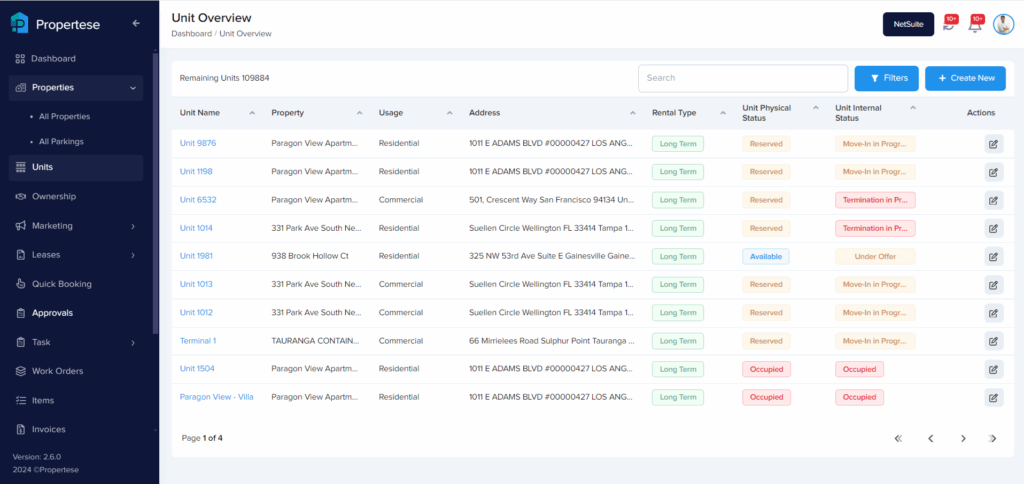
Image: Propertese dashboard of rent roll analysis with property unit overview
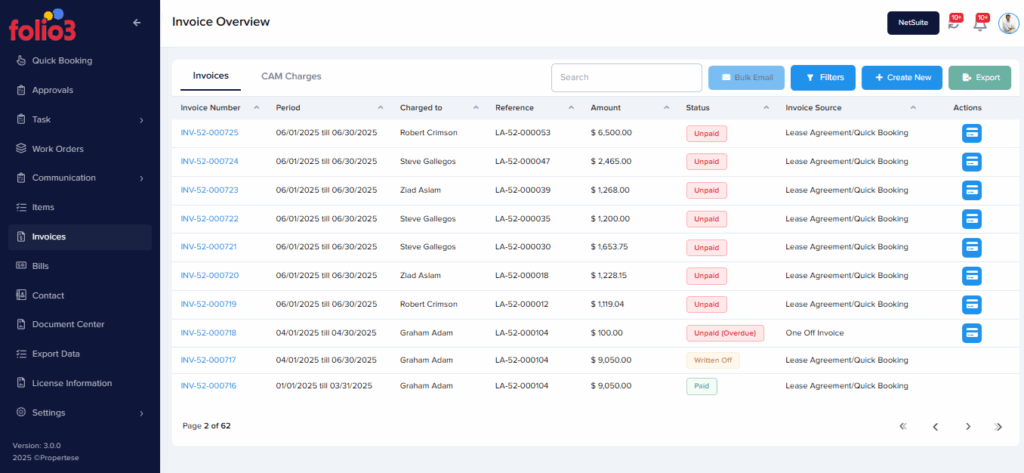
Image: Propertese dashboard of rent roll analysis with invoice details and payment status of tenants

Essential Rent Roll KPIs

As a property manager, you should monitor the following KPIs because they drive your rent roll.

  • Gross Scheduled Income (GSI): Potential income if all units are rented at full price.
  • Vacancy Loss: Income lost due to empty units.
  • Concessions & Discounts: Impact of rental incentives on revenue.
  • Effective Gross Income (EGI): Actual income after subtracting vacancies and concessions.
  • Turnover Rate: Percentage of tenants leaving within a year.
  • Collection Rate: Percentage of rent actually collected vs. billed.
  • Market Rent Comparison: How your rents compare to average market prices.

Pro tip: If you want to know how well your leasing is performing or identify problems and new opportunities, you need to do a regular rent roll scan. This way, you can verify current revenue, assess gross scheduled income, and look for revenue potential in your portfolio.

You can also use property management bookkeeping best practices to stay on top of financial reporting.

Examples of A Rent Roll Usage

The rent roll usage depends totally on the type of property you manage. Consider that you have the following properties, your rent analysis will help you determine the following:

  • As a residential apartments property manager, you can track rent payments, lease terms, and occupancy rates across multiple units with a rent roll.
  • If you handle commercial properties, the rent roll will include details about the tenant business type and industry to assess lease portfolio diversity.
  • For retail spaces, your rent roll will have information about seasonal variations in rental terms and common area maintenance (CAM) charges.
  • For properties with a mix of residential and business tenants, the rent roll combines rental income from different tenant types for easy comparison and administration. 

Pro tip: With this rent roll analysis, you immediately know the impact of vacancies and concessions and can focus on marketing or revising rent terms.

Pairing your rent roll analysis with digital marketing strategies for property managers can help you fill vacancies faster.

Summing It All Up

A rent roll analysis can become a powerful asset for property managers, real estate investors, and lenders. With a rent roll analysis, you can easily track rental income, manage tenants, and evaluate a property’s financial performance. All you need to do is a thorough rent roll analysis, and voila, you can now optimize the cash flow, reduce vacancies, and make lucrative investments in the future.

Top Traits That Define the Best Rental Management Company

In the constantly changing world of residential real estate, investors are always looking for effective ways to navigate the challenges. One important player in this field is the property management company. It emerged during the Great Depression when banks had difficulty managing properties amidst all the financial chaos. Since then, the real estate sector has seen some significant changes, with professional standards being set for property and real estate management.

Today, property management companies and realtor property managers play a pivotal role in the success of real estate investments. However, choosing the right one can be daunting, given the many options available. To ensure a thriving rental property business, it’s crucial to consider certain qualities when selecting a property management company. 

Best Rental Management Company: Key Elements 

1. Reliability and Trustworthiness

Before entrusting your valuable property to a management company, thoroughly assessing their reliability and trustworthiness is of utmost importance. Look for a management company with a proven track record of success built on positive relationships with vendors, tenants, and property owners. 

Additionally, consider their online reputation, as positive feedback from satisfied clients can strongly indicate their professionalism and commitment to excellence.

To further enhance their credibility, check if the management company is a member of reputable professional associations, such as the National Association of Residential Property Managers, as this demonstrates their dedication to upholding industry standards and best practices. 

Example: A reliable property management company should readily provide references, showcasing their positive interactions with various stakeholders.

2. Bulletproof Business Structure

Peace of mind is a top priority for property owners, and having a robust business structure is crucial to ensuring the safety and profitability of their investments. When evaluating a property management company, it is essential to delve into its short- and long-term plans, organizational structure, and how well it aligns with its goals. 

A well-structured company goes beyond just having a general system; it hires individuals for specific roles with clearly defined goals and key performance indicators (KPIs). This level of specificity allows for practical performance evaluation and ensures that everyone is working towards the same objectives.

Moreover, a successful property management company is driven by performance, passion, and a commitment to hiring and retaining the right people. 

3. Transparent Management Fees

When it comes to financial matters, thoroughness is key. It is crucial to carefully consider management fees to ensure they do not significantly impact rental income. Negotiating and clarifying fees before signing a contract is advisable to prevent any surprises down the line. 

Ensure all fees are clearly outlined in the agreement, leaving no room for hidden charges or ambiguity. A trustworthy property management company will provide a detailed breakdown of all fees, promoting transparency and a clear understanding of financial commitments.

4. Professional Work Experience

Successfully navigating federal, state, and local laws can be challenging, so it is crucial to partner with a property management company with extensive professional experience in this field. During the interview process, it is vital to inquire about their track record in handling property and tenant management complexities, ensuring they have a proven ability to navigate legal requirements and regulations effectively.

In addition to legal expertise, assessing their understanding of the market area and their knowledge of various marketing strategies is essential. A property management company with a deep understanding of the local market can help optimize rental income and attract quality tenants.

Furthermore, requesting recommendations or testimonials from their previous clients can provide valuable insights into their performance and reliability. 

5. Accountability in Practice

Accountability is not just important but a crucial cornerstone of effective property management. It speaks volumes about a company’s commitment to delivering exceptional service. To assess the level of accountability, it is advisable to ask pertinent questions such as the guarantees they offer regarding the quality of their work, their churn rate versus rent-out rate, the speed at which they can successfully rent out properties, and the percentage of tenant lease renewals. 

Example: A reliable property management company will willingly provide data on their past performance, showcasing their accountability and commitment to delivering results.

6. Rigorous Tenant Screening Process

High-quality tenants are the lifeblood of a successful rental property business. When considering a property management company, it is crucial to inquire about its tenant screening process. A thorough screening process should include essential checks such as credit history, rental payment history, employment status, eviction reports, and income verification.

By conducting these comprehensive checks, property owners can ensure that they are selecting reliable and responsible tenants who will pay rent on time and maintain the property in good condition. This diligent approach to tenant screening sets the foundation for a successful and hassle-free rental property investment.

7. Effective Communication Skills

Establishing clear and effective communication is paramount when fostering a harmonious and productive relationship between landlords and property managers.

By honing the ability to articulate information concisely and understandably, promptly addressing any inquiries or concerns that may arise, and consistently keeping all stakeholders well-informed, the foundation for a positive and mutually beneficial experience can be laid. This facilitates a seamless flow of communication and enhances transparency, trust, and collaboration in the landlord-property management dynamic.

8. Technological Proficiency

In the digital age, the ability of a property management company to effectively leverage technology becomes even more crucial. By harnessing the power of innovative property management software, user-friendly online portals, and other cutting-edge tech tools, companies can streamline their processes, optimize resource allocation, and enhance overall service delivery. 

These technological advancements enable seamless tenant communication, facilitate quick issue resolution, and provide real-time access to property information. Embracing these tech-driven solutions not only improves operational efficiency but also ensures a higher level of customer satisfaction and retention. Stay ahead of the competition by embracing the limitless potential of technology in property management.

Example: A technologically proficient property management company will showcase its use of advanced tools to streamline tasks such as rent collection, maintenance requests, and financial reporting.

Final Thoughts

In conclusion, choosing the best rental property management companies is a pivotal decision for property owners. By considering these qualities, you can make an informed decision that aligns with your unique needs. Remember, the right property management company can maximize your chances of success and provide the peace of mind every property owner desires. 

Suppose you’re searching for trustworthy, accountable, results-driven, and experienced property manager software. Propertese is here to serve you in that case. Working with us will ensure success and grant you the peace of mind you deserve in your real estate ventures.

Understanding the Basics of a Rental Property Chart of Accounts

Setting up the financial framework for your rental property business is like creating a detailed roadmap for managing your money. This system’s heart is the Chart of Accounts, a carefully curated list of financial categories.

Just think of it as signposts along the way, guiding you through income, expenses, assets, liabilities, and equity. It’s like having a reliable filing cabinet for your finances, making it easy to categorize and track every financial move your business makes. With this organized structure, you can ensure efficiency and accuracy every step of the way.

Take a look at this article to get a better grasp of the basics behind a rental property chart of accounts.

Chart of Accounts For Rental Property

Let’s break it down: your chart of accounts rental property is a categorized list encompassing every financial label your business utilizes. These accounts track your business’s financial ins and outs, grouped into five core types:

1. Revenues (where you earn money).

2. Expenses (where you spend money).

3. Assets (what you own).

4. Liabilities (what you owe).

5. Equity (invested money or earnings reinvested).

Each account within this chart is classified into a type. Sub-accounts offer deeper details, allowing you to segment transactions while still aggregating them under overarching categories, which is essential for tax reporting.

Tailoring for Multiple Properties

For real estate investors, it’s crucial to keep a close eye on each property’s finances while having a big-picture view of the entire portfolio. Regarding tax reporting, forms like Schedule E require a detailed breakdown of rental income for each property. Simply relying on the chart of accounts rental property won’t provide this level of detail. That’s where accounting systems with classes or tags come into play. They help you manage everything with ease.

These tags work hand-in-hand with the chart of accounts, allowing for segmented financial reports and targeted analysis that provide valuable insights for strategic decision-making.

Creating Your Chart of Accounts For Rental Property

When it comes to accounting software, one of its many benefits is the provision of default charts that cater to the unique needs of various businesses. An efficient approach for rental property ventures is to mirror the IRS Schedule E form, which is a strong foundation for accurate financial reporting. This form, crucial for documenting revenue and expenses annually, is a reliable blueprint ensuring compliance and clarity in the complex world of rental property accounting.

Revenue Accounts

The Schedule E tool simplifies revenue reporting by focusing on one primary account: rents received. But if you want to track and analyze your rental income comprehensively, creating sub-accounts for those extra income sources is a good idea. You know, stuff like application fees, security deposits, or pet rent.

That way, you can customize your accounts to fit your business’s unique needs and quirks. And trust me, having this level of detail and organization will give you a better grasp on your rental income and help you make smarter financial decisions.

Expense Accounts

Schedule E includes fifteen expense accounts that cover everyday property expenses. These accounts encompass maintenance, repairs, and other essential services. To get a more detailed view of your expenses, you can create sub accounts to categorize them further.

For example, you can have sub accounts like “roof repairs” and “HVAC maintenance” to break down specific costs. This way, you can refine your reporting while matching the required categories. Also, an “Other Expense” class can be used for expenses that don’t fit into predefined categories. Remember to provide additional details during tax time for transactions categorized under “Other Expense” to ensure accurate reporting.

Asset Accounts

Property owners, whether individuals or businesses, typically possess dedicated business bank accounts and may also have mortgage escrow accounts. These accounts are vital assets for tracking and managing incoming revenue and outgoing expenses related to their properties.

For property owners who choose to work with property management companies, creating a separate asset account specifically for the manager can further streamline the comparison of financial statement expenses and the differentiation between managerial and personal expenses. This additional detail ensures accurate and efficient financial management for property owners.

Apart from what was mentioned earlier, we also have land, buildings, and improvements as part of the standard asset accounts. These accounts help us keep track of the capitalized improvements and annual depreciation expenses for buildings and improvements.

To accurately monitor the value of these assets over time, we use special accounts like Accumulated Depreciation. These accounts play a vital role in giving us a complete and detailed picture of these assets’ financial status and value.

Liability Accounts

In a property business, you’ll encounter common liabilities involving different financial obligations. These include mortgages, credit lines, and credit cards tied to your property ventures. Another vital thing to remember is the liability account for Security Deposits Held. This account ensures funds are set aside for returning deposits to tenants, following legal regulations and established bookkeeping protocols. Managing these liabilities is essential for maintaining a solid financial foundation in the property industry.

Equity Accounts

Equity accounts, a fundamental component of financial statements, encompass owner contributions and distributions. These accounts effectively trace the flow of money in and out of the business, providing valuable insights into the financial health of an organization.

Retained earnings, representing the cumulative income or losses over time, and net income, indicating the current-period income, are prominently displayed on the balance sheet. Together, they offer a comprehensive snapshot of the financial performance and stability of the business.

Final Touches for Smooth Operations

Propertese is a powerful ERP system, for chart of account for rental property that can significantly simplify the initial setup process for existing businesses transitioning to a more structured accounting system. Automating the entry of starting bank balances, previous capital improvements, prior year income, and other historical transactions streamlines the entire process and saves valuable time and effort. With Propertese, businesses can ensure accurate and comprehensive financial records, setting a solid foundation for future growth and success.

Conclusion

When running a rental property business, having a well-organized and comprehensive Chart of Accounts is crucial. It’s not just about keeping your books in order but also about creating a framework that can be tailored to your specific needs.

By considering tax reporting requirements and diving into detailed accounts, you can effectively manage your finances and gain valuable insights into your business’s performance. This level of attention to financial management will set you up for long-term success and growth in your rental property venture. So, let’s get started and make sure your business is on the right track!