A tenant reports a small water stain. You send maintenance to paint over it. Three months later, you’re facing a lawsuit, code violations, and a tenant demanding relocation costs while citing health problems.
The issue? Mold remediation laws you didn’t know existed, or thought didn’t apply to your state.
Here’s the reality: mold regulations vary dramatically by state, but the consequences of getting them wrong are universal. Whether you manage 10 units in Indiana or 10,000 in California, understanding your state’s requirements isn’t optional, it’s essential risk management.
Does Federal Law Regulate Mold Remediation?
No. There is no federal law mandating mold remediation in residential rental properties.
The EPA publishes “Mold Remediation in Schools and Commercial Buildings” guidelines establishing industry best practices based on affected square footage:
- Less than 10 square feet: Minor cleanup possible by property staff
- 10-100 square feet: Professional remediation recommended
- Over 100 square feet: Professional contractors required
The CDC provides health information about mold exposure risks. HUD incorporates mold prevention into inspection protocols for federally assisted housing.
But none of these constitute enforceable regulations for private landlords. Your obligations come entirely from state statutes, local ordinances, and the implied warranty of habitability.
What this means: You can’t call federal agencies to verify compliance. State and local law controls everything.
Which States Have Explicit Mold Remediation Laws?
Currently, approximately 15 states have enacted mold-related legislation with active requirements:
California: Disclosure and Substandard Housing Standards
Senate Bill 655 (effective January 2016) added visible mold to substandard housing conditions under Health & Safety Code § 17920.3.
Key requirements:
- Landlords must disclose known mold that poses health threats
- Health or code enforcement officers determine if mold makes property substandard
- If mold disclosed at move-in, landlords must remediate within 5 business days or tenant may terminate
- Minor mold on surfaces that normally accumulate moisture (shower tiles) is excluded
No professional licensing required, but California Department of Public Health recommends EPA protocols.
New York: The Nation’s Most Stringent Licensing
Labor Law Article 32 requires three distinct license types for mold work:
- Mold Assessment Consultant
- Mold Remediation Contractor
- Mold Abatement Worker
The 10-square-foot threshold: Projects involving 10+ square feet of mold in buildings with 10+ apartments require NYS Department of Labor-licensed professionals.
Critical rule: The same licensed professional cannot perform both assessment and remediation (conflict of interest prohibition).
NYC Local Law 55: Buildings with 3+ units must maintain units free of mold. Enhanced obligations exist for buildings with asthmatic tenants.
Texas: Comprehensive TDLR Licensing
The Texas Department of Licensing and Regulation administers licensing under Occupations Code Chapter 1958.
The 25-square-foot rule: Buildings with 10+ residential units must use licensed professionals for projects ≥25 contiguous square feet. According to industry analysis, this isn’t just visible mold, it’s the total cleaning footprint including containment areas.
Required procedures:
- Provide tenants Consumer Mold Information Sheet before work begins
- Submit TDLR notification 5 days before work starts (emergencies excepted)
- Licensed assessor writes remediation protocol
- Licensed contractor executes work per protocol
- Certificate of Mold Remediation issued within 10 days of completion
Insurance requirement: $1 million general liability minimum.
Virginia: New IICRC Certification Mandate
Virginia tightened requirements in 2024 with certification mandates effective July 1, 2024.
Core requirements:
- § 55.1-1215: Disclose visible mold in move-in inspection reports
- § 55.1-1220: Maintain premises to prevent moisture accumulation and mold
- § 55.1-1231: Relocate tenants up to 30 days if mold materially affects health (landlord pays for comparable housing)
New requirement: House Bill 1270 (2024) requires IICRC certification for all residential mold remediation. Violation constitutes a Consumer Protection Act offense.
Timeline: If mold disclosed at move-in, remediate within 5 business days if tenant stays.
Maryland: The 2025 Game-Changer
Senate Bill 856 (effective October 2025) creates the strictest timelines in the nation:
- 15-day testing deadline: Arrange mold testing within 15 days of written tenant notice
- 45-day remediation deadline: Complete remediation and source correction within 45 days
- Transparency requirement: Share written test results and updates with tenants
Applies to multifamily housing, apartments, and condominiums across Maryland.
Other States with Active Requirements
- Florida: Professional licensing required for commercial mold services; 7-day landlord response to tenant notice
- Illinois: Registration and third-party certification required
- Louisiana, Tennessee, Oklahoma, Kentucky, Maine, Mississippi, New Hampshire: Various licensing requirements
- Washington, D.C.: Licensing through DC Department of the Environment with ACAC examination
What About States Without Mold Laws?
The majority of U.S. states have no mold-specific statutes. This doesn’t mean no obligations exist.
The Implied Warranty of Habitability Applies Everywhere
Every residential lease in the United States now includes an implied warranty that premises are habitable, whether or not written in your lease. Arkansas was the last state to adopt this in 2021.
The warranty means rental property must be safe and fit for human habitation. This includes:
- Effective weatherproofing and waterproofing
- Adequate ventilation
- Freedom from health hazards
- Compliance with building codes
How mold fits: Courts consistently rule that significant mold growth, especially from landlord-controlled building defects, breaches habitability even without explicit mold laws.
Recent examples:
- Colorado’s SB24-094 explicitly added “mold from dampness” to habitability definitions in 2024
- Indiana courts hold landlords responsible for mold from structural issues under habitability principles
- Arizona, Oregon, Washington enforce habitability standards encompassing moisture and mold
Critical point: Property managers must remediate mold promptly after notice regardless of whether state law mentions mold. Failure exposes you to rent withholding, repair-and-deduct remedies, and damage claims.
Three Ways Mold Creates Legal Liability
1. Breach of Implied Warranty of Habitability Mold affecting indoor air quality or tenant health violates the warranty in all states.
2. Health and Housing Code Enforcement Municipal health departments can cite properties for mold under general habitability provisions. Code violations trigger mandatory remediation, fines, and potential property condemnation.
3. Negligence Claims When you receive notice of moisture problems and fail to investigate or remediate adequately, resulting mold supports negligence claims for medical expenses, relocation costs, and property damage.
Your Mold Compliance Framework: What Property Managers Must Do
Step 1: Establish Immediate Response Protocols
When tenant reports mold or moisture:
- Acknowledge receipt within 24 hours in writing
- Schedule inspection within 3-5 business days
- Document with timestamped photographs
- Identify moisture source (not just visible mold)
- Provide written findings and remediation plan within 5-7 days
Why documentation matters: In disputes, written records prove reasonable care. Verbal assurances mean nothing in litigation.
Step 2: Fix the Moisture Source First
Mold is a symptom. According to EPA guidance, effective remediation requires identifying and correcting underlying moisture.
Common sources:
- Roof leaks
- Plumbing failures (supply lines, drains, toilet seals)
- HVAC condensation
- Foundation water intrusion
- Window/door seal failures
- Inadequate ventilation
Critical mistake: Cleaning mold without fixing the leak guarantees recurrence and creates negligence liability.
Step 3: Determine Professional vs. In-House Remediation
Use EPA square footage guidelines:
- <10 sq. ft.: May be handled by trained staff with proper PPE
- 10-100 sq. ft.: Professional remediation recommended
- >100 sq. ft.: Professional remediation required
Always use professionals for:
- Work in licensing states above statutory thresholds
- HVAC system contamination
- Sewage or contaminated water mold
- Tenants with documented health issues
- Hidden mold (wall cavities, under flooring)
Why this matters legally: Courts view professional remediation as evidence of reasonable care. DIY cleanup of significant mold creates liability exposure.
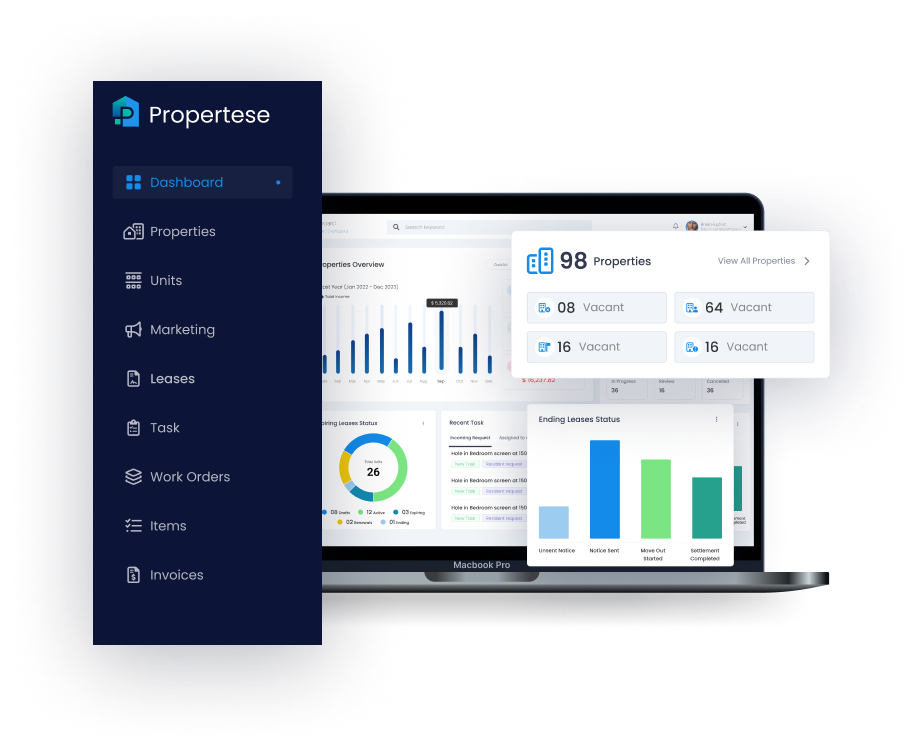
Modern property management software helps track maintenance requests, document remediation work, and maintain contractor credentials, critical for compliance.
Step 4: Maintain Comprehensive Records
Retain all documentation for the tenancy duration plus your state’s statute of limitations (typically 2-4 years):
- Dated tenant notifications
- Inspection reports with photos
- Contractor licenses and insurance certificates
- Remediation protocols (required in Texas, New York)
- Before/during/after photographs
- Completion certificates
- All tenant correspondence
- Relocation arrangements and costs
Centralized document management ensures nothing gets lost when disputes arise months or years later.
Common Mistakes That Cost Property Managers Money
Mistake 1: “We Don’t Have a Mold Law, So We’re Not Liable”
Reality: Implied warranty of habitability applies everywhere. States without mold statutes still award damages for mold-related habitability breaches.
Mistake 2: “Tenants Caused It, So They’re Responsible”
Reality: Even when tenants contribute (not using exhaust fans), landlords remain responsible if root cause is building system failure.
If exhaust fan is non-functional or undersized, landlord is liable regardless of tenant behavior.
Mistake 3: “Bleach Cleanup Solves the Problem”
Reality: Bleach kills surface mold on non-porous materials (tile, glass) but cannot penetrate porous materials (drywall, wood, carpet).
Proper remediation requires removing contaminated porous materials and fixing moisture sources, not surface spraying.
Mistake 4: “Small Mold Doesn’t Matter”
Reality: In Texas, the 25-square-foot licensing threshold includes the total cleaning footprint. A small visible patch often requires cleaning 40+ square feet when accounting for containment.
More importantly: If tenants have documented health symptoms, square footage becomes irrelevant. Health impact shifts analysis from “minor issue” to “habitability breach.”
Mistake 5: “Lease Clauses Can Shift Liability to Tenants”
Reality: Courts reject clauses attempting to waive habitability rights:
Prohibited language:
- “Tenant responsible for all mold remediation”
- “Landlord not responsible for mold regardless of cause”
- “Tenant waives mold exposure claims”
Permitted language:
- Tenant must promptly report leaks and moisture
- Tenant must use ventilation systems properly
- Landlord may enter for inspections (with proper notice)
The difference? You can require tenants to fulfill their obligations, but cannot eliminate your habitability duties.
The Real Cost of Mold (Beyond Contractor Bills)
Direct costs:
- Small projects (10-25 sq. ft.): $2,500-$5,000
- Medium projects (25-100 sq. ft.): $5,000-$10,000
- Large projects (100+ sq. ft.): $10,000-$30,000+
Indirect costs (often higher):
- Lost rent during vacancy: $1,500-$4,000+
- Tenant relocation (Virginia’s 30-day requirement): $2,000-$4,000 in hotel fees
- Turn costs if tenant moves out: $1,500-$5,000
- Legal fees if disputed: $5,000-$50,000+
- Insurance premium increases
- Negative online reviews deterring prospects
Prevention ROI:
- Annual preventive maintenance per unit: $600-$1,200
- Average mold incident (all costs): $8,000-$25,000+
Preventing 1-2 incidents across a 50-unit property pays for systematic preventive maintenance across the entire portfolio.
Where Mold Liability Hits Hardest
High-Risk States for Litigation
California: Explicit statute creates clear plaintiff claims; strong tenant protections; coastal humidity
New York: Comprehensive licensing with criminal penalties; NYC Local Law 55; older building stock
Texas: Detailed licensing regime; high humidity in major cities; active enforcement
Virginia: New IICRC requirements; 5-day deadlines; mandatory relocation provisions
Florida: Hurricane-related water intrusion; high humidity; active plaintiff bar despite no landlord-specific statute
Climate-Driven Risk Zones
High mold probability areas:
- Pacific Northwest (high rainfall)
- Gulf Coast (humidity + hurricanes)
- Mid-Atlantic coastal areas
- Anywhere with temperature swings causing condensation
If you manage properties in these regions, mold prevention must be core operational focus, not reactive response.
Your Action Plan: What to Do This Week
Immediate Actions
1. Identify your state requirements Review statutes for licensing, disclosure, and timeline requirements using sources throughout this article.
2. Audit your current process
- How do tenants report mold issues?
- How quickly do you typically respond?
- How is documentation stored?
- What determines professional vs. in-house remediation?
3. Review lease language Ensure tenant notification obligations exist without prohibited liability waivers.
This Month
4. Create written procedures Document your process for receiving reports, inspection timelines, contractor selection, and record retention.
5. Verify contractor credentials Compile licensed/certified contractors. Verify current licenses, insurance, certifications.
6. Implement systematic tracking If you’re using spreadsheets and email to track maintenance, consider Propertese, that centralizes documentation, automates workflows, and tracks compliance deadlines.
This Quarter
7. Schedule preventive inspections
- Quarterly roof inspections (high-precipitation climates)
- Annual HVAC maintenance including drain pans
- Annual plumbing leak detection
- Quarterly basement/crawlspace moisture monitoring
8. Train your team Ensure staff understands early moisture identification, documentation procedures, professional remediation triggers, and state-specific requirements.
How Technology Protects You From Mold Liability
The property management trends research shows technology is no longer optional, it’s operational necessity.
Mold compliance proves this perfectly.
The documentation challenge: Can you prove when tenant first reported moisture? How quickly you responded? Which contractors you hired and their credentials? What remediation occurred?
If this information lives in scattered emails, texts, and paper files, you cannot reconstruct an effective defense.
How modern platforms solve this:
- Automatic timestamping of all tenant maintenance requests
- Photo uploads attached directly to work orders
- Contractor credential storage and renewal tracking
- Automated deadline reminders (Maryland’s 15 days, Virginia’s 5 days)
- Complete communication history in one location
- Document attachment for protocols, certificates, test results
Property managers report this level of documentation has resolved disputes before litigation, provided compelling evidence in code enforcement hearings, and reduced administrative time by 60% through eliminated manual record-keeping.
The Bottom Line
Mold remediation laws aren’t getting simpler, they’re tightening. Maryland’s 2025 timelines, Virginia’s 2024 certification requirements, and Colorado’s habitability expansions show the trajectory.
The stakes are clear: A $500 roof leak ignored for two months becomes a $15,000 remediation project. Add relocation, lost rent, and potential litigation, you’re looking at $30,000-$50,000 in total losses.
Or invest in systematic prevention, rapid response, and proper documentation, and avoid 90% of mold incidents entirely.
Table of Contents
Stay Updated
Subscribe to get the latest news, industry trends, blog posts, and updates...