Property management in North Carolina is governed by a strict regulatory framework. Licensing, trust account handling, security deposits, lease execution, and recordkeeping are all closely monitored and enforcement is active.
This guide provides a clear, accurate overview of North Carolina property management laws and best practices for 2026, explaining who must be licensed, what activities are regulated, how tenant funds must be handled, and how property managers can operate compliantly at scale.
Do property managers need a license in North Carolina?
Yes.
In North Carolina, property management is legally defined as a form of real estate brokerage when it is performed for others and for compensation.
Under the authority of the North Carolina Real Estate Commission (NCREC), a real estate broker license is required if you engage in activities including:
- collecting rent or other monies on behalf of an owner
- negotiating, executing, or renewing leases
- advertising rental property for others
- handling or holding security deposits
- managing property under a property management agreement
North Carolina does not issue a separate property management license. All licensed property managers operate under the state’s real estate brokerage laws.
North Carolina’s broker-only licensing model (important distinction)
Unlike many states, North Carolina operates under a broker-only licensing structure.
There are no salesperson licenses.
License types
- Provisional Broker
- Must operate under the supervision of a full broker
- Common for leasing agents and junior property managers
- Broker (Full)
- May operate independently
- May open and control trust accounts
- Bears primary responsibility for compliance, supervision, and audits
If you operate a property management company, collect rent, or hold tenant funds, those activities must be conducted under a full broker license.
For teams building or scaling operations, this context is helpful:
Laying the foundation: essential steps for starting a property management business
When is a license NOT required?
A real estate license may not be required only in limited circumstances, such as:
- managing property you personally own
- serving as a salaried employee of the property owner (not commission-based)
- performing strictly clerical or administrative tasks, including:
- data entry
- scheduling maintenance
- document preparation without negotiation authority
A license is still required if you:
- negotiate lease terms
- collect or handle rent or deposits
- sign leases
- advertise property on behalf of others
Misclassification of unlicensed activity is a frequent cause of enforcement action.
Trust account requirements in North Carolina
Trust accounting is one of the most heavily enforced areas of property management regulation in North Carolina.
Property managers must:
- maintain separate trust accounts for tenant and owner funds
- never commingle trust funds with operating accounts
- deposit funds promptly
- maintain complete, auditable records for each property and owner
Trust accounts are controlled at the broker level, and deficiencies in reconciliation, documentation, or fund handling commonly result in disciplinary action by the NCREC.
For operational alignment, this internal resource is directly relevant:
The cornerstone of credibility: best practices for managing a property management trust account
Security deposit rules in North Carolina
North Carolina’s Tenant Security Deposit Act establishes clear rules for residential deposits.
Key requirements include:
- Deposit limits based on lease length
- up to two months’ rent for leases longer than two months
- Deposits must be held in a trust account or secured by a bond
- Deposits must be returned within the statutory timeframe after move-out
- Any deductions must be supported by a written itemized accounting
Most disputes arise not from misunderstanding the law, but from inadequate move-in or move-out documentation.
This checklist supports compliance and dispute prevention:
The ultimate rental inspection checklist for property managers
Lease execution and disclosure requirements
Property managers in North Carolina are expected to follow consistent and compliant lease practices, including:
- using written lease agreements
- identifying the property owner or authorized agent
- complying with habitability requirements
- adhering to state and federal fair housing laws
As portfolios grow, inconsistent lease handling increases both legal and operational risk.
Maintenance obligations and tenant rights
North Carolina law requires landlords and their agents to maintain rental properties in a fit and habitable condition, including:
- safe electrical, plumbing, and HVAC systems
- weatherproofing and structural integrity
- timely response to repair requests
Failure to meet these obligations can result in:
- tenant legal remedies
- rent disputes
- regulatory complaints
For practical guidance, this internal resource fits naturally here: The essentials of effective property maintenance management
Advertising and fair housing compliance
All rental advertising in North Carolina must comply with fair housing laws.
Best practices include:
- neutral and inclusive language
- accurate representation of availability and pricing
- consistency across listing platforms
If listings are underperforming or creating compliance risk, this guide is relevant: Why your rental listings aren’t converting and how to get more applications
Recordkeeping and audit readiness
North Carolina property managers are expected to maintain accurate records, including:
- lease agreements and amendments
- rent and payment histories
- trust account reconciliations
- maintenance records
- owner statements
Most compliance failures stem from fragmented systems, not unclear laws.
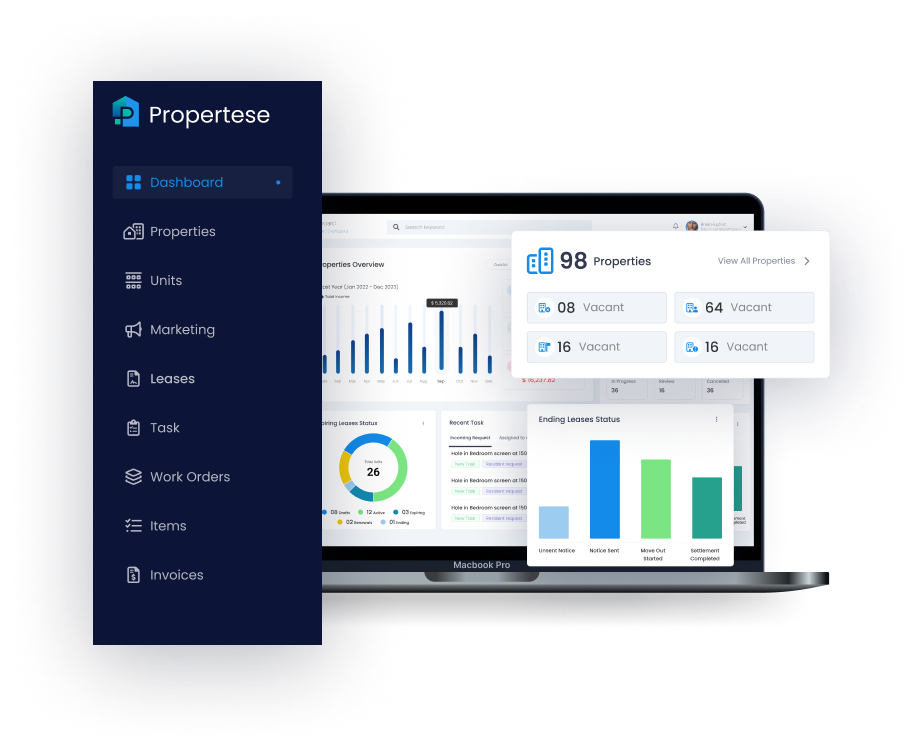
If audits, reconciliations, or reporting are recurring challenges, Propertese helps centralize leases, rent collection, documents, and reporting, making compliance easier to maintain year-round.
Penalties for non-compliance
Failure to comply with North Carolina property management laws may result in:
- fines and disciplinary action
- license suspension or revocation
- civil liability
- reputational damage
Most enforcement actions are linked to unlicensed activity, trust account violations, or poor recordkeeping.
Final thoughts
North Carolina property management laws are clear, structured, and actively enforced. Licensing requirements, trust account controls, security deposit handling, and documentation standards are not edge cases, they define how compliant property management must operate in the state.
For property managers overseeing multiple properties or owners, the challenge isn’t understanding the rules. It’s maintaining consistent processes as portfolios grow and operations become more complex.
Centralizing leases, payments, documentation, and reporting makes it easier to stay aligned with regulatory expectations and reduces the risk that small operational gaps turn into compliance issues over time.
Propertese supports this kind of structured, compliant property management by bringing core workflows, leasing, rent collection, documents, and reporting, into one system, helping teams stay organized without adding operational overhead.
Table of Contents
Stay Updated
Subscribe to get the latest news, industry trends, blog posts, and updates...