Tax season is stressful for property managers for one reason: messy records.
It’s not that deductions are hard to understand. It’s that expenses, invoices, vendor bills, and tenant payments live in too many places, bank feeds, email threads, spreadsheets, and random folders.
This guide covers the most common property management tax deductions to know for the 2026 tax season, plus what to track all year so your books are cleaner, your deductions are defensible, and tax prep doesn’t turn into a scavenger hunt.
What qualifies as a tax deduction in property management?
Most property management deductions come down to one question:
Was this expense necessary to operate and manage properties?
If the expense supports leasing, operations, maintenance, finance, tenant communication, marketing, or administration, it’s typically deductible, assuming you can document it properly and categorize it correctly.
That documentation piece matters more than most people realize. If your expense tracking is disorganized, you end up either:
- missing deductions you should claim, or
- claiming expenses you can’t support if questioned later
If you want a practical system for keeping everything organized, use this as a baseline: Best methods for tracking property expenses without spending hours on bookkeeping (and build your tax workflow from it).
The core property management tax deductions (checklist)
1) Payroll and contractor costs
If you have employees, vendors, or contractors, these costs are usually deductible:
- salaries and wages
- contractor invoices (maintenance vendors, cleaners, inspectors, leasing support)
- employer payroll taxes
- recruitment and onboarding expenses
This category often becomes messy because vendor bills are scattered. If you’re managing multiple properties and vendors, it helps to keep vendor and documentation workflows in one place, see how Propertese supports structured tenant and vendor management.
2) Property management software and technology
Technology expenses are common deductions, such as:
- property management software subscriptions
- accounting and bookkeeping tools
- e-signature and document tools
- tenant portal tools
- cybersecurity and backup tools
If you’re moving from spreadsheets to a system that centralizes your property operations and financial workflow, this breakdown helps frame the “why”: Spreadsheets vs property management software.
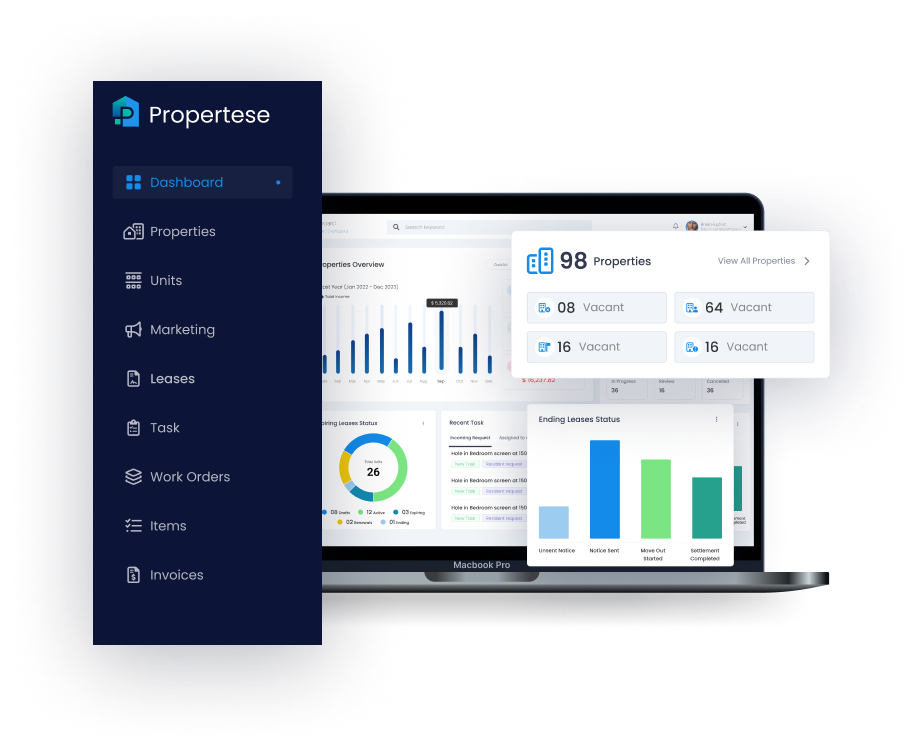
For software that’s used to run real operations end-to-end (leasing → rent → payments → reporting), you can also explore what Propertese includes under its platform features.
3) Office, admin, and operating expenses
Most property management businesses can deduct:
- office rent / coworking fees
- internet and business phone costs
- office supplies, postage, printing
- business insurance (general liability, E&O, cyber insurance)
- bank charges and payment processing fees
This is the category where expense categorization matters a lot. If your chart of accounts isn’t set up properly, your tax reports won’t be clean. If you need a reference point, here’s a solid internal read: Organizing your finances: setting up the ideal property management chart of accounts.
4) Marketing and advertising expenses
Marketing costs are usually deductible if they’re directly related to leasing or brand awareness, including:
- listing fees
- paid ads
- photography and video
- signage and brochures
- website hosting and landing pages
If your pipeline is the problem (leads aren’t converting), this will support the “why” and give readers practical steps: Why your rental listings aren’t converting and how to get more applications
And if you want a higher-level framework: Maximizing occupancy rates: the power of effective property management advertising
5) Vehicle, mileage, and travel related to properties
If you drive for business purposes, expenses may be deductible for:
- property inspections
- showings and move-ins
- vendor visits and supply runs
- meetings with owners or partners
The key is separating business driving from commuting and keeping a simple log:
- date
- purpose
- miles driven
This is where tax time breaks down for many teams: the data exists, but it’s not captured consistently.
6) Meals (business-related) and business travel
Business travel can be deductible when it’s tied to work (not personal trips), such as:
- lodging
- transportation
- travel-related expenses
- business meals (often limited depending on the situation)
The rule of thumb: if you can’t confidently describe the business purpose of the expense, treat it as non-deductible or ask your CPA.
7) Professional services, licensing, and compliance
Property management often involves deductible professional costs such as:
- CPA and tax prep fees
- legal support
- licensing fees
- compliance consulting
If your business is scaling or managing regulated portfolios, operational structure matters too. This can help readers understand what “good” looks like: Navigating legal and operational requirements for property management startups
Depreciation: the deduction people get wrong most often
Depreciation applies when you buy assets with a useful life beyond a year, examples:
- computers and office equipment
- furniture
- vehicles used for the business
- certain tools and maintenance equipment
The mistake isn’t missing depreciation. It’s mixing depreciation-related purchases into “repairs” or “supplies” without thinking.
If your audience includes owners too, this is a highly relevant internal resource:
Bonus depreciation tax benefits for property management companies
Repairs vs improvements (deduct now vs capitalize)
Here’s the practical distinction:
- Repairs and maintenance keep something operating normally (often deducted in the current year)
- Improvements add value, extend useful life, or adapt for a new use (often capitalized and depreciated)
This is where clean documentation and expense labeling matters. If maintenance and work orders are tracked systematically, you’ll have a clearer narrative at tax time.
If maintenance costs are rising, you can internal-link readers to a practical problem-solving piece:
Why your property maintenance costs are too high and 7 ways to fix it
What to track all year so tax season is easier
If you want tax deductions to hold up, don’t “fix it in March.” Build a year-round habit around:
1) A clean expense trail
- vendor invoices
- receipts
- payment confirmations
- property allocation (which property/entity the expense belongs to)
2) A consistent documentation system
- leases
- vendor contracts
- approvals
- insurance docs
- compliance records
This is a good moment to introduce Propertese without forcing it:
If you’re aiming for audit-ready records, keeping documents and lease workflows structured helps. Propertese includes document management and workflow support that can reduce “missing paperwork” problems at tax time.
3) Rent, payments, and reconciliation consistency
Many teams lose time because rent roll ≠ bank deposits ≠ accounting.
If rent collection and payment tracking are a pain point, these two internal reads are highly relevant:
And for a product path that matches the same problem:
Online rent payments and collections (core capability)
Common mistakes to avoid in the 2026 tax season
- mixing personal and business expenses
- inconsistent receipt storage
- claiming mileage without a log
- misclassifying improvements as repairs
- forgetting to allocate expenses per property/entity
- relying on spreadsheets that don’t reflect reality
If your team struggles with tax reporting and staying organized across properties, you can direct readers to a very aligned internal guide: Property management tax reporting made easy
Final thoughts: deductions are easier when your data is clean
Property management tax deductions aren’t just about knowing what’s deductible. They’re about having clean records: categorized expenses, complete documentation, and a traceable rent/payment trail.
If you’re currently stitching together spreadsheets, email threads, and bank exports, you’ll feel the pain every tax season.
Propertese helps centralize leases, rent collection, documents, and reporting, so property financials are easier to track throughout the year, not just when filing is due. Get a demo today.
Table of Contents
Stay Updated
Subscribe to get the latest news, industry trends, blog posts, and updates...