Finding reliable tenants who pay on time and treat your property with respect isn’t luck, it’s the result of a systematic tenant screening process. With the average cost of tenant turnover reaching nearly $4,000 per unit and evictions potentially costing over $10,000, thorough screening isn’t optional, it’s essential for protecting your investment.
This guide provides property managers and landlords with an actionable tenant screening checklist that balances thoroughness with efficiency while ensuring full compliance with fair housing laws.
Understanding Tenant Screening: More Than Just Background Checks
Tenant screening is your systematic approach to evaluating rental applicants before signing a lease. It combines financial verification, background research, and reference validation to predict whether an applicant will be a responsible, long-term tenant.
Effective screening accomplishes three critical goals:
- Financial Protection: Identifies applicants who can afford rent consistently throughout their lease term
- Property Protection: Reveals applicants likely to maintain your property properly and follow lease terms
- Legal Protection: Creates documented, objective decision-making processes that comply with discrimination laws
The key is building a repeatable process that delivers consistent results across all your properties.
Why Property Managers Need a Standardized Screening Process
Without a structured tenant screening checklist, decisions become subjective and inconsistent. This creates several risks:
- Legal exposure from applying different standards to different applicants
- Poor tenant selection based on incomplete information or gut feelings
- Wasted time from disorganized processes and missing documentation
- Higher vacancy costs from slow screening that loses good applicants to competitors
A standardized process solves these problems while dramatically improving your tenant quality. Properties with formal screening procedures report 40% fewer payment issues and 50% fewer early lease terminations.
Understanding common tenant screening pitfalls helps you avoid the mistakes that cost property managers thousands in lost revenue and legal fees.
Fair Housing Compliance: The Foundation of Legal Screening
Before diving into screening techniques, understand this: fair housing compliance must guide every screening decision.
The Fair Housing Act prohibits discrimination based on race, color, national origin, religion, sex, familial status, and disability. Many states add protected classes including source of income, sexual orientation, gender identity, and veteran status.
Three Rules for Staying Compliant
Rule 1: Establish Written Criteria Before Reviewing Applications
Document your exact requirements for credit scores, income levels, rental history, and other factors. These become your objective standards applied equally to everyone.
Rule 2: Apply Identical Standards to All Applicants
Every applicant must meet the same requirements. If you make exceptions, document specific business justifications unrelated to protected characteristics.
Rule 3: Document Your Process and Decisions
Keep records showing you followed your stated criteria for each applicant. This documentation is your defense if discrimination claims arise.
Setting Your Tenant Qualification Standards
Start your rental criteria checklist by defining non-negotiable minimums. These typically include:
Income Requirements
Most property managers require gross monthly income of 2.5-3 times the rent. For a $2,000 monthly rental, applicants need $5,000-$6,000 in verified monthly income.
This ratio ensures tenants can comfortably afford rent while covering other living expenses, reducing payment default risk. Implementing automated rent collection becomes much more effective when you’ve screened for financial capability from the start.
Credit Score Thresholds
Minimum credit scores typically range from 600-650 depending on your market. However, review the complete credit report, not just the score. Look for:
- Payment history patterns over the past 12-24 months
- Outstanding debt relative to income
- Recent bankruptcies or foreclosures
- Collections or charge-offs
A 680 score with recent late payments may be riskier than a 620 score with consistent on-time payments.
Employment History Standards
Require minimum employment duration, typically 6 months in current position or 2 years in the same industry for self-employed applicants. Stable employment indicates reliable income streams.
Rental History Requirements
Look for 12+ months of positive rental history with no evictions in the past 5-7 years. Previous landlords provide invaluable insights about payment reliability and property care.
Propertese’s leasing and rental management tools help you standardize these criteria across your entire portfolio while maintaining flexibility for different property types.
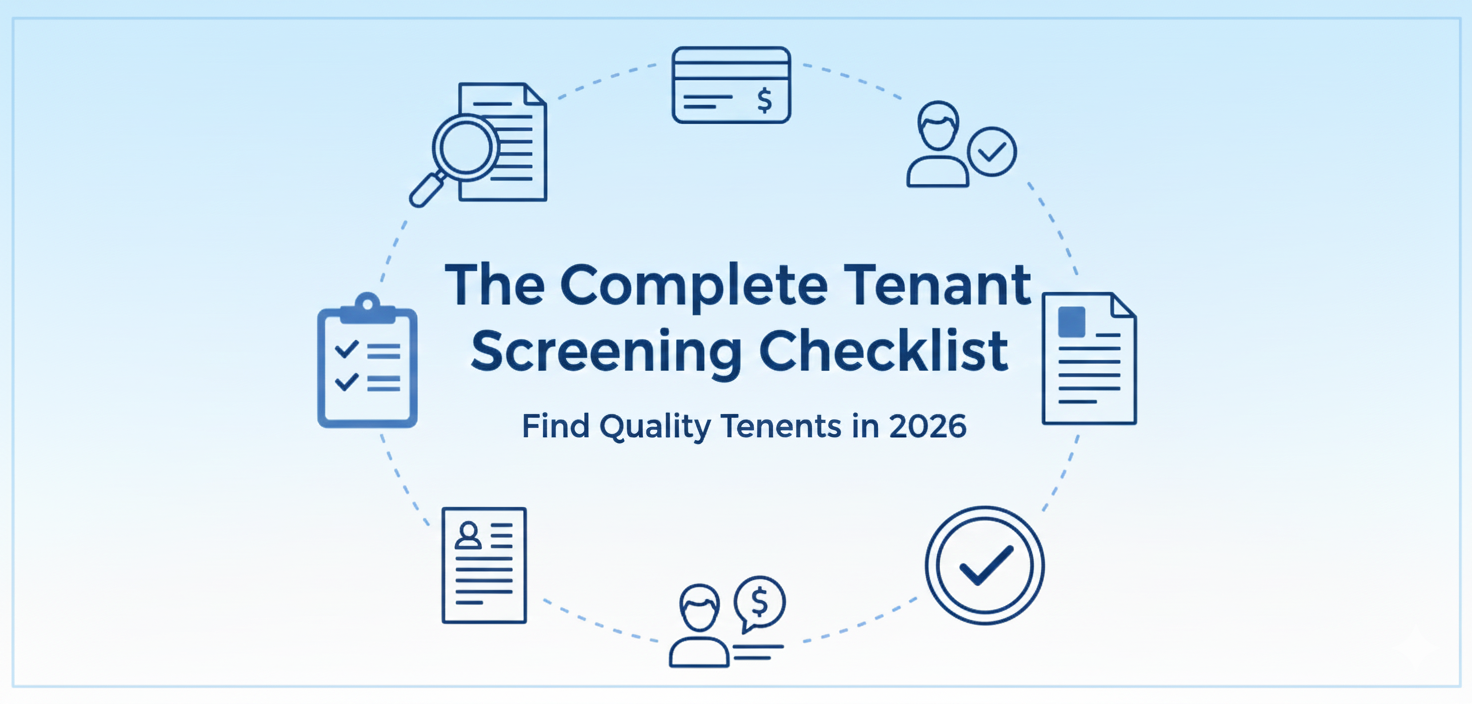
The 7-Step Tenant Screening Checklist
Step 1: Pre-Qualify Through Your Listing
Your rental listing serves as your first filter. Clearly state key requirements upfront:
- Monthly rent and deposit amounts
- Income requirements (e.g., “minimum 3x monthly rent”)
- Credit score expectations
- Pet policies and associated fees
- Move-in date requirements
This transparency attracts qualified applicants while discouraging unqualified ones from applying. You’ll receive fewer applications but higher quality candidates.
Many property managers struggle with rental listings that don’t convert. The key is being upfront about requirements while highlighting your property’s best features.
Effective property listings and outreach strategies ensure you’re marketing to the right tenant demographics.
Step 2: Review Rental Applications Thoroughly
Complete applications provide the foundation for your screening. Essential application components include:
- Full legal names of all adults who will occupy the property
- Current and previous addresses for the past 2-3 years
- Complete employment information with employer contacts
- Monthly income from all sources
- Vehicle information
- Emergency contact details
- Permission to contact references and run background checks
Incomplete applications signal potential problems. Applicants serious about securing your property will provide thorough information.
Once you’ve mastered initial screening, learn how to track rental leads effectively to ensure no qualified applicants fall through the cracks.
Rental application management systems automate completeness checks and flag missing information immediately.
Step 3: Verify Identity and Prevent Fraud
Rental fraud is surprisingly common. Always verify applicants are who they claim to be by:
- Requiring government-issued photo ID for every adult applicant
- Matching ID names exactly to rental applications
- Verifying addresses on IDs match application information
- Conducting video calls for remote applicants to confirm identity
This simple step prevents identity theft and application fraud that could leave you with an unapproved occupant.
Step 4: Conduct Financial Verification
Financial screening reveals whether applicants can truly afford your property.
Credit Report Analysis
Pull comprehensive credit reports (not just scores) to evaluate:
- Payment history across all accounts
- Total debt obligations
- Available credit utilization
- Public records (bankruptcies, judgments, liens)
- Recent credit inquiries
Income Documentation Review
Verify claimed income through:
- Recent pay stubs (2-3 months for employed applicants)
- Bank statements showing consistent deposits
- Tax returns (previous 2 years for self-employed)
- Employment verification letters on company letterhead
- Benefit statements for social security, disability, or other income
Cross-reference all documents to ensure consistency. Discrepancies between application statements and documentation require explanation.
Understanding rental income accounting helps you better evaluate whether applicants’ financial situations support long-term tenancy.
Step 5: Run Background Checks
Criminal background checks help assess safety risks, but use them carefully to avoid discrimination.
Most property managers check:
- National criminal databases
- Sex offender registries
- Local court records
Important: You cannot automatically deny applicants with criminal history. Evaluate the nature, severity, and recency of offenses. A 10-year-old misdemeanor differs dramatically from a recent violent felony.
Always obtain written consent before running background checks, as required by the Fair Credit Reporting Act.
Step 6: Search Eviction History
Eviction records strongly predict future problems, but context matters:
- What caused the eviction? Non-payment, property damage, or lease violations?
- How long ago did it occur?
- Has the applicant’s situation improved since then?
- Are there multiple evictions or just one isolated incident?
Use specialized tenant screening services that search eviction databases comprehensively. Court records alone may miss filings in different jurisdictions.
Step 7: Contact References and Previous Landlords
Direct conversations with references provide insights unavailable through reports.
Previous Landlord Questions:
- Did the tenant pay rent on time every month?
- How did they maintain the property?
- Were there noise complaints or neighbor issues?
- Did they give proper notice when moving?
- Would you rent to them again?
Critical tip: Always contact at least two previous landlords, not just the current one. Current landlords sometimes give positive references simply to move problem tenants elsewhere.
Employment Verification:
Call employers directly using publicly available numbers (not contacts provided by applicants). Verify:
- Current employment status
- Position and job title
- Salary or hourly rate
- Length of employment
- Likelihood of continued employment
For self-employed applicants, request client contracts, bank statements showing regular deposits, or CPA verification letters.
Comprehensive tenant and vendor management platforms help you track and document all reference checks systematically.
Required Documentation for Complete Screening
Organize your tenant screening documents efficiently. Essential items include:
From the Applicant:
- Completed rental application
- Government-issued photo ID (all adult occupants)
- Pay stubs (most recent 2-3 months)
- Bank statements (2-3 months)
- Tax returns (self-employed applicants)
- Previous landlord contact information
- Employer contact information
- Personal references
For Your Records:
- Signed consent forms for credit and background checks
- Credit reports
- Background check results
- Eviction search results
- Reference check notes
- Adverse action notices (if denying applications)
Secure document management systems organize all screening files digitally, making retrieval simple for audits or legal proceedings. Learn more about best practices for real estate document management to ensure compliance and efficiency.
Making Fair, Defensible Tenant Decisions
After gathering information, compare applicants objectively against your predetermined criteria.
Creating a Simple Scoring System
Assign points to key factors:
- Credit score: 0-30 points based on score ranges
- Income ratio: 0-25 points (higher ratios score better)
- Rental history: 0-25 points (positive references score higher)
- Employment stability: 0-20 points
Total scores above your threshold qualify for approval. This removes subjectivity from decisions.
Handling Denials Properly
When denying applications based on credit reports, background checks, or tenant screening services, you must send an adverse action notice within 7-10 days.
Required adverse action notice elements:
- Specific reasons for denial
- Name and contact information of screening service used
- Statement of applicant’s right to dispute report accuracy
- Clarification that the screening service didn’t make the decision
Keep copies of all adverse action notices. They prove you followed legal procedures if discrimination claims arise.
Moving Approved Applicants to Lease Signing
Once you approve an applicant, move quickly. Good tenants often apply to multiple properties simultaneously.
- Send lease agreements within 24-48 hours
- Clearly communicate move-in requirements and timeline
- Collect security deposits and first month’s rent per local regulations
- Schedule move-in inspections
- Provide keys and access information
Learn how to write a lease agreement for an apartment that protects your interests while remaining legally compliant.
Streamlined move-in and move-out processes ensure nothing falls through the cracks during this critical transition. You can also implement a paperless leasing process that tenants actually appreciate.
Technology That Transforms Tenant Screening
Manual screening consumes enormous time. Modern platforms automate repetitive tasks while improving accuracy.
Many property managers discover that their tenant screening process is failing due to outdated manual methods that can’t keep pace with today’s competitive rental market.
Online Applications and Automated Screening
Digital applications automatically check for completeness and route to screening services instantly. What once took days now happens in hours.
Understanding which property management tasks you should automate helps you focus on strategic activities rather than administrative work.
Integrated Background Services
Rather than visiting multiple websites, integrated platforms run credit checks, criminal background searches, and eviction lookups simultaneously with single-click initiation.
Centralized Communication
Email communication systems document every interaction with applicants automatically, creating audit trails that prove fair treatment. Learn best practices for effective communication in property management to improve your tenant relationships from day one.
Applicant Self-Service
Tenant portals allow applicants to upload documents, check status, and complete forms independently, reducing your administrative workload dramatically.
Portfolio-Wide Management
For multi-property managers, portfolio management tools maintain consistent screening standards across all properties while accommodating property-specific requirements.
Understanding Screening Costs and Fee Regulations
Tenant screening costs typically include:
- Credit reports: $15-$40 per applicant
- Background checks: $10-$30 per applicant
- Eviction searches: $10-$25 per applicant
- Comprehensive screening packages: $30-$75 total
Many states regulate application fees. California caps fees at $59.67 (2025), while other states have different limits or no caps. Always check local regulations and charge only actual costs incurred.
Understanding property management requirements by state ensures you remain compliant with all screening regulations.
Retaining Quality Tenants After Screening
Finding great tenants is just the beginning. Keeping them requires ongoing effort:
- Maintain open communication channels
- Address maintenance requests promptly
- Respect tenant privacy and lease terms
- Consider flexible rent payment options that make payments easier
- Implement regular tenant satisfaction surveys
Learn insider tips on how to retain good tenants to maximize your return on the screening investment.
Excellent customer service in property management transforms good tenants into long-term residents who take pride in their homes.
Improve Your Tenant Screening Today
Effective tenant screening protects your investment, reduces turnover, and creates better landlord-tenant relationships. The time invested in thorough screening pays dividends through years of reliable tenancy.
Propertese provides comprehensive tools that streamline every aspect of tenant screening:
- Automated application processing with completeness validation
- Integrated credit, background, and eviction screening
- Secure document storage and management
- Built-in compliance tracking for fair housing laws
- Customizable screening workflows by property type
- Team collaboration with role-based access
- Owner transparency through dedicated portals
Whether you manage residential, commercial, affordable housing, or community associations, our platform adapts to your needs while maintaining consistent quality.
Schedule a demo to see how Propertese transforms tenant screening from a time-consuming burden into a streamlined competitive advantage.
Tenant Screening FAQs
Q. What’s the most important part of tenant screening?
Income verification is the single most critical component. Even applicants with excellent credit and rental history can’t maintain tenancy if they lack sufficient income. Require documented proof of income at least 2.5-3 times monthly rent to ensure applicants can comfortably afford your property while meeting other obligations.
Q. How long does professional tenant screening take?
Comprehensive screening typically requires 3-5 business days when done manually. Automated systems with integrated screening services reduce this to 24-48 hours. Speed matters in competitive markets where qualified applicants receive multiple offers quickly.
Q. Can I charge applicants for screening costs?
Most jurisdictions allow charging application fees to cover actual screening costs, but many states cap these fees. California limits fees to $59.67 (2025), while other states have different caps or none at all. Never charge more than your actual costs and always check local regulations before collecting fees.
Q. What if an applicant has no credit history?
Applicants without credit history (common with recent graduates or immigrants) require alternative evaluation. Request additional documentation like rent payment receipts, utility payment history, or letters from previous landlords. Some applicants may need cosigners who meet your standard financial criteria.
Q. Should I reject all applicants with prior evictions?
Not automatically. Consider eviction context, timing, and subsequent rental history. An eviction from 7 years ago during an economic crisis differs from multiple recent evictions. Many previously evicted tenants become excellent renters after resolving past issues. Blanket policies may violate fair housing principles in some jurisdictions.
Q. How do I screen self-employed applicants?
Self-employed applicants require two years of tax returns, recent bank statements showing consistent deposits, profit and loss statements, and contracts with clients. Their income should average 3x monthly rent over time, even if some months vary. Verify business legitimacy through state registrations or business licenses.
Q. What questions can’t I ask applicants?
Avoid questions about race, religion, national origin, familial status, disability, sexual orientation, or other protected characteristics. Never ask about plans for children, marital status, or disabilities. Focus exclusively on objective financial qualifications, rental history, and ability to comply with lease terms.
Q. Do I need consent forms for background checks?
Yes, absolutely. The Fair Credit Reporting Act requires written consent before pulling credit reports or using tenant screening services. Consent forms should specifically authorize credit checks, criminal background searches, eviction history searches, and reference contact. Keep signed consent forms in your records.
Table of Contents
Stay Updated
Subscribe to get the latest news, industry trends, blog posts, and updates...