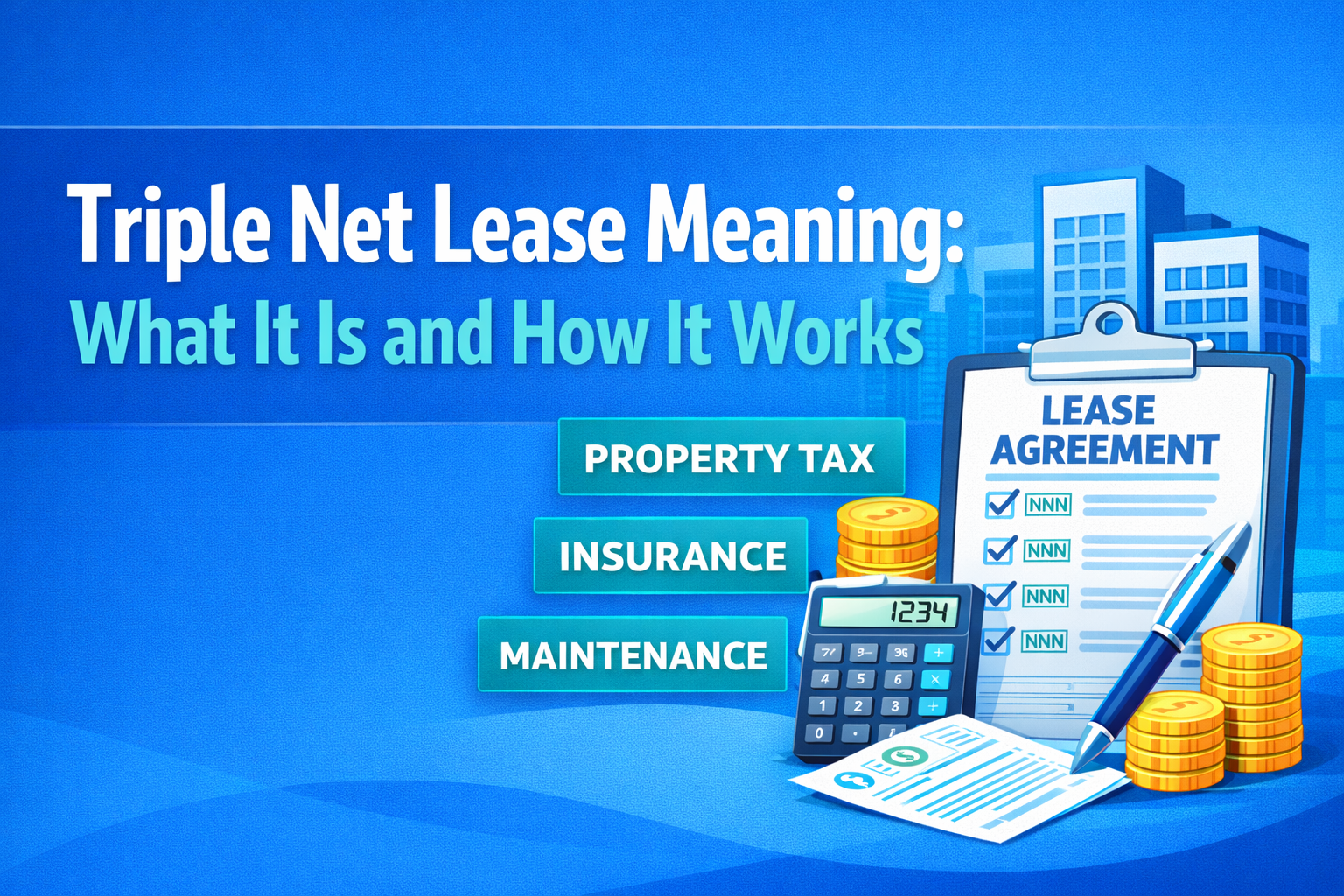
A triple net lease, often shortened to NNN lease, is a commercial lease where the tenant pays base rent plus the three major operating expenses: property taxes, building insurance, and maintenance. In other words, the tenant carries most of the property’s operating burden while the landlord collects a steadier net rent stream. This net lease structure is common in retail and industrial real estate and is central to how many corporate occupiers and investors manage costs and control. Asset managers, property managers, and finance teams rely on NNN terms to forecast cash flows, while tenants use them to tailor operations and budgets. Understanding how NNNs allocate expenses, reconcile costs, and assign responsibilities helps both owners and occupiers optimize total occupancy costs and operational control.
Key takeaways:
- Tenants pay base rent plus property taxes, insurance, and maintenance under NNN terms.
- Base rent is typically lower than in gross leases, but total occupancy cost depends on operating expenses.
- NNNs shift operating risk to tenants while providing landlords with steadier net income.
- Expenses are paid directly or via estimate-and-true-up reconciliations; CAM is pro-rated in multi-tenant buildings.
- Clear definitions of maintenance scope (including structural items) and CAM inclusions/exclusions are critical.
What Is a Triple Net Lease
A triple net lease (NNN) is a commercial lease in which the tenant pays base rent plus property taxes, insurance, and maintenance costs that landlords typically cover in gross leases. NNNs are widely used for freestanding retail, industrial, and build-to-suit assets and are common in sale-leaseback transactions because they convert operating costs to tenant obligations while delivering predictable landlord income.
By comparison:
- Single net leases shift property taxes to the tenant.
- Double net leases add insurance to taxes.
- Triple net leases include taxes, insurance, and maintenance on top of base rent.
The Three Nets Explained: Taxes, Insurance, and Maintenance
- Property taxes: Tenants typically pay all real estate taxes assessed on the leased premises and must remit them on time per lease terms (or reimburse the landlord if the landlord pays first).
- Building insurance: Tenants are responsible for obtaining, maintaining, and paying premiums for required property insurance, often naming the landlord as additional insured or loss payee.
- Maintenance: Tenants cover routine upkeep and, unless expressly carved out, major repairs. Leases should spell out structural vs. non-structural obligations to avoid disputes.
Common area maintenance (CAM) refers to shared-property costs—such as parking lots, landscaping, lighting, and signage—typically allocated among tenants based on their share of the building.
Lease-type comparison at a glance:
| Lease Type | Property Taxes | Insurance | Maintenance/CAM | Typical Base Rent Level |
|---|---|---|---|---|
| Gross (Full-Service) | Landlord | Landlord | Landlord | Higher |
| Single Net (N) | Tenant (Taxes) | Landlord | Landlord | Moderate–Higher |
| Double Net (NN) | Tenant (Taxes) | Tenant | Landlord | Moderate |
| Triple Net (NNN) | Tenant | Tenant | Tenant (incl. CAM) | Lower |
How Triple Net Leases Work in Practice
Operationally, tenants pay a monthly base rent and either (1) pay operating expenses directly (e.g., tax bills, insurance premiums, vendor invoices) or (2) reimburse the landlord through estimate-and-true-up cycles. In the latter, the landlord’s bill estimates monthly expense shares, then reconciles against actuals annually and issues credits or shortfall invoices. In multi-tenant buildings, expenses are pro-rated based on each tenant’s percentage of leased square footage; in single-tenant NNNs, nearly all costs sit with the sole occupier.
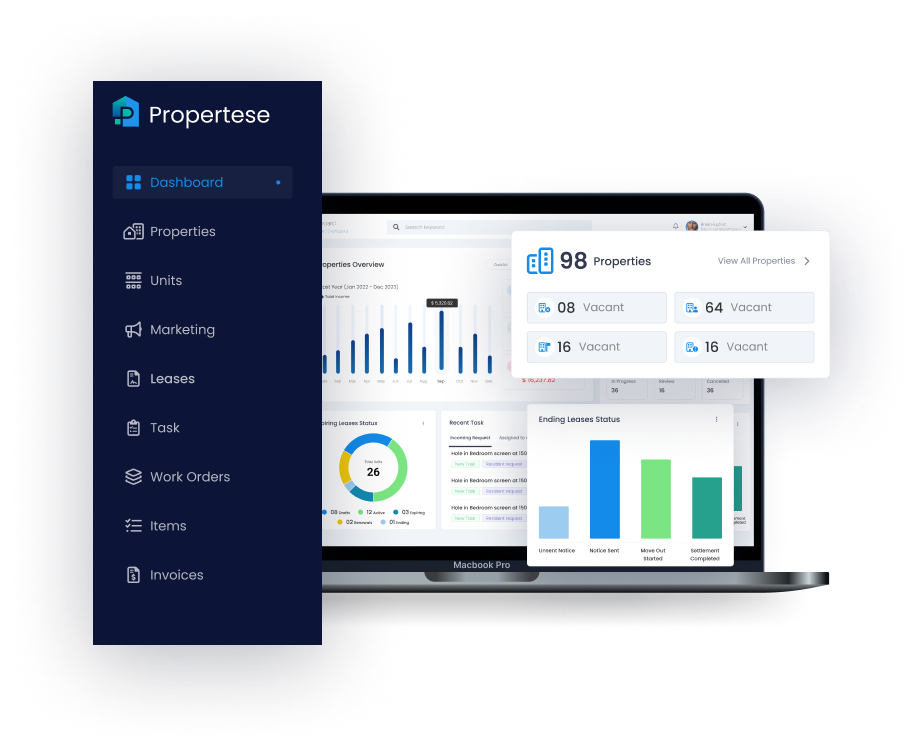
Because accuracy and trust hinge on documentation, tight reconciliation clauses, and clean records, many property teams centralize expense data, leases, and invoices in platforms like Propertese to automate allocations, maintain an audit trail, and provide both landlords and tenants with transparent dashboards for compliance.
Tenant and Landlord Responsibilities
| Area | Tenant (NNN) | Landlord (NNN) |
|---|---|---|
| Taxes & Insurance | Remit property taxes and maintain required insurance; provide proof on request. | Monitor compliance; may pay and recharge if tenant defaults. |
| Maintenance – Routine | Handle day-to-day upkeep, cleaning, landscaping, and minor repairs. | Oversight; approval for certain works per lease. |
| Maintenance – Capital/Structural | Often tenant, unless explicitly excluded; clarify roofs, structure, and MEP systems. | If excluded from tenant scope, landlord handles and may not be reimbursable. |
| CAM & Shared Services (multi-tenant) | Pay pro-rata share per GLA; follow building rules. | Calculate allocations, budget forecasts, and annual reconciliations. |
| Payments & Reporting | Pay base rent and pass-throughs on time; report issues promptly. | Invoice estimates, perform true-ups, and manage vendor/contract compliance. |
| Inspections/Approvals | Seek approvals for material alterations or major works. | Conduct inspections; enforce standards and approvals. |
Notes:
- Single-tenant NNN: The tenant typically bears nearly all operating and maintenance costs, with fewer shared-area complexities.
- Multi-tenant NNN: CAM budgets, pro-rata math, and reconciliation accuracy become critical operational tasks.
Financial Aspects and Rent Calculations
Because tenants assume operating expenses, NNN base rents are typically lower than gross lease rents, while landlords benefit from steadier net operating income that is less exposed to expense volatility. To estimate total occupancy cost, add base rent to projected taxes, insurance, and maintenance (including CAM where applicable).
Illustrative calculation (single-tenant, 10,000 sq ft):
- Base rent: $18.00/sf = $180,000/year
- Property taxes: $2.50/sf = $25,000/year
- Insurance: $0.75/sf = $7,500/year
- Maintenance: $1.50/sf = $15,000/year
- Total estimated occupancy cost: $227,500/year ($18,958/month)
In multi-tenant NNNs, expense allocations typically follow each tenant’s percentage of gross leasable area. Most NNN leases also include rent escalations, fixed annual bumps, or CPI-based adjustments to preserve real returns over time.
Benefits and Risks for Landlords and Tenants
Landlord benefits
- Predictable, often passive income with lower exposure to rising operating costs.
- Liquidity and financing advantages, especially with creditworthy tenants and long terms.
Tenant benefits
- Greater control over property operations, vendor selection, and maintenance standards.
- Potentially lower base rent and more tailored build-outs.
Risk checkpoints
- Landlords: tenant credit risk, unclear repair carve-outs (e.g., roofs/structure), and administrative overhead from reconciliations.
- Tenants: exposure to cost inflation, unexpected major repairs, and inflexible long-term commitments.
Real-world use
- Pharmacies, dollar stores, medical users, quick-service restaurants, and national retailers frequently utilize NNN structures.
Common Lease Clauses and Negotiation Tips
High-impact clauses to scrutinize
- Expense definitions and scope; clear CAM inclusions/exclusions and audit rights.
- Caps on CAM increases; carve-outs for uncontrollable costs.
- Tenant improvement allowances; approval processes and restoration.
- Limits on repair/replacement obligations, especially structural items.
- Estimate-and-true-up mechanics and documentation requirements.
- Assignment and subletting restrictions.
Absolute or bondable NNN leases require tenants to perform regardless of circumstances and shift extraordinary risks to the tenant. Negotiate caps on expense growth, require transparent CAM breakdowns, define which repairs remain with the landlord, align insurance requirements with actual risk, and document reconciliation procedures in detail. Legal and accounting reviews can surface hidden exposures before signing.
Emerging Trends in Triple Net Leases
- Hybrid net structures: To attract a wider tenant base, parties are splitting certain expenses or adding caps to balance risk.
- Technology and automation: Proptech and IoT are streamlining expense tracking, preventive maintenance, and reconciliation transparency; platforms like Propertese centralize data syncing, automate allocations, and surface anomalies before year-end.
- ESG and sustainability: Green leases are incorporating energy metering, LEED-aligned operations, solar adders, and resilience upgrades, with cost-sharing frameworks evolving alongside incentives.
- Market cyclicality: Development pipelines, cap rates, and retailer expansion cycles are shaping term lengths, rent escalations, and flexibility provisions.
Frequently asked questions
What expenses are tenants responsible for in a triple net lease?
Tenants in a triple net lease pay property taxes, building insurance, and all maintenance costs for the premises in addition to base rent.
How can tenants protect themselves from unexpected cost increases?
Negotiate annual caps on controllable expenses, require detailed CAM statements with audit rights, and clarify escalation formulas and repair carve-outs before signing.
What should landlords consider when evaluating tenant creditworthiness?
Review audited financials, debt levels, store performance (if applicable), and credit reports, and consider guaranties or security where risk remains.
How do true-up and reconciliation processes work in triple net leases?
Landlords set annual expense budgets, collect monthly estimates, and reconcile to actual costs at year-end, issuing credits or invoices for differences.
Are triple net leases suitable for all types of commercial tenants?
They fit established retailers, medical, and industrial users who are comfortable managing property costs, but may not suit tenants seeking simplicity or short-term flexibility.
Table of Contents
Stay Updated
Subscribe to get the latest news, industry trends, blog posts, and updates...