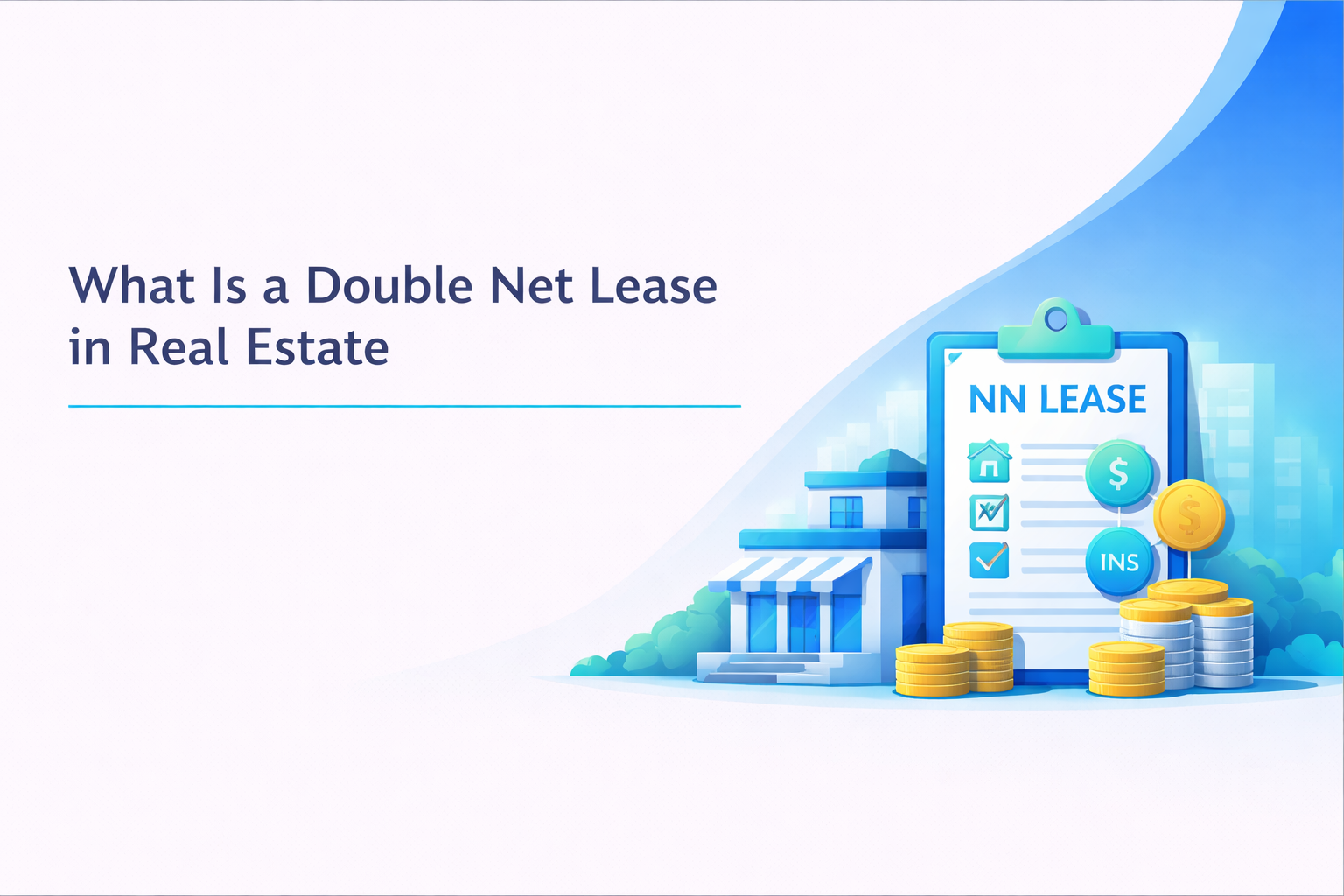
A double net lease is a common commercial lease structure that splits costs between landlord and tenant in a predictable way. In a double net (NN) lease, the tenant pays base rent plus property taxes and building insurance, while the landlord typically retains responsibility for structural maintenance and major repairs. This arrangement often results in lower base rent than a gross lease but more variable total occupancy costs. Because an NN lease sits between a gross lease and a triple net lease, it’s popular among investors and tenants seeking a balance of responsibility and control. For operators, the key is clean documentation and reliable expense tracking. A platform like Propertese standardizes proration, pass-throughs, and reporting across portfolios.
Key takeaways:
- A double net lease shifts property taxes and building insurance to the tenant while the landlord retains structural and major repair obligations.
- Total occupancy costs under a double net lease can vary with tax and insurance fluctuations, so modeling scenarios and cash buffers matter.
- Clear documentation around proration, caps, and reconciliations is critical; centralized tools like Propertese reduce errors and speed true-ups.
- Compared with a gross lease and a triple net lease, a double net lease offers middle-ground control and cost sharing.
Definition and core components of a double net lease
A double net lease (NN) is a commercial lease structure in which the tenant pays base rent, property taxes, and building insurance, while the landlord generally handles structural maintenance and major repairs. It sits between a gross lease (landlord pays most expenses) and a triple net lease (tenant pays nearly all).
Core components of an NN lease:
- Base rent: paid by the tenant.
- Property taxes: paid by the tenant, often prorated in multi-tenant buildings.
- Building insurance: paid by the tenant, typically for the landlord’s policy on the structure.
- Structural repairs and major capital items: typically remain with the landlord.
You may see this described as an NN lease, a double net commercial lease, or simply a commercial lease structure with taxes and insurance passed through.
Comparison at a glance:
| Lease Type | Tenant Pays | Landlord Pays |
|---|---|---|
| Single Net (N) | Base rent + property taxes | Insurance, maintenance/repairs |
| Double Net (NN) | Base rent + property taxes + insurance | Structural repairs/major capital |
| Triple Net (NNN) | Base rent + taxes + insurance + most maintenance | Structural integrity oversight, sometimes roof/structure per contract |
How a double net lease allocates costs between tenant and landlord
Under a double net lease, the tenant pays property taxes and building insurance in addition to base rent. In multi-tenant properties, these expenses are commonly prorated by square footage or another defined allocation method. The landlord generally retains responsibility for structural components (e.g., roof, exterior walls) and major capital repairs.
Positioning on the spectrum:
- Gross lease: landlord covers most operating costs; tenant pays predictable rent.
- Double net: mid-spectrum; shifts taxes and insurance to the tenant, unlike a gross lease, while leaving structural obligations with the landlord per contract.
- Triple net: tenant takes on nearly all operating expenses, with limited landlord obligations.
Side-by-side cost allocation:
| Cost Item | Gross Lease | Double Net (NN) | Triple Net (NNN) |
|---|---|---|---|
| Base rent | Tenant | Tenant | Tenant |
| Property taxes | Landlord | Tenant (often prorated) | Tenant |
| Building insurance | Landlord | Tenant (landlord’s policy) | Tenant |
| Common area maintenance | Landlord | Varies by lease | Tenant (often) |
| Structural/major capital | Landlord | Landlord | Often Tenant per lease, but varies |
For quick evaluation, this mid-spectrum structure offers lower base rent than a gross lease but more variable total cost than a fixed full-service arrangement.
Variations and contractual nuances in double net leases
“Double net” is shorthand, not a full rulebook. Key terms such as expense stops, pass-through caps, administrative fees, and definitions of operating expenses often shape the real cost profile and should be reviewed closely. Allocation methods vary: taxes and insurance may be divvied up by rentable square footage, set percentages, or customized riders. Multi-tenant buildings sometimes add unique pass-throughs (e.g., localized security or parking costs), so verify the fine print and any exclusions.
Top contractual nuances tenants and landlords should check before signing:
- Exact definitions of taxes, insurance, and operating expenses.
- How proration works (by rentable vs. usable square feet; load factors).
- Expense stops, escalation caps, and seasonal/one-off adjustments.
- Administrative or management fee markups and calculation bases.
- Audit rights, documentation standards, and dispute timelines.
- Clarification on structural vs. non-structural repairs and replacements.
- Treatment of extraordinary assessments or insurance deductibles.
Advantages and disadvantages for tenants and landlords
For tenants, NN leases can deliver lower base rent than gross leases, but they introduce exposure to fluctuating taxes and insurance and may reduce flexibility on alterations. For landlords, they reduce recurring tax and insurance exposure while maintaining oversight of the building’s structure; however, owners still face residual maintenance and capital costs.
Tenant vs. landlord snapshot:
| Perspective | Advantages | Disadvantages |
|---|---|---|
| Tenant | Lower base rent; clearer line of sight into taxes/insurance; mid-level responsibility vs. NNN | Variable occupancy costs; potential spikes in taxes/insurance; limited alteration rights |
| Landlord | Shifts recurring taxes/insurance; maintains control of structure and long-term asset value | Retains structural/capex costs; must manage billing accuracy and tenant communications |
Key negotiation points and risk management strategies
Priority topics to address in an NN lease:
- Definitions: taxes, insurance, operating expenses, and exclusions.
- Allocation: proration method (RSF/USF), timing, and true-up processes.
- Controls: pass-through caps, expense stops, and catastrophe deductibles.
- Fees and transparency: admin/management fee caps and invoice standards.
- Rights: audit rights, documentation access, and dispute resolution steps, and alignment with lease agreement requirements by state.
Risk mitigation steps:
- Clarify landlord vs. tenant repair and maintenance obligations in writing, including roof, structure, HVAC, and parking.
- Require transparent billing with monthly/quarterly statements and an annual reconciliation.
- Conduct a pre-lease property condition assessment to surface deferred or latent repairs.
- Model multiple tax/insurance scenarios before signing; preserve cash buffers for variability.
- Centralize lease documents, amendments, and expense workflows; platforms like Propertese streamline lease administration, proration, and reconciliations across assets, and improve signing compliance via our DocuSign integration.
Market trends and practical advice for evaluating double net leases
The net-lease market is stabilizing as investors anticipate an eventual rebound in transaction volumes, with a focus on credit quality and lease duration. Broker outlooks for 2025–2026 also highlight tighter underwriting and greater tenant selectivity as interest rates and operating costs weigh on decisions.
Practical evaluation tips for double net lease market trends and NN lease evaluation:
- Review the full lease and all exhibits; don’t rely on shorthand like “NN.” For drafting fundamentals, see how to write a lease agreement.
- Request three years of historical taxes, insurance policies, and loss runs.
- Stress test pro formas for tax reassessments, premium inflation, and deductibles.
- Confirm proration basis and measurement standards (BOMA, rentable vs. usable).
- Align renewal options and rent steps with expense volatility scenarios.
- Seek legal counsel for complex expense stops, caps, or co-tenancy language.
- Schedule periodic property inspections to curb disputes and protect value.
- Use a centralized system for expense tracking and KPIs; Propertese customers often pair lease data with portfolio metrics to stay ahead of reconciliations and true-ups. For process rigor, see our guides to commercial property management and property management KPIs.
Frequently Asked Questions About Double Net Leases
What is a double net lease?
A double net lease is a commercial lease where the tenant pays base rent plus property taxes and building insurance, while the landlord typically handles structural maintenance.
What costs does the tenant pay in a double net lease?
The tenant is responsible for base rent, property taxes, and insurance, but not for major maintenance or structural repairs.
How does budgeting work with a double net lease?
Budgeting requires anticipating variable costs for taxes and insurance, since these are passed through to the tenant in addition to base rent.
How does a double net lease compare to other lease types?
A double net lease sits between a gross lease and a triple net lease in terms of tenant responsibility, requiring payment of rent, taxes, and insurance, but not maintenance.
What should I ask before signing a double net lease?
Ask for historical property tax and insurance data, and clarify which maintenance costs the landlord will cover before committing.
Are there variations in double net lease terms?
Yes, lease structures can differ, so always review the lease details to understand exactly what costs you’re responsible for.
Table of Contents
Stay Updated
Subscribe to get the latest news, industry trends, blog posts, and updates...