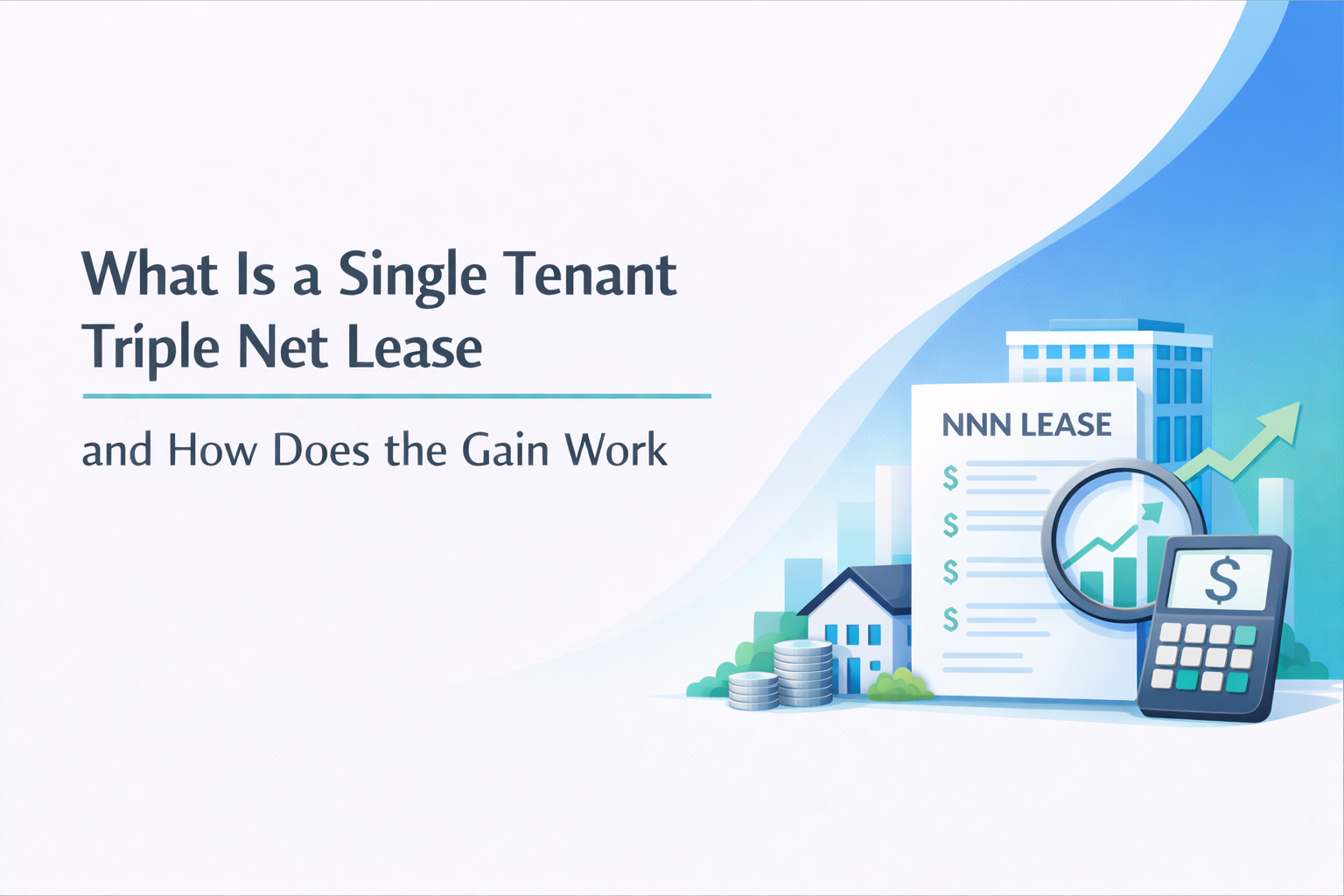
A single tenant triple net lease is a commercial lease in which one tenant pays base rent plus nearly all operating expenses, shifting most cost volatility away from the landlord. For owners, this structure delivers predictable, low-touch income throughout long lease terms that commonly span 10–25 years. The “gain” in these investments generally comes in two forms: steady cash flow from rent (supported by fixed or CPI-based escalators) and capital gains realized at sale when net operating income (NOI) and market cap rates determine value. Below, we explain how NNN leases work, how cash flows and valuations are calculated, where risks hide, and how platforms like Propertese help investors monitor and manage these assets effectively.
Key takeaways:
- In NNN leases, tenants pay taxes, insurance, and maintenance, shifting operating cost risk away from the landlord.
- Cash flow is typically predictable and closely tracks base rent; escalators help protect against inflation.
- Property value is driven by NOI and market cap rates; gains come from NOI growth and/or cap-rate compression.
- Primary risks include single-tenant concentration, lease language carve-outs, and end-of-term maintenance behavior.
- Disciplined underwriting, proactive renewals, and strong lease management tools help optimize returns and reduce surprises.
Understanding Single Tenant Triple Net Leases
A single-tenant triple net (NNN) lease is a net lease contract where the sole tenant pays base rent plus the “three nets”: real estate taxes, property insurance, and maintenance, often including repairs negotiated in the lease. This structure materially transfers operating expense risk from landlord to tenant unlike gross leases where the landlord pays most expenses and faces cost inflation directly. These leases frequently run 10–25 years and are common in sale-leasebacks and build-to-suit developments, particularly for credit tenants and essential retail. For a deeper primer, explore our guide to triple net leases—meaning, what they are, and how they work.
Key Components of a Triple Net Lease
- Property taxes: Typically paid by the tenant directly to the jurisdiction or reimbursed to the landlord.
- Building insurance: Tenant procures and pays, meeting coverage limits defined in the lease.
- Maintenance and repairs: The tenant handles routine maintenance; larger items (e.g., roof/HVAC/structure) depend on whether the deal is an absolute NNN or a modified NNN with carve-outs.
Rent escalators are contractual increases—either fixed annual bumps or tied to CPI—that protect the landlord’s purchasing power over time. Because tenants assume expenses, base rent in NNNs is often lower than in gross leases; however, the tenant’s total occupancy cost can be higher once pass-throughs are included.
Expense allocation at a glance:
| Cost category | Typical payer in NNN | How it’s paid |
|---|---|---|
| Base rent | Tenant | Monthly/quarterly to landlord |
| Property taxes | Tenant | Direct to taxing authority or reimburse landlord |
| Insurance | Tenant | Tenant policy per lease requirements |
| Maintenance/repairs | Tenant (varies by scope) | Direct payment or reimbursement per lease |
| Common area (if any) | Tenant | Pass-throughs/additional rent |
Note: “Additional rent” or “pass-throughs” are the mechanisms for these non-rent charges.
How Cash Flow Works in Single Tenant Triple Net Leases
Because the tenant covers operating expenses, a landlord’s NOI under a true NNN often aligns closely with base rent—meaning fewer surprises and simpler forecasting. Institutional research notes single-tenant NNN yields commonly start around 6–8%, with stability supported by long terms and rent escalators. CPI-linked or fixed increases help income keep pace with inflation. The result is a low-management, “set-it-and-collect” profile prized by income-focused investors.
Illustrative annual cash flow (Year 1):
| Line item | Amount | Payer |
|---|---|---|
| Base rent | $500,000 | Tenant |
| Property taxes | $0 (landlord) | Tenant (direct or reimbursed) |
| Insurance | $0 (landlord) | Tenant |
| Maintenance/repairs | $0 (landlord, if absolute NNN) | Tenant |
| Landlord admin/oversight | Minimal | Landlord |
| Net operating income (approx.) | ~$500,000 | Landlord |
Actuals vary with lease carve-outs and capital items.
Capital Gains and Market Valuation
Cap rate (capitalization rate) is the ratio of NOI to property value and anchors NNN pricing. Cap rates for NNN assets commonly range 4–8%, with recent averages reported near the mid-6% range across select segments.
- Valuation formula: Property value = NOI / Cap rate.
- Example: If NOI is $300,000 and the market cap rate is 6.0%, value ≈ $5,000,000.
Capital gains are realized when:
- NOI grows (rent escalators, lease extensions at higher rents, adding credit enhancement/guarantees).
- Cap-rate compression occurs (selling into stronger demand, longer remaining term, or improved tenant credit).
Experienced owners pursue renewals early, negotiate rent bumps or landlord-friendly options, and time the market to capture tighter cap rates. When selling, investors often defer taxable gains using a 1031 like-kind exchange subject to strict timelines and rules; consult counsel and tax advisors.
Risks and Challenges with Single Tenant Triple Net Leases
- Concentration risk: One tenant means one income stream; default or vacancy can immediately zero-out cash flow while ownership costs (debt service, potential capital items) persist.
- Lease language pitfalls: Not all “NNN” deals are absolute; hidden landlord responsibilities for roofs, structure, CAM administration, or casualty can surface if clauses are vague.
- Market and credit trends: Investors increasingly scrutinize tenant credit, store formats, and location durability, given evolving retail and service footprints.
- End-of-term behavior: Tenants may defer maintenance as leases approach expiration, raising turnover capex and downtime risk.
Risk mitigants:
- Tight drafting (absolute NNN clarity, repair standards, audit rights, end-of-term condition).
- Tenant credit checks and, where possible, corporate guarantees.
- Reserves for roof/HVAC/parking and re-tenanting downtime.
- Early renewal outreach and backfill planning.
- Continuous monitoring using integrated lease management to track obligations, certificates, and deadlines.
Due Diligence for Investors and Landlords
A practical checklist:
- Confirm structure: Absolute NNN vs. modified NNN and every landlord responsibility (roof, structure, capital replacements, administration).
- Underwrite tenant credit: Financials, store-level sales (if available), guarantor strength, and lease assignment/subletting terms.
- Analyze economics: Base rent relative to market, escalators (fixed or CPI), duration, options, and percentage rent (if any).
- Stress test: Model vacancy downtime, re-tenanting costs, and cap-rate expansion scenarios on exit.
- Coordinate tax planning: Explore 1031 eligibility and whether your structure could allow Section 199A qualified business income treatment, where applicable.
Operating across jurisdictions? Review lease agreement requirements by state to ensure compliance.
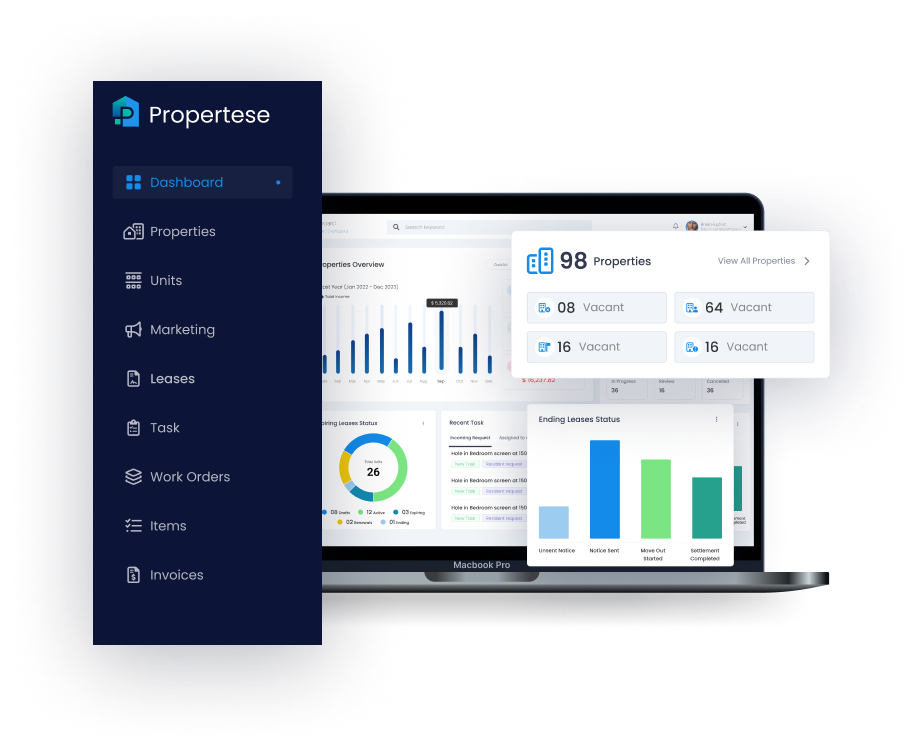
Also review maintenance logs, vendor contracts, environmental reports, and any transfer or SNDA requirements embedded in the lease. For ongoing control, use a platform that centralizes lease abstracts, compliance tasks, rent escalations, and insurance tracking. Propertese’s commercial property management tools automate these workflows portfolio-wide, improving oversight and reducing leakage.
Tax Considerations and Strategies
- Capital gains: On sale, gains are generally taxable; a properly executed 1031 exchange can defer the tax by reinvesting proceeds into like-kind property under IRS timelines.
- Section 199A: Some investors may access qualified business income deductions on eligible rental operations, but rules are nuanced and depend on activity levels and entity structure—discuss “passive income deductions” with a tax professional.
- Depreciation: Land improvements and building components depreciate on set schedules; cost segregation may accelerate deductions, affecting current income and future recapture.
- Multi-entity, multi-state: Plan for apportionment, franchise taxes, and filing logistics across jurisdictions; align entity design with lender covenants and exit strategies.
Tax law evolves—coordinate with advisors before transacting.
Conclusion: Balancing Stability and Risk in NNN Leases
Single tenant NNNs deliver durable, low-management income and clear valuation math, but success hinges on lease detail, tenant credit, and vacancy planning. Tight documents, disciplined underwriting, and proactive renewals help protect returns, while cap-rate awareness and tax strategy shape the ultimate gain. For portfolio operators, consistent oversight is essential—Propertese automates rent escalations, compliance tracking, and critical date management so teams can scale NNN performance with confidence.
Frequently Asked Questions
What Is a Triple Net Lease?
A triple net lease (NNN) makes the tenant responsible for property taxes, insurance, and maintenance in addition to base rent, shifting most operating costs off the landlord.
How Do the Operating Expenses Work in an NNN Lease?
Tenants pay the three nets directly or reimburse the landlord as additional rent, making the landlord’s cash flow more predictable.
What Are the Benefits for Landlords and Tenants?
Landlords get stable, passive income with minimal oversight; tenants gain control over property operations but accept variable expense risk.
What Risks Should Investors Be Aware Of?
Key risks include single-tenant concentration, hidden landlord obligations in lease language, and deferred maintenance costs near lease end.
How Can Investors Maximize Returns on Single Tenant NNN Properties?
Focus on strong credit tenants, airtight lease terms, early renewal strategies, downside stress testing, and tax-efficient exits such as 1031 exchanges.
Table of Contents
Stay Updated
Subscribe to get the latest news, industry trends, blog posts, and updates...