Weighted average life is a small metric with an outsized impact on debt and fixed-income decisions. In plain terms, “weighted average life (WAL) measures the average time each dollar of unpaid principal remains outstanding on an amortizing loan, bond, or mortgage pool.” It considers only principal repayments and weights each payment by when it is received, making it a clean indicator of how quickly investors get their money back.
In practice, WAL serves as a proxy for the center of gravity of principal cash flows. For property and debt portfolio leaders, mastering WAL clarifies payment timing, credit exposure, and liquidity horizons, and supports better asset-liability alignment and loan structuring. See the method, examples, and practical uses below, tailored to the realities of real estate and fixed income portfolios.
Definition and purpose of weighted average life
“Weighted average life (WAL) measures the average time each dollar of unpaid principal remains outstanding,” with weights based on the size and timing of principal repayments, not interest. Because WAL focuses solely on principal repayments, it tells you when invested capital is scheduled to come back to you, as it is crucial to manage credit risk, refinancing windows, and cash planning.
As a rule of thumb, WAL approximates when the principal paydown reaches its midpoint for amortizing structures, making it a practical guidepost for liquidity and loss-exposure timelines, as outlined in Investopedia’s definition of weighted average life.
To situate WAL among related concepts:
- WAL vs maturity: Maturity is the final contractual end date; WAL is the time-weighted average of principal paydowns.
- WAL vs duration: Duration measures price sensitivity to interest rates; WAL measures principal timing.
- WAL vs yield: Yield is return-based; WAL is the settlement of principal.
A quick contrast:
- What it measures:
- WAL: Timing of principal cash flows.
- Duration: Interest-rate sensitivity (weighted by present value of cash flows).
- Final maturity: Legal end date of the instrument.
- Use cases:
- WAL: Liquidity planning, credit exposure, cash return profile.
- Duration: Hedging and interest-rate risk.
- Final maturity: Legal and covenant analysis.
How weighted average life differs from weighted average maturity
WAL and weighted average maturity (WAM) often get conflated, but they answer different questions.
- WAL: Focuses on the timing of principal repayments weighted by amount (actual principal cash flows).
- WAM: Measures the average time to contractual maturities per the debt service or amortization schedule, emphasizing stated maturities rather than realized principal cash flows; see the Tennessee Comptroller’s WAM calculator guide.
Key differences at a glance:
- What’s weighted:
- WAL: Actual principal cash flows.
- WAM: Stated maturities/scheduled balances.
- Sensitivity to prepayments:
- WAL: Directly affected; earlier prepayments shorten WAL.
- WAM: Less sensitive; anchored to contractual terms.
- Best for:
- WAL: Amortizing, prepayable assets (mortgages, ABS/MBS, loans).
- WAM: Portfolios of bullet bonds or when using policy limits tied to maturities.
- Link to amortization schedule:
- WAL: Derived from realized principal timing (can deviate from the schedule).
- WAM: Aligned to the amortization schedule as written.
Step-by-step weighted average life calculation
The core formula is simple: WAL = (sum of time × principal payment) ÷ total principal repaid.
Practical steps:
- List each period’s principal repayment and its time from settlement (e.g., in years).
- Multiply each period’s principal by its time.
- Sum those weighted values.
- Divide by total principal repaid.
Worked example
- Principal payments over Years 1–5: $1,000; $2,000; $4,000; $6,000; $10,000.
- Weighted sum = (1×1,000) + (2×2,000) + (3×4,000) + (4×6,000) + (5×10,000) = $91,000.
- Total principal = $23,000.
- WAL = 91,000 ÷ 23,000 = 3.96 years.
For another illustrated walkthrough, see Willow Wealth’s WAL calculation walkthrough.
Quick checklist
- Use consistent time units (years or months).
- Include only principal, not interest.
- Reflect realistic prepayments, not just scheduled amortization.
- Recalculate when payment timing changes.
Practical applications of weighted average life in debt and fixed income
Professionals use WAL to make payment timing explicit, which tightens credit and liquidity risk assessment. A shorter WAL generally implies quicker principal recovery and lower exposure to adverse credit events or changing rate environments; a longer WAL extends exposure and uncertainty, as summarized in Re-Leased’s definition of weighted average life.
Common uses:
- Loan and bond comparison: Contrast amortization patterns and prepayment options to see which returns principal sooner.
- Mortgage pools and ABS/MBS: Model prepayment speeds and their effect on capital return and yield.
- Asset-liability alignment: Match asset WAL to liability profiles in public finance or corporate treasury.
- Portfolio triage: Prioritize refinancing and disposition decisions based on WAL vs. market conditions.
Example scenarios
- Two loans, same maturity, different amortization: The loan with heavier early principal (front-loaded amortization) has a shorter WAL and typically lower credit risk exposure.
- Debt issuance planning: Issuers align expected cash inflows/outflows so asset WAL and debt WAL reduce refinancing cliffs and rollover risk.
Factors affecting weighted average life estimates
WAL moves with the pattern and certainty of principal repayments.
Primary drivers:
- Prepayments: Early repayments shorten WAL; payment holidays or deferrals lengthen it.
- Scheduled amortization: Front-loaded schedules reduce WAL; back-loaded schedules extend it.
- Tenant and collateral dynamics: In property-backed loans and securitizations, lease roll, tenant churn, and NOI variability can alter refinancing or prepayment behavior, shifting WAL, as noted in Re-Leased’s definition of weighted average life.
Payment-timing intuition, reinforced by Kohla Group’s overview of WAL uses:
- Larger payments later in life pull WAL toward maturity.
- Concentrating repayments earlier shortens WAL and speeds capital recovery.
Typical influencers to monitor:
- Prepayment speeds/CPR assumptions.
- Default and loss timing.
- Amortization changes (interest-only periods, step-ups, balloons).
- For property deals: lease expiries, capex schedules, and refinancing incentives.
Weighted average life in regulatory and risk management contexts
Regulatory frameworks increasingly rely on expected-life concepts where WAL or closely related measures matter.
- CECL/WARM: The NCUA acknowledges weighted-average remaining maturity (WARM) as a pragmatic approach for expected credit loss modeling when granular cash-flow models aren’t feasible; mapping exposure over expected life is essential, per NCUA’s CECL FAQs.
- IFRS 9: Expected credit losses are estimated over an instrument’s expected life, making exposure timing (captured by WAL/WARM) an input to forward-looking loss allowances, as summarized in Moody’s summary of IFRS 9 impairment rules.
Practical implications:
- Institutions often adjust WAL/WARM by segment to reflect collateral quality, prepayment behavior, and macro scenarios.
- Risk provisioning benefits from scenario analysis where WAL shifts under different prepayment/default paths.
How WAL informs reserves and coverage (examples):
- Shorter WAL segments may warrant lower lifetime loss rates (less time at risk).
- Longer WAL or back-ended amortization may increase lifetime loss exposure and required reserves.
Using weighted average life for portfolio and asset-liability management
WAL sharpens portfolio construction and asset-liability matching by making principal timing explicit.
How to integrate WAL into reviews:
- Compute WAL by asset, segment, and portfolio.
- Compare asset WAL to liability WAL to identify maturity and liquidity gaps.
- Map WAL against duration, DSCR, LTV, and interest-rate hedges to see combined risk.
- Stress-test WAL with prepayment/default scenarios; re-run liquidity and covenant headroom.
- Implement actions: adjust amortization, add prepayment protection, refinance, or rebalance.
Why it works:
- WAL helps compare liquidity and risk across amortizing loans and bonds, guiding structure and funding choices, as noted in Re-Leased’s definition of weighted average life.
- Aligning asset WAL and debt WAL reduces refinancing cliffs, interest-rate mismatch, and short-term liquidity strain—core to effective portfolio risk and asset-liability match discipline.
Frequently asked questions
What is the formula for calculating weighted average life?
WAL = (sum of each period’s time × principal payment) ÷ total principal repaid. It shows the average time until the principal is returned.
How does weighted average life impact credit and liquidity risk assessment?
Shorter WALs return capital faster, generally lowering credit and liquidity risk; longer WALs extend exposure to adverse events.
Why is weighted average life preferred over weighted average maturity in some cases?
For amortizing or prepayable debt, WAL reflects actual principal timing, while WAM relies on contractual maturities that may not match realized cash flows.
How do prepayments affect weighted average life calculations?
Prepayments accelerate principal, reducing WAL and bringing forward capital recovery.
What limitations should practitioners consider when relying on weighted average life?
WAL excludes interest cash flows, is sensitive to prepayment/default assumptions, and may diverge from outcomes if behavior changes.
Conclusion
Weighted average life is ultimately a discipline of clarity. For real estate and fixed-income professionals, that clarity translates directly into smarter loan structuring, tighter credit risk controls, and more confident asset-liability decisions.
But WAL doesn’t exist in isolation. It’s most powerful when it’s connected to live portfolio data, which shows lease schedules, amortization timelines, refinancing windows, and cash flow projections in a cloud platform.
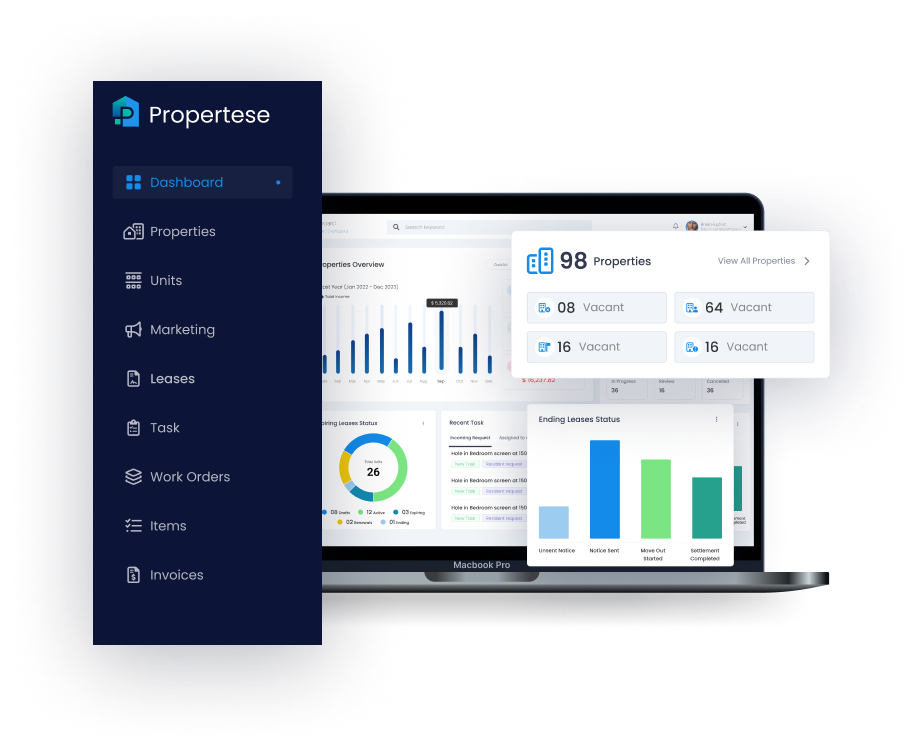
That’s exactly where Propertese comes in. Propertese property management software gives portfolio and debt leaders the operational visibility to track payment timing, monitor amortization across assets, and align their financing decisions with real-world cash flow dynamics.
Are you looking for real estate software to bring this level of clarity to your portfolio? Explore Propertese today.
Table of Contents
Stay Updated
Subscribe to get the latest news, industry trends, blog posts, and updates...