A good operating expense ratio depends on your asset type and market. In property management, multifamily assets often run between 35–45% of gross operating income, with some markets pushing higher during inflationary or deferred-maintenance cycles, while offices commonly sit around 35–55%; retail can vary widely depending on triple-net leases and tenant responsibilities, so “good” is relative to peers and leases in place. Many high-margin businesses target below 50% overall. There’s no universal target, benchmark locally and by property type to judge competitiveness and set goals.
Key takeaways:
- “Good” OER is context-specific; benchmark by asset type, lease structure, and local market.
- Typical ranges: Multifamily 35–45%; Office 35–55%; Retail varies by lease and tenant responsibility.
- Document what’s included/excluded (e.g., depreciation, one-time items) to keep comparisons consistent.
- Pair OER with occupancy, rent growth, and maintenance plans to identify drivers and protect NOI.
Defining the Operating Expense Ratio
The Operating Expense Ratio (OER) is a metric that compares the income a commercial property generates to the cost of operating it. OER is calculated as the ratio of total operating expenses to gross operating income, typically expressed as a percentage. Operating expenses typically include recurring costs such as repairs, insurance, property taxes, utilities, and management fees, and generally exclude loan payments, depreciation (depending on the calculation), and capital improvements.
In practice, property teams use the operating expense ratio to evaluate operational efficiency against property income across units, buildings, and portfolios. Because OER reduces complex cost structures to a single, comparable percentage, it’s a fast way to gauge whether operations are trending lean or bloated—and where to investigate further.
How to Calculate the Operating Expense Ratio
OER = Total Operating Expenses ÷ Gross Operating Income (expressed as a percentage)
Step-by-step:
- Compile annual operating expenses: maintenance, utilities, insurance, property taxes, payroll, and management fees. Exclude non-recurring items. Depending on your convention, you may exclude depreciation.
- Determine gross operating income for the same period: total rent and other recurring property income before operating costs.
- Divide expenses by income and multiply by 100 to get a percentage.
Important: Calculation conventions vary—some operators subtract depreciation while others don’t. Always document inclusions/exclusions so OERs are comparable across properties, time periods, and peer sets.
Why the Operating Expense Ratio Matters for Property Management
A lower OER generally signals a more profitable, efficiently managed property because a larger share of income remains as operating profit, lifting net operating income and, by extension, valuation. For owners and asset managers, the OER is a must-watch KPI because it supports:
- Investment comparisons: Rank assets by cost efficiency to prioritize capital and dispositions.
- Operational benchmarking: Compare against market averages and property-type norms to set realistic targets.
- Early cost detection: Spot rising utilities, insurance, or maintenance pressures before they erode margins.
Link OER to occupancy metrics, rent growth, and cost management plans to understand whether expense shifts stem from pricing, leasing, or operational drivers.
Benchmarks for a Good Operating Expense Ratio by Sector
Typical ranges vary by asset type and lease structure. Based on widely cited market ranges:
| Property Type | Typical OER Range |
|---|---|
| Multifamily | 35–45% (some markets >60%) |
| Office | 35–55% |
| Retail/Specialized | Varies widely (lease-driven, tenant responsibility) |
In high-margin sectors like SaaS, leadership teams often push for OERs below 50%, reflecting lean overhead relative to revenue. There is no universal “good” OER—your assessment should reference current, local peers, asset-weighted comparisons, and industry-specific benchmarks.
Limitations and Considerations When Using Operating Expense Ratios
OER is powerful but context-sensitive:
- Accounting differences can skew comparisons. Depreciation treatment, capitalization policies, or inclusion of one-time repairs can inflate or deflate the ratio.
- Short-term events distort trends. A major roof fix or a temporary vacancy can spike OER for a period without signaling chronic inefficiency.
- Use a basket of KPIs. Pair OER with cap rate, rent and revenue growth, occupancy, lease structure, and maintenance backlog to form a complete view.
Above all, be transparent and consistent in your category definitions and reporting cadence so internal and external comparisons stay apples-to-apples.
Using Operating Expense Ratio Insights to Improve Property Performance
Turn OER into action:
- Track with intent: Itemize recurring operating costs by category (utilities, repairs, payroll, insurance, taxes) and tag non-recurring items for clean analytics. For practical tips, see the best methods for tracking property expenses.
- Benchmark routinely: Compare by market, asset class, and vintage to set achievable targets and surface outliers.
- Pull operating levers: Use automation, vendor and supply renegotiation, energy-efficiency upgrades, preventive maintenance, and selective outsourcing to lower structural costs. Learn proven ways for property managers to lower maintenance expenses.
- Align with leasing: Optimize occupancy, reduce turnover costs, and strengthen expense pass-throughs where leases allow.
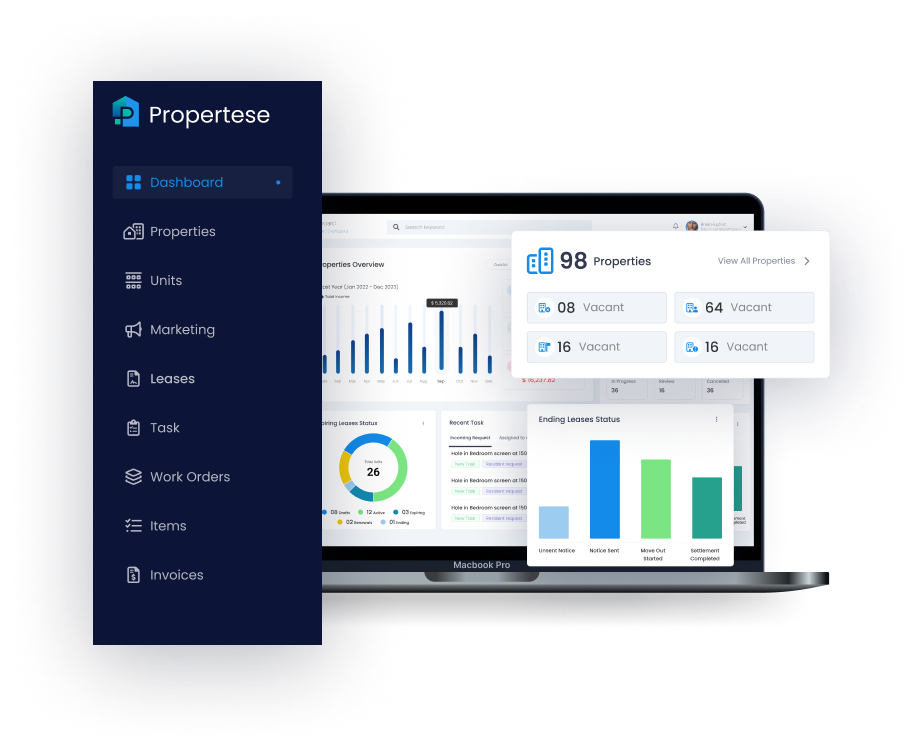
Proactive, technology-driven management compounds these gains. Propertese brings real-time portfolio visibility, automated lease-to-ledger workflows, and integrated OER insights so teams can act faster on trends and sustain improvements. For deeper discipline around dollars in and out, see our rental income accounting guide from Propertese.
Frequently Asked Questions about Operating Expense Ratio
What is the Operating Expense Ratio (OER)?
The Operating Expense Ratio measures the percentage of income a property or business spends on ongoing operating costs, calculated as operating expenses divided by gross operating income.
How do you calculate the Operating Expense Ratio?
Divide total operating expenses by gross operating income for the same period, then multiply by 100 to convert to a percentage.
What is a good Operating Expense Ratio?
Many businesses target below 50%; multifamily properties often fall between 35% and 45%, but the right target depends on local, asset-specific benchmarks.
Why does the Operating Expense Ratio matter?
It highlights cost efficiency and profitability, helping owners manage expenses, protect NOI, and make better investment and operational decisions.
What expenses are included in OER?
Recurring costs like repairs, utilities, insurance, property taxes, payroll, and management fees; it typically excludes loan payments, depreciation (by convention), and capital improvements.
How does OER differ from expense ratios in investments?
OER tracks operational efficiency relative to income for properties or businesses, while fund expense ratios capture management fees as a percentage of assets under management.
Table of Contents
Stay Updated
Subscribe to get the latest news, industry trends, blog posts, and updates...