A property manager runs a standard background check, finds a seven-year-old misdemeanor conviction, and denies the application based on their “no criminal history” policy. Two months later, they receive a discrimination lawsuit citing Fair Housing Act violations and demanding damages. The applicant’s attorney argues the blanket ban policy has a disparate impact on protected classes, and the case settles for $45,000.
This scenario plays out more frequently than most property managers realize. Background checks feel routine, even automatic, but the legal landscape around tenant screening has fundamentally shifted in recent years. What was standard practice five years ago can now trigger federal investigations, state penalties, and expensive litigation.
Whether you manage 20 units or 2,000, understanding what you can and cannot legally do during tenant screening is not just about compliance. It’s about protecting your business from devastating financial exposure while still finding qualified tenants who will pay rent on time and respect your properties.
What Federal Law Says About Property Management Background Checks
The Fair Credit Reporting Act (FCRA) governs how landlords and property managers can use background check information when making housing decisions. Enacted in 1970, the FCRA protects consumer information and ensures accuracy in screening reports.
According to the Federal Trade Commission, which enforces the FCRA, tenant background check reports are consumer reports. When you use these reports to evaluate applicants, you must comply with specific legal requirements at every stage of the process.
What Qualifies as a Consumer Report
A consumer report includes any information bearing on an applicant’s creditworthiness, character, general reputation, or personal characteristics when used for housing eligibility decisions. This encompasses:
Credit reports showing payment history, outstanding debts, bankruptcies, and credit scores
Criminal background checks revealing convictions, arrests (in some jurisdictions), and sex offender registry status
Eviction history reports documenting previous landlord-tenant court actions
Rental history verification from previous landlords and property managers
Employment and income verification confirming ability to pay rent
Any company that provides this information to landlords qualifies as a Consumer Reporting Agency (CRA) under the FCRA, even if they don’t traditionally think of themselves that way. This includes major screening companies and smaller regional providers.
The Three Mandatory Steps in FCRA-Compliant Screening
Step 1: Obtain Written Consent Before Running Checks
You cannot run a background check without the applicant’s explicit written permission. This consent must be clear, conspicuous, and separate from other application materials. Many property managers include a standalone authorization form that applicants sign before any screening begins.
The consent requirement serves a dual purpose. It ensures applicants know you’re checking their background, and it establishes that you have a permissible purpose for accessing their consumer report.
Step 2: Provide Pre-Adverse Action Notice
If information in the background check causes you to consider denying the application or offering less favorable terms (higher deposit, requiring a co-signer), you must provide a pre-adverse action notice. This notice gives applicants time to review the report and dispute any inaccuracies before you make a final decision.
The pre-adverse action notice must include a copy of the consumer report and a document explaining the applicant’s rights under the FCRA. Most screening companies provide the rights document automatically.
Step 3: Send Adverse Action Notice After Denial
When you deny an application based wholly or partially on information in a consumer report, federal law requires you to send a formal adverse action notice. This notice must include:
The name, address, and phone number of the screening company that provided the report
A statement that the screening company did not make the denial decision and cannot provide specific reasons
Notice of the applicant’s right to obtain a free copy of their report within 60 days
Notice of the applicant’s right to dispute inaccurate or incomplete information
Even if the background check information played only a small role in your decision, you must still provide the adverse action notice. The FCRA makes no exceptions for situations where the report was just one factor among many.
While oral adverse action notices are technically permitted, written notices create documentation of your compliance and better enable applicants to exercise their dispute rights. Always send adverse action notices in writing.
How the Fair Housing Act Restricts Criminal Background Checks
Beyond the FCRA’s procedural requirements, the Fair Housing Act (FHA) places substantive limits on how you can use criminal history information in housing decisions.
The FHA prohibits housing discrimination based on race, color, national origin, religion, sex, familial status, and disability. While criminal history is not itself a protected class, the U.S. Department of Housing and Urban Development has made clear that certain criminal background check policies violate the FHA through disparate impact.
HUD’s 2016 Guidance on Criminal Records
In 2016, HUD issued guidance clarifying that blanket bans on applicants with criminal records likely violate the Fair Housing Act. The guidance recognizes that criminal justice system involvement disproportionately affects racial minorities, meaning policies that automatically exclude anyone with a criminal record have a discriminatory, disparate impact on protected classes.
According to HUD guidance, two types of criminal history policies are particularly problematic:
Policies excluding applicants based on arrests not resulting in convictions. An arrest indicates only that someone was suspected of a crime, not that they committed one. Using arrests without convictions in housing decisions has a disparate impact and cannot be justified as necessary to protect resident safety or property.
Blanket bans automatically denying anyone with any conviction. These policies fail to distinguish between applicants who may pose a legitimate risk and those who do not. Courts consistently find that blanket bans have an unjustified disparate impact on protected classes.
The Individualized Assessment Requirement
Instead of blanket bans, property managers must conduct individualized assessments when considering criminal history. This means evaluating each applicant’s specific circumstances, including:
Nature and severity of the criminal conduct. A violent felony presents different considerations than a non-violent misdemeanor.
How much time has passed since the conduct or conviction. A 10-year-old conviction is less relevant than one from last year.
Evidence of rehabilitation. Has the applicant completed treatment programs, maintained employment, or shown other signs of changed circumstances?
The relationship between the conviction and tenant responsibilities. Does the criminal history reasonably relate to concerns about property damage, resident safety, or financial obligations?
Individualized assessments take more time than automatic denials, but they reduce Fair Housing Act violation risk while still allowing you to make informed decisions about applicant suitability.
What You Can Still Consider Legally
The Fair Housing Act does not prohibit all use of criminal history in tenant screening. Property managers may still deny applicants based on:
Convictions for illegal manufacture or distribution of controlled substances. This exception appears in the Fair Housing Act itself and cannot be challenged even if it creates disparate impact.
Lifetime sex offender registry status. HUD guidance permits automatic denial of applicants required to register as sex offenders for life.
Recent relevant convictions after individualized assessment. When the conviction relates to property safety or financial reliability, and the timeframe is reasonably recent, denial may be justified if based on individualized review rather than blanket policy.
The key distinction is between categorical exclusions (which violate the FHA) and case-by-case determinations that consider the specific facts of each applicant’s situation.
New York City’s Fair Chance Housing Law Changes Everything
As of January 1, 2025, New York City implemented one of the nation’s most restrictive criminal background check laws for housing. The Fair Chance for Housing Act (Local Law 24) fundamentally changes when and how landlords can use criminal history information.
What NYC’s Law Prohibits
Under the Fair Chance Housing Law, covered housing providers cannot ask about criminal history in initial applications or advertisements. You cannot include language like “no criminal background” or “must pass background check” in rental listings.
You cannot run a criminal background check until after you have reviewed the applicant’s general eligibility (income, rental history, credit) and made a conditional offer of housing. This “ban the box” approach prevents criminal history from automatically eliminating applicants before you assess their qualifications.
The law also severely limits what criminal records you can consider even after making a conditional offer. You cannot review:
Arrests without convictions
Pending criminal cases
Adjournments in Contemplation of Dismissal (ACDs)
Convictions that have been sealed, expunged, or vacated
Youthful offender adjudications
Most felony convictions more than five years old
Most misdemeanor convictions more than three years old
These timeframes start from release from incarceration or sentencing, not from the date of the offense.
What NYC Landlords Can Still Consider
After making a conditional offer and waiting the required time period, NYC landlords can review:
Convictions requiring registration on a sex offender registry
Felony convictions within five years of release or sentencing
Misdemeanor convictions within three years of release or sentencing
Even when these convictions appear on a background check, you cannot automatically deny housing. You must provide written notice explaining why the conviction relates to a legitimate business interest, give the applicant at least three business days to respond with mitigating information, and make an individualized determination based on the complete application.
Other Cities and States with Fair Chance Laws
New York City is not alone in restricting criminal background checks. According to the Urban Institute’s 2025 analysis, at least 15 jurisdictions have enacted Fair Chance housing laws:
Seattle, Washington enacted Fair Chance housing protections in 2017, though court rulings have limited enforcement
Portland and statewide Oregon prohibit blanket bans and require individualized assessments with specific time limitations
Cook County, Illinois (Chicago area) restricts criminal history consideration
Richmond, Virginia prohibits affordable housing developments from denying applicants based on criminal history
New Jersey statewide law prevents housing providers from asking about criminal records before conditional offers
Each jurisdiction has different requirements, so property managers operating in multiple markets must comply with the most restrictive law applicable to each property.
State-Specific Screening Fee Limits and Disclosure Requirements
Beyond federal Fair Housing and FCRA requirements, states impose varying limits on what you can charge for application screening and what disclosures you must provide.
California’s 2025 Screening Fee Cap
California limits application fees to actual screening costs or a statutory maximum, whichever is less. As of January 2025, that maximum is $62.02 per applicant, adjusted annually for inflation.
California also prohibits charging application fees when no units are available. If you collect a fee and don’t use it for actual screening costs, you must refund the unused portion.
The state’s complex criminal history regulations also restrict what landlords can consider in background checks. California prohibits using arrests without convictions and requires individualized assessments for conviction records. Given these complexities, the California Apartment Association recommends landlords consult with fair housing attorneys before implementing criminal background check policies.
New York’s Application Process Rules
New York limits security deposits to one month’s rent (a major change effective June 2024) and caps screening fees at $20 or the actual cost of the background check, whichever is less. The fee is non-refundable and separate from the security deposit.
New York also requires landlords to process applications in the order received. You must evaluate the first qualified applicant who meets your written criteria before considering others.
Other State Requirements to Know
Most states require written consent before running background checks, though the specific language varies. Some states mandate specific disclosures about what information will be checked and how it will be used.
Property managers operating across multiple states should establish consistent screening procedures that comply with the strictest applicable requirements. This reduces the risk of accidentally violating a state law by following a less restrictive jurisdiction’s standards.
What Screening Companies Can and Cannot Report
The FCRA limits how long negative information can appear in consumer reports. These time restrictions apply to what screening companies can legally report, not to underlying public records.
Seven-Year Reporting Limits
Consumer reporting agencies generally cannot report the following if older than seven years:
Civil lawsuits and judgments, including housing court cases
Most paid tax liens
Accounts placed in collection
Records of arrest (in states where reporting arrests is permitted)
Completed bankruptcies (Chapter 13)
Ten-Year Bankruptcy Reporting
Chapter 7 bankruptcies can be reported for 10 years from the filing date.
No Time Limit for Criminal Convictions
The FCRA imposes no time limit on reporting criminal convictions. Screening companies can report convictions from any time period, regardless of how long ago they occurred.
However, some state laws impose stricter limits. California, for example, restricts reporting of most criminal convictions to seven years, though certain serious offenses can be reported longer. These state laws only apply if enacted before September 30, 1996. Federal law preempts newer state time restrictions.
The fact that screening companies can report old convictions does not mean property managers should use them in decisions. Fair Housing considerations require individualized assessment of whether old convictions remain relevant to current tenant suitability.
Common Background Check Mistakes That Create Legal Liability
Property managers often violate background check requirements without realizing it. Here are the most frequent mistakes and how to avoid them.
Running Checks Without Written Consent
Some property managers assume verbal permission or a general application signature suffices. It does not. The FCRA requires explicit written authorization specifically for obtaining consumer reports. This authorization should be a standalone document or clearly separated section of the application form.
Without proper consent, you have no permissible purpose for accessing the background check, and both you and the screening company can face FCRA liability.
Skipping Pre-Adverse Action Procedures
Many property managers jump directly from reviewing a problematic background check to denying the application. This violates FCRA requirements.
You must provide the pre-adverse action notice with a copy of the report and FCRA rights document, then wait a reasonable period (typically 5-7 days) before making a final decision. This allows applicants to identify and dispute errors before you deny them.
Skipping this step can result in FCRA violations even when the information in the report was accurate and the denial was justified.
Using Arrest Records Without Convictions
Arrests without convictions violate Fair Housing Act guidance because they provide no reliable information about whether the person committed a crime. Innocent people are arrested regularly. Using arrests in housing decisions creates disparate impact on protected classes without justification.
If arrest records appear in background checks, you cannot use them in screening decisions. Focus only on actual convictions when evaluating criminal history.
Implementing Blanket Ban Policies
“No felonies” or “no criminal history” policies are blanket bans that violate Fair Housing guidance. These policies automatically exclude applicants without considering individual circumstances, creating unjustified disparate impact.
Replace blanket bans with written criteria that require individualized assessment. Your policy should specify what types of convictions are relevant to tenant responsibilities, how recent they must be to matter, and what mitigating factors you will consider.
Failing to Document Individualized Assessments
Even when you conduct individualized assessments, failure to document your reasoning creates Fair Housing liability. If an applicant later claims discrimination, you need written evidence showing you considered specific factors rather than making arbitrary decisions.
Document what conviction information you reviewed, what mitigating factors the applicant provided, why the conviction does or does not relate to legitimate housing concerns, and how you reached your final decision.
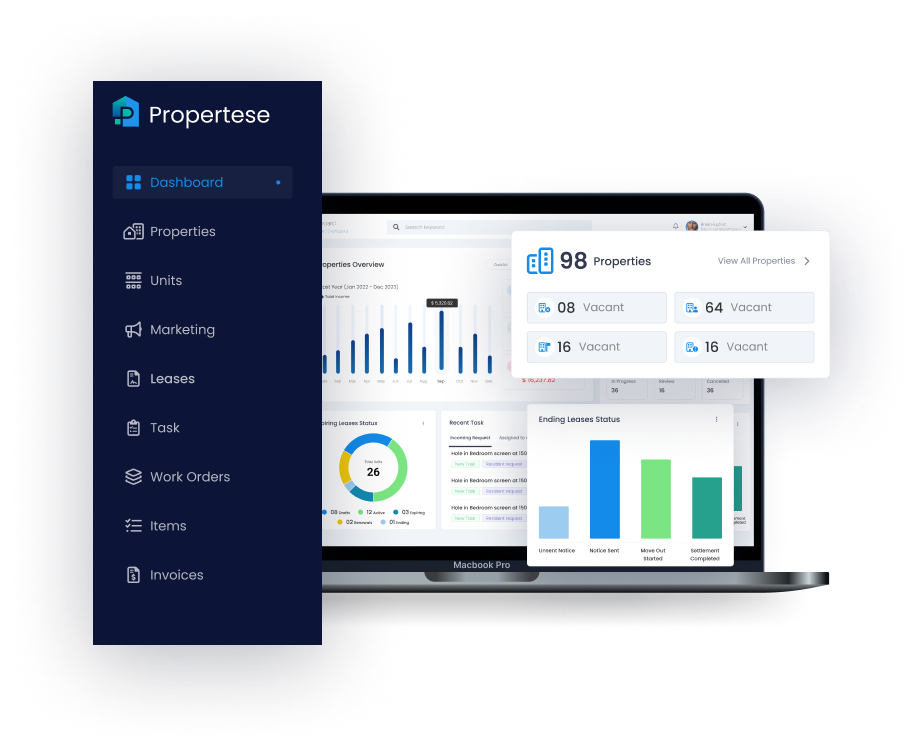
Modern property management software with built-in applicant tracking can standardize this documentation process, ensuring every screening decision is properly recorded and defensible.
How Technology Reduces Background Check Compliance Risk
Managing FCRA and Fair Housing compliance manually across dozens or hundreds of applications creates enormous risk. A single missed deadline, forgotten notice, or inconsistent application of criteria can trigger violations.
Property management platforms solve this by automating the compliance steps that create the most liability exposure.
Automated Consent and Disclosure Management
When applicants submit applications through a digital leasing platform, the system can require them to review and accept screening authorization before proceeding. This ensures you obtain proper written consent for every background check without relying on staff to remember the requirement.
The platform stores the signed authorization with timestamp and date, creating permanent documentation of compliance.
Built-In Adverse Action Workflows
Instead of manually tracking which applicants need pre-adverse action notices and when to send final adverse action letters, property management software automates these workflows.
When you mark an application as “pending denial” based on background check information, the system generates the required pre-adverse action notice with the screening report and FCRA rights document attached. It sets a reminder for the mandatory waiting period, then prompts you to either proceed with denial (triggering automatic adverse action notice generation) or approve the applicant if they dispute the information.
This automation eliminates the most common FCRA violation: skipping required notices because you forgot or didn’t know they were mandatory.
Consistent Application of Screening Criteria
Fair Housing violations often result from inconsistent application of policies. One applicant with a five-year-old misdemeanor gets approved while another with similar history gets denied, creating evidence of discriminatory treatment.
Property management platforms with applicant scoring or evaluation tools ensure you apply the same criteria to every applicant. The system flags criminal history that requires individualized assessment, prompts you to document your reasoning, and maintains records showing consistent treatment across all applications.
Secure Storage of Screening Reports
The FCRA requires proper safeguarding of consumer report information. Leaving printed background checks in desk drawers or storing them in unsecured email accounts violates these requirements.
Document management systems encrypt and secure all screening reports, limiting access to authorized users and maintaining audit trails of who viewed what information and when. This protects applicant privacy while demonstrating compliance with data security obligations.
Your Background Check Compliance Checklist
Follow this process for every rental application to ensure FCRA and Fair Housing compliance:
Before Screening
Create written tenant selection criteria specifying income requirements, credit standards, rental history expectations, and how you will evaluate criminal history through individualized assessment. Provide these criteria to all applicants so they understand your standards.
Review all federal, state, and local laws applicable to your properties. Fair Chance housing laws, screening fee caps, and disclosure requirements vary significantly by jurisdiction.
Choose an FCRA-compliant screening company that provides adverse action notice templates and FCRA rights documents automatically.
During Application Review
Obtain written consent before running any background check. Use a standalone authorization form that clearly explains what information you will access and how it may be used.
Evaluate non-criminal qualifications first (income, credit, rental history). In jurisdictions with Fair Chance laws, make a conditional offer before running criminal background checks.
Run the background check only after obtaining consent and establishing that the applicant meets your non-criminal criteria.
After Receiving Background Check Results
Review the complete report for accuracy. Look for obvious errors like wrong names, addresses, or dates that suggest information may belong to someone else.
If information in the report could lead to application denial or less favorable terms, immediately send the pre-adverse action notice with a copy of the report and FCRA rights document.
Wait 5-7 business days before making a final decision. This gives applicants time to dispute errors or provide mitigating information.
If the applicant disputes information, wait for the screening company to complete its reinvestigation before proceeding.
Making Your Final Decision
Conduct an individualized assessment for any criminal history. Document the nature and severity of the offense, the time passed since conviction, evidence of rehabilitation, and the relationship to tenant responsibilities.
Consider any mitigating information the applicant provided. Has their life situation changed since the conviction? Do they have strong rental references or a stable employment history?
Make your decision based on the complete application, not solely on the existence of a conviction.
After Denial
If you deny the application based wholly or partially on background check information, send a formal adverse action notice within a reasonable time period (typically 3-5 business days).
Ensure the notice includes all required elements: screening company contact information, a statement that they didn’t make the decision, the applicant’s right to a free report within 60 days, and the right to dispute inaccuracies.
Retain copies of all screening documentation, notices, and decision rationale for at least two years (longer in some states) in case of later disputes or audits.
The Bottom Line on Background Check Compliance
Background check requirements have become significantly more complex over the past decade. What used to be a simple matter of running a criminal check and making a yes-or-no decision now requires navigating federal FCRA procedures, Fair Housing Act disparate impact analysis, and increasingly restrictive state and local Fair Chance laws.
Property managers who continue using outdated blanket ban policies or who skip required FCRA notices are not just risking compliance violations. They are exposing their businesses to discrimination lawsuits, government investigations, and settlements that can reach tens or hundreds of thousands of dollars.
The good news is that compliance does not require abandoning background checks entirely or accepting every applicant regardless of history. You can still screen for criminal history that genuinely relates to tenant suitability. You simply must do it properly: obtaining consent, providing required notices, conducting individualized assessments, and documenting your reasoning.
The property managers succeeding in this environment are those who have built systematic compliance processes that work the same way for every applicant, every time. They use written criteria applied consistently. They document everything. And increasingly, they rely on technology to automate the procedural requirements that create the most liability when done manually.
If you are still handling background checks through informal processes, scattered paperwork, and case-by-case decisions made without documentation, now is the time to upgrade your approach. The regulatory environment is only getting stricter, and the financial consequences of violations continue growing.
Contact Propertese today to see how our platform automates FCRA notices, standardizes applicant evaluation, and maintains the documentation you need to defend every screening decision.
Table of Contents
Stay Updated
Subscribe to get the latest news, industry trends, blog posts, and updates...