Navigating Emotional Support Animal (ESA) and assistance animal accommodation requests is a growing challenge for landlords and property managers. The mix of federal protections, tenant expectations, and evolving documentation rules makes manual tracking nearly impossible. Real estate CRM software and animal accommodation management software can turn this compliance maze into a simple and transparent workflow. This playbook explains what every landlord needs to know about ESA and assistance animal management and how platforms like Propertese help property owners stay compliant, efficient, and responsive.
Key takeaways:
- Set a clear ESA and assistance animal policy before the first request
- Centralize requests, documents, and decisions in one system
- Verify ESA letters to reduce fraud and protect revenue
- Track response times, outcomes, and costs across the portfolio
Understanding ESA and assistance animal accommodation requirements
An Emotional Support Animal provides comfort that eases symptoms of a mental or emotional disability. An assistance animal, often called a service animal, is trained to perform tasks for individuals with disabilities. While pets are subject to property rules and fees, ESAs and assistance animals receive legal protection under federal housing law.
Under the Fair Housing Act (FHA), landlords must make reasonable accommodations for disabled tenants who depend on these animals. This can include waiving pet fees, adjusting restrictions, or providing specific unit modifications when appropriate.
| Category | Description | Legal Protection | Documentation Typically Required |
|---|---|---|---|
| Pet | Companion or recreational animal | None under FHA | Rental/lease agreement |
| ESA | Provides emotional support; not trained for specific tasks | FHA protection | Letter from licensed healthcare provider |
| Assistance/Service Animal | Trained to perform disability-related tasks | ADA & FHA protection | Proof of training not required for housing, but function must be documented |
Legal framework for ESA and assistance animals in rental properties
The Fair Housing Act prohibits housing discrimination based on disability and requires landlords to permit qualifying assistance animals, including ESAs. However, accommodations may be denied if a specific animal poses a direct threat to health or safety or would cause substantial property damage. For a deeper overview, see our guide to fair housing laws for property managers.
Some edge cases like multiple animals, nontraditional species, or requests involving miniature horses may require legal interpretation. In these cases, landlords should consult counsel before making a final determination.
Challenges landlords face with ESA and assistance animal requests
ESA requests can be complex and financially significant. Many ESA letters are fraudulent or unsupported, which creates compliance and revenue risks. Common challenges include:
- Fraudulent ESA documentation and unclear verification standards
- Reduced rental revenue from waived pet fees
- Documentation management gaps that create audit exposure
- Balancing tenant experience with operational and property protection
Without a structured process, even well intentioned landlords risk noncompliance or tenant disputes.
Benefits of using real estate CRM software for ESA management
Modern animal accommodation management software, like Propertese, Salesforce, or Zoho, centralize communication, automate task flows, and maintain full audit trails. These systems remove manual tracking and ensure transparency.
Key advantages include:
- Automated intake and tracking of ESA/accommodation requests
- Centralized document and communication histories
- Integration with verification and pet management tools
- Configurable approval workflows and audit logs
By combining compliance tracking and tenant management in one platform, landlords can minimize risk while improving response times. With Propertese, these functions connect directly with maintenance, leasing, and financial data, which gives managers a single, reliable system of record.
Step 1: Establishing a clear ESA and assistance animal policy
A strong policy sets the tone for consistency and fairness. It should:
- Define what qualifies as a reasonable accommodation
- Outline documentation requirements and response timelines
- Address exceptions involving safety risks or property damage
- Reference the Fair Housing Act and applicable state regulations
A basic policy structure might include sections on definitions, documentation, evaluation process, approval or denial communication, and ongoing compliance obligations.
Step 2: Configuring CRM systems for ESA request intake and tracking
Once a policy exists, translate it into your CRM workflow. Within Propertese and similar animal accommodation management software:
- Create custom ESA or accommodation request forms.
- Enable secure document uploads for verification materials.
- Automate responses that acknowledge receipt.
- Route requests to designated reviewers or legal advisors.
| ESA Request Workflow | CRM Action |
|---|---|
| Tenant submits request | Digital form captured in CRM |
| System validates completeness | Triggers auto response |
| Staff reviews documentation | Routes to compliance queue |
| Decision issued | Logged with timestamp and notes |
Step 3: Integrating verification platforms to authenticate ESA documentation
Pair animal accommodation management software with verification tools such as LandlordTech or PetScreening to add an essential authentication layer. These integrations:
- Validate healthcare provider credentials
- Detect template or fraudulent ESA letters
- Associate verified animals with tenant records
In Propertese, integration with verification systems allows invalid claims to revert automatically to standard pet agreements, which recovers potential revenue and maintains fairness.
Step 4: Using CRM workflows to document decisions and maintain compliance
A defensible compliance trail is critical. Animal accommodation management software automatically stores:
- Decision history (approval, accommodation, or denial)
- Communication logs with tenants
- Justifications for each outcome
A typical documentation checklist includes:
| Stage | Required Records |
|---|---|
| Request submission | Tenant form, date stamp |
| Review & verification | Provider letter, validation notes |
| Decision & notification | Approval or denial letter, workflow signatures |
| Ongoing tracking | Incident or maintenance reports |
Propertese automates each record keeping step, which ensures accuracy and readiness for audits.
Step 5: Enforcing accommodation terms and managing ongoing compliance
After approval, landlords must ensure animals remain compliant with property rules. Animal accommodation management software can log behavioral issues, damage reports, and renewal deadlines.
For example, Propertese dashboards track:
- Cleaning or repair costs related to ESA units
- Behavior or noise complaints
- Expired or invalid ESA documentation
Automated alerts notify managers when follow ups are due or when a claim should revert to a regular pet agreement, which reduces manual oversight.
Step 6: Training staff and conducting regular policy audits with CRM tools
Compliance is only as strong as the staff behind it. Ongoing training should cover:
- Legal updates and reasonable accommodation requirements
- CRM workflows for intake and tracking
- Fraud detection protocols
Establish quarterly audits to check for:
- Response and review times
- Verification success rates
- Trends in denied or converted requests
| Audit Element | Frequency | Owner |
|---|---|---|
| Policy review | Quarterly | Compliance Manager |
| Workflow update | Semiannually | System Admin |
| Staff refresh training | Quarterly | HR/Training |
Propertese provides built in reporting views that make these audits faster and more consistent across teams.
Key metrics and risk management in ESA accommodation
Monitoring clear performance metrics protects landlords and builds defensible compliance evidence. Track the following:
- Average response time to ESA requests
- Verification pass or failure rates
- Total recovered revenue from invalid claims
- Number of accommodation disputes or appeals
- Reported property damage incidents
A property wide Propertese dashboard in animal accommodation management software can visualize these KPIs and flag anomalies for review by compliance officers or portfolio managers.
How Propertese enhances ESA and assistance animal management
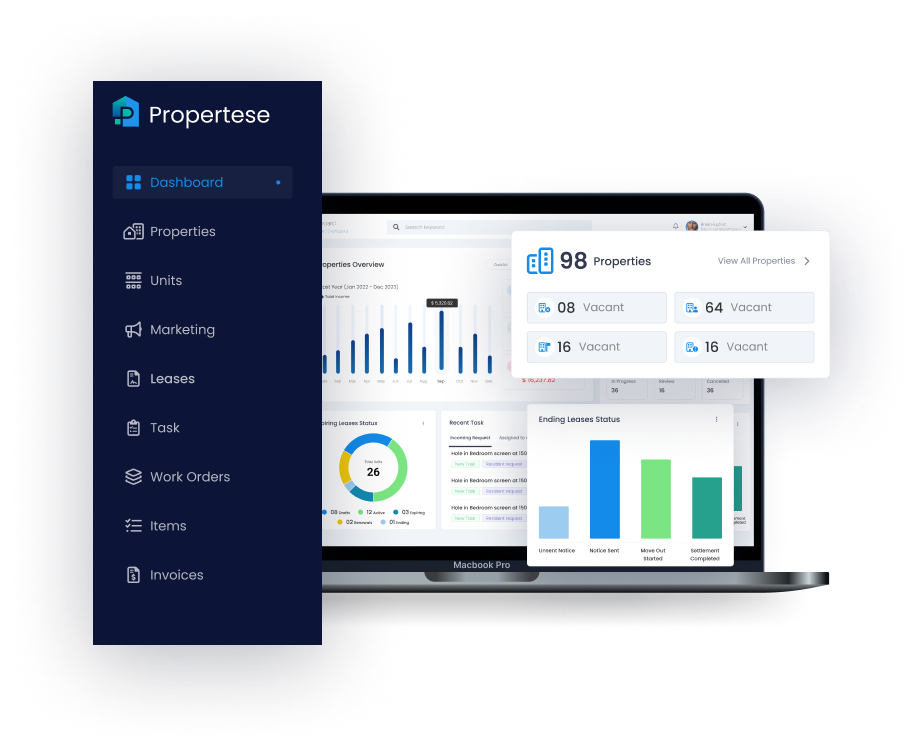
Propertese unifies every step of ESA and assistance animal management, housing documentation, workflow automation, and compliance monitoring, in a single platform. Its configurable dashboards and e signature tools accelerate approvals and improve transparency. By consolidating maintenance, lease, and incident data, it provides landlords with total visibility and fewer compliance errors. Propertese’s real time reporting and integrated support help property teams adapt to evolving laws and handle every accommodation request with confidence and consistency.
Frequently asked questions
What documentation can landlords require for ESA or assistance animal accommodation?
Landlords may request reliable documentation from a qualified healthcare provider verifying a disability related need, without seeking full medical details.
How do landlords handle fraudulent or unsupported ESA claims?
Landlords should use verification and property management software like Propertese to authenticate documentation and manage unsupported requests according to policy.
Can landlords charge fees for ESA or assistance animals?
Pet fees cannot be charged for legitimate ESAs or assistance animals, but costs for damages beyond normal wear and tear remain recoverable.
What are reasonable accommodations landlords must provide for assistance animals?
Reasonable accommodations include waiving pet restrictions or fees unless the animal threatens safety or causes undue property damage.
How can CRM software improve compliance and tenant communication for ESA accommodations?
CRM solutions like Propertese centralize submissions, automate decision records, and standardize communication, which helps maintain compliance and responsiveness across every property.
Conclusion
Choosing the right system for ESA and assistance animal workflows protects your residents and your properties. Propertese brings policies, documents, reviews, and audits into one place so teams can respond fast, stay compliant, and reduce disputes. If you want a simple path to consistent ESA decisions across your portfolio, choose Propertese as your animal accommodation management software and move forward with confidence.
Table of Contents
Stay Updated
Subscribe to get the latest news, industry trends, blog posts, and updates...