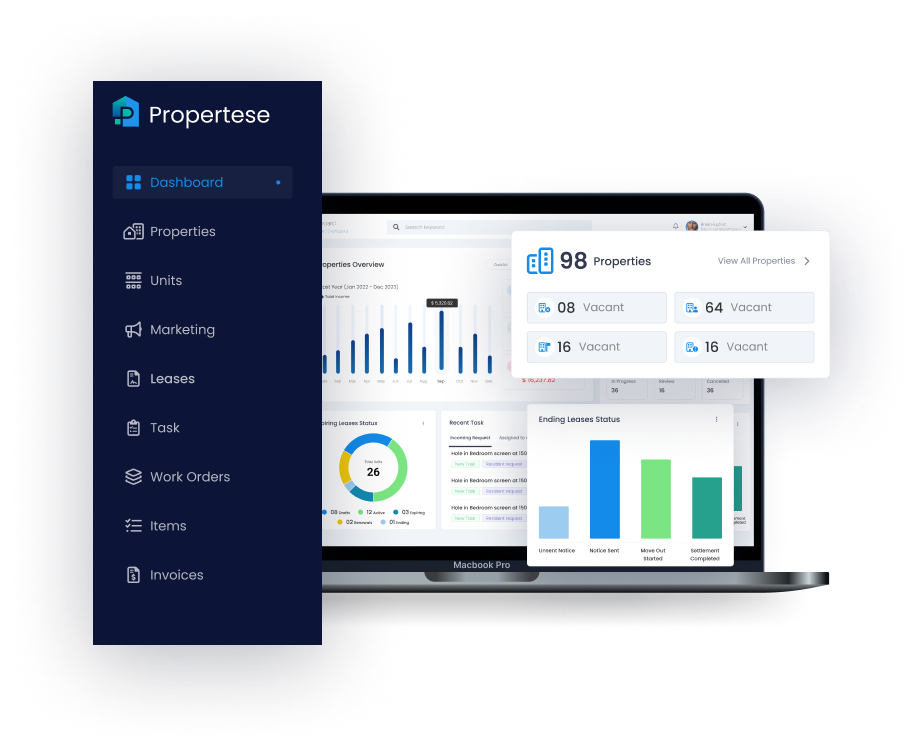
Affordable housing compliance has grown increasingly complex as regulatory programs expand across federal, state, and local jurisdictions. For property owners and managers, manual data tracking and reports are not sustainable. Affordable housing compliance software serves as the essential bridge, automates certifications, calculations, and reports while it maintains rigorous audit trails. This guide outlines what these systems do, the features that matter most, and how to select and implement a platform that keeps your portfolio compliant and efficient. Affordable Housing Compliance Software gives owners and managers a clear path to stay compliant.
Key takeaways:
- Automate certifications, rent rules, and reports to cut errors and save time
- Seek direct HUD TRACS connectivity and strong accounting integrations
- Use dashboards and audit logs to support faster reviews
- Confirm security, scale, and vendor support before rollout
What is affordable housing compliance software?
Affordable Housing Compliance Software automates data collection, workflows, and reports required to maintain regulatory adherence for programs such as LIHTC, HUD Multifamily, Section 8, and USDA Rural Development.
Unlike general property management tools, this software connects directly with compliance portals like HUD’s TRACS, manages subsidy logic, and generates audit ready reports. It tracks income eligibility, household certifications, and rent calculations. These tasks would otherwise require hours of manual oversight.
Adoption continues to accelerate as oversight tightens, program layered funding expands, and data accuracy demands increase. Without automation, property teams risk missed deadlines, inconsistent eligibility determinations, and audit exposure.
Core features to prioritize for compliance
To maintain smooth operations and dependable audit results, an effective compliance platform should combine automation, integration, and transparency. The table below highlights essential capabilities to look for.
| Feature | Description |
|---|---|
| HUD TRACS and subsidy portal integration | Automatic file generation and submission to HUD and other agencies to reduce manual data entry errors. |
| Waitlist management system | Timestamped applications, preference records, and transparent selection logs to demonstrate fair housing compliance. |
| Automated recertification and alerts | Scheduled notifications for renewals, lease expirations, and compliance events keep deadlines on track. |
| Compliance dashboards and customizable reports | Real time metrics for auditors and funders covering LIHTC, HOME, and voucher program requirements. |
| Secure data permissions and import/export tools | Protects tenant records and enable secure data exchange with accounting or government platforms. |
| Centralized document management | Timestamped, secure storage with complete audit trails for certifications, communications, and lease documentation. |
Collectively, these features form the foundation of an audit ready and compliant operation. They simplify daily workflows and reinforce data integrity. Propertese unifies these functions within its Affordable Housing Compliance Software platform, and it provides real time visibility across compliance and property operations.
Why automation and integration matter in affordable housing compliance
Automation eliminates repetitive, time sensitive tasks like recertification reminders and TRACS file generation. Integration ensures your accounting, resident, and compliance data stay synchronized.
A system that automatically generates HUD TRACS submissions can save staff significant time each week and virtually eliminate transposition errors. Before automation, teams often relied on spreadsheets, emails, and manual uploads. After automation, workflows align within one platform: alerts trigger instantly, and reports are generated on demand.
Seamless integration not only reduces redundancy but also guarantees that every update from income data to occupancy changes flows accurately across your operational stack to support precision and audit readiness. Propertese embeds compliance workflows directly within its ERP integrated property management system to ensure accuracy without manual data transfers. Affordable Housing Compliance Software ties automation and integration into one system.
Step-by-step guide to selecting the right software
Selecting the right Affordable Housing Compliance Software platform requires a structured evaluation approach. Follow these steps:
- Define program scope and scale. Identify which programs (LIHTC, Section 8, HUD, USDA) and how many units you must support.
- Verify key integrations. Look for HUD compliant platforms that offer direct TRACS uploads and accounting connectivity.
- Test audit workflows. Request sample reports, TRACS exports, and audit log demonstrations.
- Evaluate security and scalability. Confirm encryption, role based permissions, and cloud reliability.
- Plan migration and training. Plan data migration and staff training. Set clear timelines for data transfer and user setup before full rollout.
- Pilot the system. Run limited tests to validate performance and confirm certification accuracy.
As part of every evaluation, confirm vendor references, request sandbox access, and review documentation that shows regulatory expertise. Propertese provides guided implementation and ERP level integration support to maintain compliance from day one.
Evaluating integrations and reporting capabilities
Integration and reporting determine how well a compliance system supports your operations. A mature Affordable Housing Compliance Software solution connects with the most important systems. Confirm that the platform connects with:
- Accounting software (ERP) such as NetSuite or Xero
- Government portals including HUD TRACS and state housing agencies
- Electronic signature tools such as DocuSign
- Marketplaces used for waitlist and applicant visibility
For a deeper look at how signatures can support audits, see 5 ways Propertese DocuSign integration improves lease signing compliance: https://propertese.com/blog/5-ways-propertese-docusign-integration-improves-lease-signing-compliance/
For reporting, review whether the system provides on demand dashboards for program specific compliance and performance KPIs. Ask vendors for example exports or a live dashboard demo. The ability to filter and format TRACS, LIHTC, or voucher data for auditors is a defining trait of a mature, HUD compliant solution. Propertese’s dashboards sync financial and compliance data automatically and give managers a single source of truth.
Assessing security, scalability, and vendor support
Your Affordable Housing Compliance Software must protect sensitive resident data and scale seamlessly as your portfolio grows.
- Security: Confirm encryption standards, role based permissions, and multi factor authentication.
- Scalability: Cloud infrastructure should support growth without compromising performance or data reliability.
- Vendor support: Verify availability, update cadence, and responsiveness to regulatory changes such as HOTMA or TRACS updates.
A dependable software partner offers helpdesk access, regulatory training, and proactive compliance updates. Propertese provides continuous release updates and dedicated support to keep clients aligned with new housing regulations.
Planning migration, staff training, and implementation
Implementation success depends on preparation. Start with a migration plan that cleans existing data and sets realistic go live milestones.
Train staff early through role based courses and vendor led sessions for compliance modules. Before full deployment, pilot critical workflows, such as household certification and rent calculation, to validate results.
Use a property management compliance calendar to map deadlines and tasks: https://propertese.com/blog/property-management-compliance-calendar/
Document your procedures and track user education through the platform’s log tools. This record keeping can later serve as evidence of diligence during audits.
Tips for maintaining compliance beyond software
Software builds the infrastructure for compliance, but consistent processes sustain it. Keep standardized selection criteria, written policies, and a regular training schedule.
Conduct internal self audits regularly, and monitor dashboard alerts for discrepancies before external reviews. For state rules, review California property management requirements: https://propertese.com/blog/california-property-management-requirements/ and Illinois property management regulations: https://propertese.com/blog/illinois-property-management-regulations/. By combining disciplined operations with integrated tools like Propertese, compliance becomes a proactive, continuous practice.
Frequently asked questions about affordable housing compliance software
What key features should I look for in compliance software?
Prioritize automated HUD TRACS integration, robust waitlist tracking, secure document management, custom reporting, and accounting system connectivity. Propertese includes all these functions in one centralized interface.
How does affordable housing software ensure regulatory compliance?
It automates certification cycles, maintains audit ready records, and generates HUD and related program files in real time.
What types of affordable housing programs do these solutions support?
Most solutions support LIHTC, HUD Multifamily, HOME, Section 8, and USDA Rural Development within one platform. Propertese consolidates these in a unified dashboard linked to your ERP.
How do updates like HOTMA and TRACS affect software choice?
Choose a vendor that delivers automatic regulatory updates and publishes transparent release notes to ensure ongoing compliance.
What pricing models are typical for affordable housing compliance software?
Subscription models based on unit or property count are most common, often tiered for portfolio size and feature needs.
Conclusion
Affordable Housing Compliance Software acts as the backbone for accurate certifications, clear audits, and steady portfolio health. If you want a single system that aligns compliance, property, and financial data without manual transfers, consider Propertese. Our team can walk your staff through setup, training, and go live so you can focus on residents and results.
Table of Contents
Stay Updated
Subscribe to get the latest news, industry trends, blog posts, and updates...