Proactive lease renewal pipeline management is one of the most effective ways to safeguard portfolio value, strengthen tenant relationships, and prevent costly occupancy gaps. For multi-entity property organizations, teams manage dozens or thousands of leases near expiry and need structure and consistency. A milestone-driven alert and workflow system built around 90, 120, and 180-day notice periods gives the visibility and automation needed to manage renewals with less effort.
This article explains how to create a scalable, automated renewal framework that blends notifications, expiry tracking, and templated workflows, and how a connected real estate ERP like Propertese helps property teams replace fragmented spreadsheets with a unified, compliance-ready lease renewal pipeline.
- Key takeaways:
- Start early with 180, 120, and 90-day milestones to protect revenue
- Standardize lease data to power automation and reduce errors
- Role-based workflows with SLAs and escalations keep tasks on time
- Integrate accounting and CRM to keep one source of truth
- Measure KPIs and refine alerts and templates to improve results
Strategic overview
In property management, the difference between seamless renewals and lost revenue usually comes down to timing. Lease renewal pipeline management adds that timing discipline, with checkpoints before leases expire and clear workflow stages.
By structuring the lease lifecycle into milestone windows of 180, 120, and 90 days before expiry, organizations anticipate tenant needs, reduce vacancy risks, and keep financial forecasts aligned. Stage-defined workflows reduce missed deadlines and increase engagement.
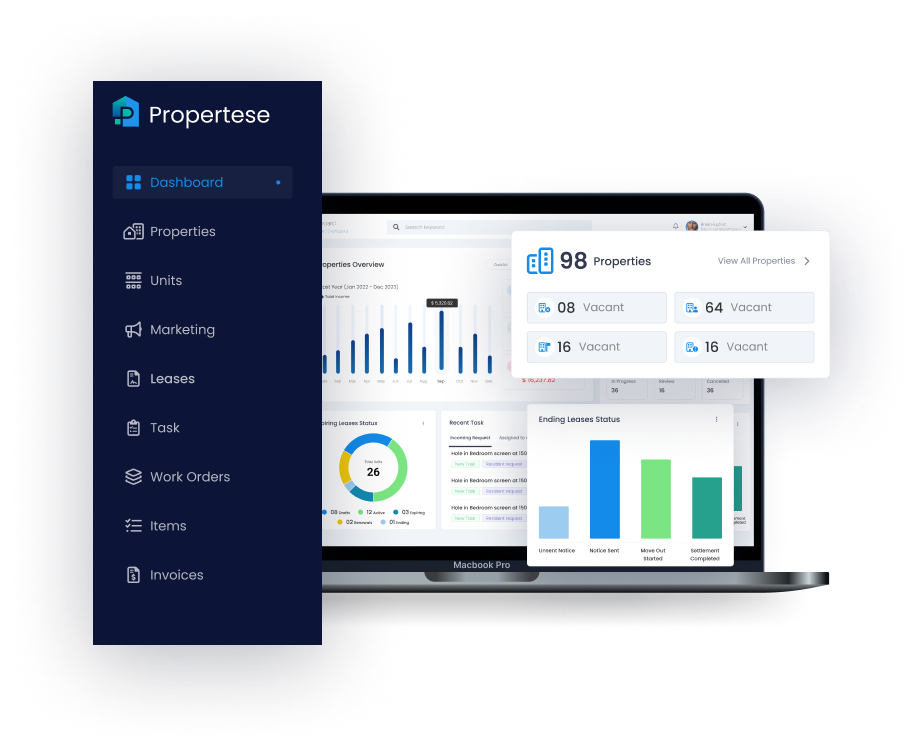
Propertese brings these approaches into one dashboard, integrating expiry tracking, renewal tasks, and automated alerts. The result is a resilient, compliant, and scalable operation with less administrative friction and clearer accountability.
Inventory and normalize lease data
Every effective lease renewal pipeline management plan starts with accurate, standardized data. Normalizing lease details ensures that automation runs smoothly and that all stakeholders work from the same version of each agreement.
Lease normalization aligns core variables such as start dates, expirations, renewal options, notice periods, and party names. This consistency lets automation rules run reliably across the portfolio, supporting alerts, analytics, and role assignments.
A minimal data model might include:
| Lease ID | Expiry Date | Notice Period | Renewal Options | Party Names | Core Clauses |
|---|---|---|---|---|---|
| A-1003 | 2025-08-15 | 120 days | 1-year renewal | Smith Holdings | CPI Clause, Subletting |
| B-2078 | 2026-02-01 | 180 days | 3-year renewal | Green Logistics | Rent Review, Fit-Out |
Centralizing this data in a platform like Propertese removes manual consolidation errors and builds a trustworthy foundation for automation, escalation rules, and end-to-end renewal tracking.
For state-specific rules that affect notices and options, see the lease agreement requirements by state.
Define milestone rules and alert templates
Structured milestones make lease renewal pipeline management predictable and measurable. Common intervals of 180, 120, 90, 30, or even 7 days before expiry guide teams from initial review through negotiation and contract execution.
For example:
- 180 days: Conduct market benchmarking and rent analysis.
- 120 days: Prepare and send renewal offer or intent notice.
- 90 days: Begin legal and document review.
- 30 days: Finalize approvals and execute contracts.
Each milestone triggers an alert tailored to that phase. Early templates focus on relationship care. Later ones focus on confirmation and compliance. Assigning ownership to specific roles keeps steady progress without manual follow-up.
| Milestone Window | Notification Focus | Responsible Stakeholder |
|---|---|---|
| 180 Days | Market analysis and rent forecast | Asset Manager |
| 120 Days | Renewal offer preparation | Leasing Manager |
| 90 Days | Legal document check | Legal Team |
| 30 Days | Signature and system update | Property Administrator |
When you draft or update terms, this guide on how to write a lease agreement for an apartment can help teams check the essentials.
Build the alert engine and notification channels
A rules-based alert engine is the backbone of lease renewal pipeline management. It reads lease data, applies milestone logic, and sends timely notifications through the right communication channels.
Typical channels include:
- Email for audit traceable reminders
- SMS for urgent deadlines
- In-app messages for team collaboration
If a milestone passes without action, the system can escalate the task to a supervisor or trigger compliance alerts. Each notification creates an audit trail with recipients, timestamps, and content, which reinforces accountability and transparency.
A sample alert sequence:
- Lease expiry reaches the 120-day window.
- The alert engine triggers the renewal offer template.
- Notifications are sent via email and in-app message.
- If no action occurs within five days, the workflow escalates to the portfolio director.
Propertese automates this cycle natively, combining reminders, escalations, and audit records under one integrated workflow.
Create workflow templates with roles and SLAs
Consistent workflows keep the lease renewal pipeline management on track, no matter which property or user is involved. A workflow template defines tasks with roles, due dates, and escalation policies to standardize execution.
These templates clarify ownership of each stage, who reviews market data, who negotiates terms, and who approves legal documents, which reduces miscommunication and delays.
Low-code workflow builders let managers quickly adapt templates for different property types or compliance requirements, ensuring flexibility without losing control.
| Workflow Stage | Responsible Role | SLA (Days) | Escalation Path |
|---|---|---|---|
| Market Analysis | Asset Analyst | 10 | Senior Asset Manager |
| Draft Offer | Leasing Manager | 5 | VP of Leasing |
| Legal Review | Legal Counsel | 7 | Chief Compliance Officer |
| Contract Signature | Property Administrator | 3 | Operations Director |
With Propertese, role-based access and built-in SLAs reinforce accountability and make renewal performance measurable portfolio-wide.
Integrate with lease accounting and CRM systems
Strong integration converts lease renewal management from organized to intelligent. Connecting the renewal pipeline directly to accounting and CRM systems enables real-time data flow, which eliminates duplicate entry and ensures one version of the truth.
A unified environment provides:
- Immediate visibility into payment history and outstanding balances
- Access to tenant interactions and communication logs
- Real-time financial exposure linked to expirations
- Centralized document control and audit readiness
Platforms with open APIs and stable middleware make this scalability possible. Propertese delivers deep interoperability with leading Enterprise Resource Planning (ERP) systems like NetSuite and Xero, giving property teams synchronized insight across leasing, financial, and customer data in one system.
Monitor key performance indicators and iterate
Once the system is in place, continued improvement depends on measurement. Tracking renewal KPIs helps identify strengths and bottlenecks in the process. This helps teams see how the lease renewal pipeline management performs and where to refine.
Key metrics include:
- Average days to expiry in pipeline
- At-risk lease ratio
- Renewal conversion rate
- Expected rent retention
- Vacancy exposure percentage
Iterating based on these insights, for example, refining alert timing or template logic, improves response rates over time. Dashboards in Propertese make these analytics instantly visible, helping leaders act on real time data, segment results by portfolio segment, and streamline continuous optimization.
For a deeper revenue context, use a lease trade-out report to compare achieved renewals against prior terms.
Frequently asked questions
How far in advance should leases appear in the renewal pipeline?
Leases should enter the renewal pipeline 90, 120, or 180 days before expiration to allow time for review, negotiation, and documentation, steps easily automated in Propertese.
What are the standard notice periods for lease renewals?
Most leases require renewal notices between 90 and 180 days before expiration, which Propertese auto calculates and monitors through milestone alerts.
How do you structure a complete lease renewal workflow?
A reliable workflow includes milestone alerts, negotiation tasks, documentation, and approval stages, all configurable in Propertese templates.
What are the main risks to avoid in lease renewals?
Common risks include missed notice deadlines, incomplete documentation, and overlooked clauses. Automated reminders in Propertese reduce these errors.
What key terms should be reviewed in a lease renewal agreement?
Review rent adjustments, new fees, and altered responsibilities versus the original lease. Propertese centralizes this data for easy comparison.
Conclusion
A clear plan for lease renewal pipeline management turns timing into results. Put milestone alerts, clean data, and standard workflows to work so renewals close on time, and revenue stays predictable. If you want a connected way to run this playbook, try Propertese to unify alerts, tasks, and reporting in one place.
Table of Contents
Stay Updated
Subscribe to get the latest news, industry trends, blog posts, and updates...