Property accounting is the finance discipline behind rental operations: it captures every dollar in and out of each property, from rent and fees to maintenance, taxes, security deposits, and owner distributions. In practice, it’s more specialized than general bookkeeping because it must track multiple properties, segregate trust funds, and produce investor- and tax-ready reports at scale. Rental property accounting software supports this work by automating transaction capture, enforcing trust accounting compliance, and delivering real-time, multi-entity reporting—enabling owners and managers to optimize cash flow, reduce risk, and make faster decisions. As portfolios expand, integrated platforms like Propertese unify leasing, maintenance, and financial workflows with ERP-grade controls to keep data accurate, auditable, and actionable.
Key takeaways:
- Property accounting centralizes every dollar moving through each unit, property, and entity to drive transparency and control.
- Dedicated software automates transaction capture, enforces trust accounting, and streamlines reporting as you scale.
- Multi-entity support and real-time dashboards replace manual rollups and month-end surprises with daily visibility.
- Integrating a property platform with a GL/ERP strengthens controls while keeping operations efficient.
- Standardized charts of accounts, bank feeds, and accountant collaboration accelerate tax and investor readiness.
Understanding Property Accounting
Definition and Purpose
“Property accounting is the financial system that records, classifies, and reports every dollar that flows through rental properties—rent, fees, maintenance, taxes, security deposits, and owner distributions.” Thoughtful rental accounting provides transparency across assets, cuts variance through disciplined budgeting, and supports lender, investor, and tax compliance.
Unlike general accounting, real estate accounting spans many properties and entities, adds trust fund segregation, and ties directly to unit-level operations. Accurate books enable cleaner audits, timely owner payouts, and sharper hold/sell decisions—core to portfolio performance and governance.
Key Financial Elements in Property Accounting
- Rental Income and Other Revenue Streams: Recurring rent, late fees, utility reimbursements, parking, storage, pet fees, and short‑term rental charges must be captured by unit and period to prevent leakage. For a step‑by‑step overview, see our rental income accounting guide.
- Expenses: Track repairs, property taxes, utilities, insurance, mortgage interest, and management fees with clear vendor attribution and evidence (invoices, receipts).
- Security Deposits and Trust Account Handling: Trust accounting means managing tenant and owner funds separately and compliantly, with bank accounts and ledgers that mirror legal obligations.
- Owner Equity and Mortgage Liabilities: Owner equity is the portion of a property’s value after subtracting all debts; tracking principal, interest, and amortization clarifies true returns and leverage.
Good real estate bookkeeping helps landlords file accurate taxes and create audit-ready documentation, reducing prep time and errors.
A simple real estate balance sheet snapshot:
| Category | Definition | Examples |
|---|---|---|
| Assets | What the property owns or controls | Property value, cash accounts, AR (rent due) |
| Liabilities | What the property owes | Mortgage balance, AP (vendor bills), deposits owed |
| Owner Equity | Residual interest after liabilities | Owner capital, retained earnings |
Differences from General Bookkeeping
Property accounting vs bookkeeping isn’t just semantics. Beyond routine debits and credits, property accounting supports:
- Multi-entity roll-ups and consolidations with property/owner-level ledgers.
- Real estate fiduciary accounting for security deposits and owner funds under state trust rules.
- Tax-specific workflows (e.g., Schedule E for individuals, Form 8825 for partnerships) and GAAP-compliant financials.
Managers also deliver frequent owner statements, comply with state trust audits, and maintain detailed trails for lender and investor reporting—requirements that outgrow generic small-business ledgers.
Common Challenges in Rental Property Accounting
Managing Multiple Revenue Streams
Portfolios juggle rent, late fees, utility reimbursements, one-off maintenance pass-throughs, pet deposits, and STR income. Each unit can have different schedules, concessions, and add-ons; shared costs like landscaping must be allocated by square footage or rubs-equations. As operators scale, manual entry or spreadsheet tracking often leads to missed payments and inconsistent reporting.
Typical flows: single unit vs portfolio
| Scenario | Revenue/Expense Flow |
|---|---|
| Single Unit | Monthly rent + occasional fee; 3–5 expense vendors; simple reconciliation. |
| 50‑Unit Portfolio | Staggered rents, multiple fee types, utility bill-backs, dozens of vendors; allocations across units; multi-bank reconciliations and owner distributions. |
Compliance with Trust and Tax Regulations
Trust accounting requires that tenant deposits and owner funds are held and recorded separately by law, with precise ledgers and bank reconciliation. Compliance pitfalls include unclaimed property rules, security deposit interest/return deadlines, and maintaining tax-ready records (e.g., Schedule E for landlords). Failure to segregate funds or misrecord deposits invites legal risk and audit exposure, underscoring why many operators modernize finance processes amid broader technology shifts in property management.
Risks of Manual Processes and Data Silos
Common failure points include lost receipts, late fee assessment gaps, duplicate data entry, and slow, error-prone consolidations across entities. Spreadsheets or single-user tools rarely scale beyond a handful of doors; error rates and compliance gaps compound with volume. If you’re assessing no-cost tools, consider the pros and cons of free property management accounting software.
Manual vs software-driven workflows:
- Rent Collection
- Manual: Track checks, update spreadsheets, chase delinquencies via email.
- Software: Online rent payments auto-post to ledgers; reminders and late fees apply per policy; dashboards flag arrears.
- Bank Reconciliation
- Manual: Hand-match statements monthly; high re-entry risk.
- Software: Daily bank feeds match transactions; discrepancies flagged for review.
- Owner Statements
- Manual: Compile income/expense per unit; export PDFs.
- Software: One-click statements by owner/entity with drill‑downs and audit trails.
How Rental Property Accounting Software Enhances Property Accounting
Automating Transaction Capture and Categorization
As portfolios grow, “accounting software reduces manual data entry and improves accuracy for property managers.” Modern platforms connect to banks via secure feeds (e.g., Plaid) to import and categorize rent, expenses, and deposit movements automatically. Consistent categorization accelerates tax-ready reports and cuts back-and-forth with accountants, while rules and alerts flag anomalies, duplicates, or misapplied deposits and preserve a clean audit trail. Compare leading platforms in our 10 best property management accounting software options for 2026.
Integration with General Ledger and ERP Systems
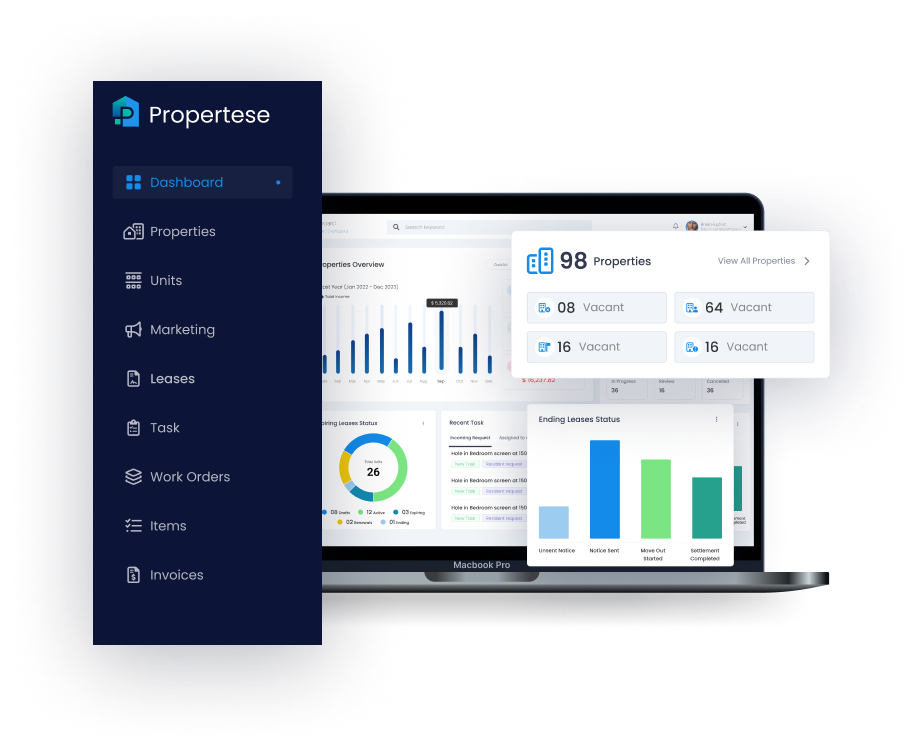
Best practice is to keep daily rent, maintenance, and owner draw workflows inside a unified property platform, while syncing to a general ledger such as QuickBooks, Xero, or an enterprise ERP for formal accounting controls. Propertese supports property and unit management workflows end-to-end and connects to back-office systems for reliable property accounting ERP integration, including multi-entity subsidiary management.
- Explore property and unit management workflows in Propertese.
- See multi-entity subsidiary management capabilities.
Real-Time Reporting and Dashboards
Cloud dashboards with role-based access provide instant views of cash, receivables, payables, and expense anomalies—moving teams from month-end surprises to daily decision-making. Instead of spreadsheet rollups, managers and owners can pull on-demand unit, property, or portfolio reports that improve transparency and board communications.
Sample dashboard snapshot:
| View | What it Shows |
|---|---|
| Portfolio Cash | Bank balances by entity + trust vs operating |
| Receivables Aging | Current, 30, 60, 90+ day delinquencies |
| Expense Variance | Actuals vs budget by GL and property |
| Deposits Ledger | Tenant-level deposit balances and movements |
Advanced Features in Property Accounting Software for Large Portfolios
Multi-Entity and Trust Accounting Support
Multi-entity support means keeping separate books for each property, owner, or fund—then consolidating results without breaking audit trails. Robust trust accounting modules help enforce state rules and fund segregation. Examples:
- Single sign-on to manage multiple LLCs or partnerships.
- Custom charts of accounts per entity and portfolio.
- Securely managing tenant security deposits separately from operating funds.
Automated Owner and Vendor Payments
Direct ACH for owner draws and vendor reimbursements shortens cycles and reduces errors. “Cloud and mobile-first products enable remote access, faster owner payouts, and tighter data security,” improving stakeholder experience and compliance with payment timelines. Virtual and physical fintech cards further enforce spend controls and streamline coding.
Emerging Fintech Tools and AI Enhancements
AI now assists with predictive cash flow, smart categorization, and anomaly detection to prevent fraud and leakage. Virtual card systems and mobile-first approvals accelerate AP without sacrificing controls. Put simply, “AI and automation speed expense allocation, vendor bills, and provide financial insights,” freeing teams to focus on analysis rather than entry.
Best Practices for Effective Property Accounting
Structuring Accounts and Choosing Accounting Methods
Separate business and personal banking, and implement a rental-specific chart of accounts from day one. Accrual accounting recognizes income and expenses when incurred, not when paid, but most small landlords default to cash-basis; accrual can be preferable for STRs or complex revenue recognition. Get started:
- Document trust-account procedures (open separate accounts, map ledgers).
- Turn on bank integrations and set categorization rules.
- Engage an accountant familiar with rentals and local regulations.
Ensuring Compliance with Trust and Tax Rules
Keep tenant and owner funds segregated with corresponding ledgers and reconciliations. Maintain detailed, auditable tax records (e.g., Schedule E or Form 8825) and use software audit logs plus automated reminders to meet filing, deposit return, and unclaimed property deadlines.
Leveraging Software with Professional Accounting Support
Engaging accountants who specialize in short-term rentals improves accuracy and compliance. Collaboration is easier when your system automates documentation sharing and standardized reports. As a rule of thumb: 1–4 units often rely on integrated PMS accounting; ~5–20 units commonly add a professional accountant and QuickBooks; at 21+ units, many use a property platform plus GL and a CPA. For a deeper checklist of capabilities, see key features in real estate accounting software.
Frequently Asked Questions
What Is Property Accounting and Why Is It Important?
Property accounting tracks all financial activity for rental assets, ensuring accurate income, expense, and compliance reporting so owners can make informed, timely decisions.
How Does Property Accounting Manage Owner Equity and Liabilities?
By recording assets, debts, and principal/interest, it shows owner equity as assets minus liabilities, giving a clear picture of true ownership stake and leverage.
What Are the Benefits of Using Dedicated Rental Property Accounting Software?
It automates data entry, reduces errors, enforces trust accounting rules, and produces tax-ready reports and owner statements with minimal manual effort.
How Can Property Accounting Software Help with Compliance?
It segregates trust funds, maintains audit trails, and generates the documentation needed for security deposit rules, unclaimed property, and tax filings.
What Is the Recommended Accounting Method for Rental Properties?
Most small landlords use cash basis, but accrual accounting is often preferred for larger or short‑term rental portfolios to match revenues and expenses accurately.
Table of Contents
Stay Updated
Subscribe to get the latest news, industry trends, blog posts, and updates...