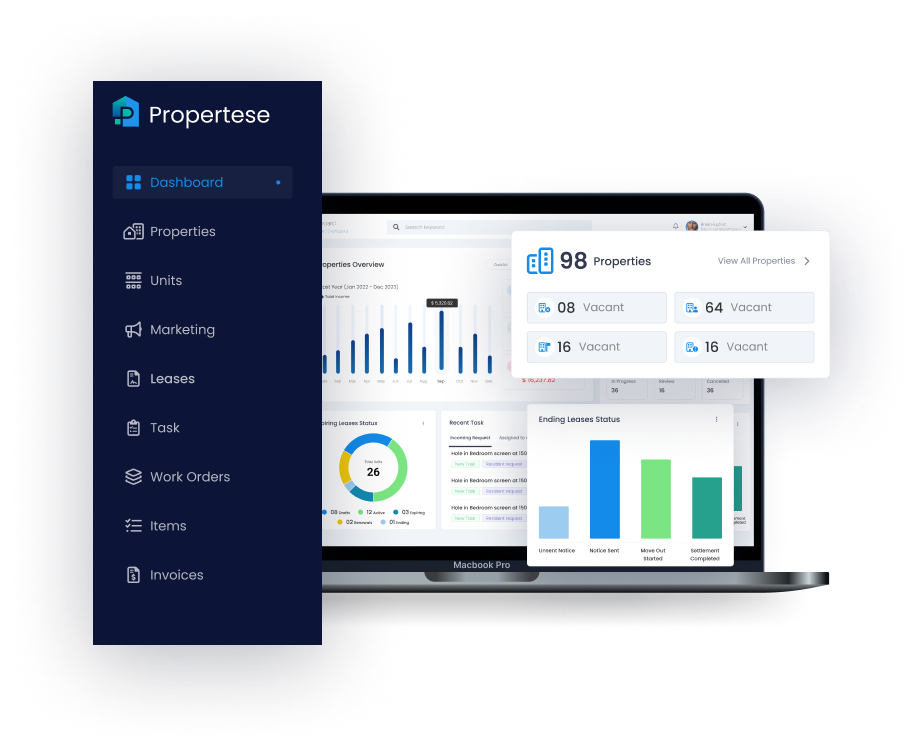
A well-run maintenance operation protects safety, cuts surprises, and preserves asset value. This guide shows owners and property managers how to build a proactive system so work gets done faster and at a lower total cost. We highlight where rental property maintenance management software fits, how to select tools, and how to structure vendor agreements and reporting. Propertese supports these workflows end-to-end with integrated work orders, vendor coordination, and real-time visibility across portfolios, helping teams move from reactive fixes to planned care.
Key takeaways:
- Proactive systems beat reactive fixes—shift operations to planned rental property maintenance.
- A searchable asset inventory and calendarized tasks form the backbone of rental property maintenance.
- Dedicated reserves and clear SLAs stabilize costs and speed up rental property maintenance.
- A CMMS, tenant portal, and mobile workflows centralize rental property maintenance from request to completion.
- Data-driven KPIs turn rental property maintenance into a repeatable, portfolio-wide advantage.
Establishing a digital asset inventory
A digital asset inventory is a centralized, searchable database of all physical systems and components within a rental property—appliances, HVAC, roofs, water heaters, alarms—stored digitally for efficient management and reporting. It is the backbone of forecasting, budgeting, and claims support.
Set up each unit and common area with a record that includes:
- Make, model, and serial number
- Purchase/installation date and expected service life
- User manuals and manufacturer-recommended maintenance intervals
- Warranty status and expiration dates
Document every maintenance event with dates, services performed, costs, receipts, and before/after photos. As noted in All Property Management’s maintenance guide, rigorous recordkeeping streamlines claims and reduces disputes.
Tips to operationalize the inventory:
- Assign each asset a unique ID and QR code so techs can scan, view history, and log new work on-site.
- Standardize fields and naming conventions across your portfolio for clean reporting.
- Connect your inventory to work orders in your platform (e.g., Propertese) so parts, labor, and downtime roll into asset-level cost histories.
Developing a maintenance calendar and schedule
Preventive maintenance means regular, scheduled tasks performed to detect and address minor issues before they become costly problems. A calendar translates your asset inventory into an actionable plan for monthly, seasonal, and annual checkpoints. For a deeper walkthrough, see our complete guide to building a preventive maintenance schedule for rental property maintenance.
Build your schedule by:
- Mapping routine tasks to timeframes (e.g., spring: clean gutters; fall: furnace service) and local climate needs, using a seasonal rental maintenance checklist for inspiration; see our property maintenance checklist guide for a ready-to-use template.
- Incorporating manufacturer intervals for durable assets (filters, anodes, belts).
- Layering compliance checks (smoke/CO alarms, handrails, GFCIs) and safety inspections into routine visits.
- Publishing the calendar to your team and vendors, then automating reminders and work orders.
Example preventive maintenance by frequency:
| Frequency | Tasks | Notes/Owner vs. Vendor |
|---|---|---|
| Monthly | Test smoke/CO alarms; visual leak checks under sinks; change HVAC filters (as needed) | In-house/tenant-assisted for filters; document tests |
| Quarterly | Pest control; clean condensate lines; inspect caulking/grout | Licensed vendor for pest control |
| Semiannual | HVAC service (cooling/heating); inspect gutters/downspouts | HVAC contractor; ladder safety for gutters |
| Annual | Water heater flush; dryer vent cleaning; roof inspection; backflow test | Specialists as required by code |
| Seasonal (Spring/Fall) | Clean gutters; service furnace/AC; winterize/dewinterize; check exterior grading | Coordinate with landscaping and HVAC |
A published calendar reduces surprises and stabilizes spend, a theme echoed in Buildium’s operational guidance. For HVAC-specific routines, use our preventive HVAC maintenance checklist to strengthen rental property maintenance.
Budgeting and funding maintenance reserves
A maintenance reserve is a fund set aside exclusively for expected and unexpected upkeep expenses. Proactive funding avoids cash shortfalls and stabilizes NOI when bigger repairs hit.
Practical steps:
- Use industry heuristics such as 1% of property value or $1 per square foot annually as a baseline, then refine with your own historicals (commonly cited in All Property Management’s guidance).
- Open a dedicated reserve account and contribute monthly to cover both recurring and emergency costs.
- Adjust reserves upward for older assets, harsh climates, or specialized amenities (elevators, pools).
For portfolio control, integrate reserve targets into your accounting workflow and dashboards. Looking to lower total rental property maintenance spend? Explore ways to reduce maintenance costs without sacrificing quality.
Selecting and integrating maintenance management software
The right rental property maintenance management software centralizes work orders, schedules, vendor assignments, and reporting. Prioritize:
- Work order intake and triage (with photos/video)
- Vendor management, insurance tracking, and role-based assignment
- Tenant-facing portals and mobile access
- Preventive schedules with automated tasks/checklists
- Real-time operational and financial reporting
Industry examples include Buildium, UpKeep, DoorLoop, and Hemlane. A platform overview from SafetyCulture highlights how mobile-first tools, checklists, and issue capture improve speed to resolution. UpKeep details how CMMS capabilities streamline work order routing, SLA tracking, and asset histories for property teams.
Definition: CMMS (Computerized Maintenance Management System) centralizes maintenance requests, schedules, work orders, parts, and asset records to improve efficiency, uptime, and compliance while reducing human error.
Propertese unifies these functions with deep ERP integrations, automated workflows, and transparent status tracking across stakeholders, accelerating cycle times for mid-to-large portfolios. For a broader overview of systems that power modern rental property maintenance programs, read our complete guide to property maintenance management systems for property managers.
Building vendor relationships and service agreements
Strong vendor partnerships shorten lead times and improve quality.
Best practices:
- Curate a preferred vendor list by trade and geography; keep W-9s, insurance, and license expirations on file (aligned with Buildium’s recommendations).
- Obtain at least three quotes for major projects and apply standardized bid sheets for apples-to-apples comparisons.
- Draft clear SLAs with response times (e.g., emergencies under 4 hours, urgent within 24 hours), scope, materials, change order rules, and communication protocols.
- Match the task to the provider: use in-house techs for common fixes and specialized contractors for code-dependent or high-risk work—electrical, roofing, gas, structural—per guidance in Rentvine’s guide to property maintenance services.
- Invest in multi-year relationships with top performers to gain priority scheduling and consistent workmanship.
Implementing tenant communication and maintenance portals
A tenant portal is a secure online platform where residents submit requests, view progress, and communicate directly with property management. Branded maintenance portals let tenants, cleaners, or vendors submit issues 24/7 with photos, then track status in real time—improving transparency and response speed.
Design a clear communication stack:
- Tenant maintenance portal with smart triage and FAQs for simple fixes
- Mobile app notifications and SMS/email updates at key milestones
- After-hours escalation for urgent issues and automated on-call routing
- Service ratings after completion to capture quality data
Buildium underscores how consistent channels and expectations reduce friction and missed messages. Propertese consolidates tenant submissions, vendor dispatch, and manager oversight into one workflow for faster first contact and fewer handoffs.
Incorporating resident benefit packages for preventive care
A Resident Benefit Package is a suite of value-added services and products delivered to tenants for a monthly fee, designed to promote maintenance best practices and retention. Typical inclusions—HVAC filter delivery, identity protection, pest control, rewards—reduce preventable calls and improve comfort. As Second Nature puts it, “RBPs can generate revenue while creating operational efficiency for property managers”.
Implementation checklist:
- Define benefits aligned to your maintenance pain points (filters, detectors, pest, concierge)
- Price for cost recovery plus margin; disclose clearly in leases and renewals
- Automate fulfillment schedules (e.g., quarterly filter shipments)
- Track participation, work order reductions, and satisfaction to refine the bundle
- Market the RBP as a quality-of-life upgrade that protects the home and reduces hassles
Recording, analyzing, and adjusting maintenance operations
Consistent documentation protects you legally and fuels continuous improvement. Record every job with timestamps, assignee, materials, costs, before/after photos, and key communications. This creates a defensible property history and cleaner audits, a practice widely emphasized in landlord maintenance guides.
Define and monitor KPIs:
- Speed: time to first response; time to completion
- Quality: first-fix rate, resident satisfaction scores, callback rate
- Cost: cost per work order; maintenance cost per unit; vendor variance to estimate
- Mix: preventive vs. reactive work ratio; seasonal backlog
Run quarterly reviews to spot trends, rebalance the maintenance calendar, adjust reserve targets, and update vendor rosters. Propertese surfaces these insights in dashboards and reports so managers can act quickly across portfolios (track property maintenance). To align teams and boost returns through rental property maintenance operations, see how property managers can use maintenance teams to increase ROI.
Frequently asked questions
Who is responsible for normal wear and tear versus tenant-caused damage?
Owners or managers cover normal wear and tear (ordinary aging), while tenants are responsible for damage caused by misuse, negligence, or unauthorized alterations.
How quickly should urgent maintenance requests be addressed?
Emergencies like active leaks or no heat should be addressed within 24–48 hours; routine repairs typically within 5–7 days, subject to local habitability rules.
What are the essential preventive maintenance tasks to schedule regularly?
Schedule HVAC filter changes, seasonal roof and gutter cleaning, periodic plumbing checks, routine pest control, and regular safety inspections of smoke/CO alarms and GFCIs.
How can property managers ensure compliance with safety and habitability standards?
Stay aligned with local codes, maintain accessibility features, and document inspections for alarms, lead-based paint, and other regulated items; update policies as codes change.
What is the best way to document maintenance activities for legal protection?
Log every repair, inspection, and related communication with dates, photos, and invoices in your system, ensuring a clear, time-stamped record to resolve disputes and prove compliance.
Table of Contents
Stay Updated
Subscribe to get the latest news, industry trends, blog posts, and updates...