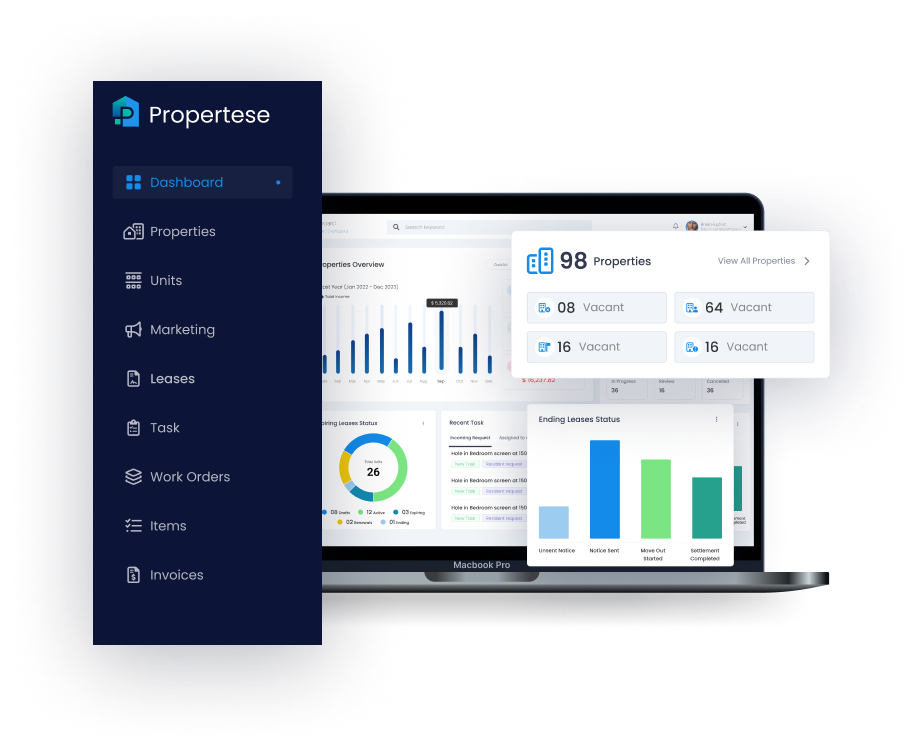
Modern property operations depend on speed, accuracy, and scalability, three areas where manual vendor assignment often falls short. Work order routing algorithms automate this process, assigning tasks to the most suitable vendor based on data like location, cost, availability, and service level agreements. For property managers overseeing hundreds of units or vendors, these algorithms transform reactive processes into predictable, auditable systems. This article explains how routing automation works, what metrics matter, and how property firms can scale vendor assignment intelligently through layered algorithmic design. In property management platforms like Propertese, these algorithms integrate directly into maintenance and vendor workflows, delivering consistent, data-driven outcomes across portfolios.
- Key takeaways:
- Work order routing turns manual dispatch into a consistent, auditable flow at scale
- Clear objectives and KPIs guide algorithm design and ongoing improvement
- Rules, heuristics, and optimization layers work together for speed and accuracy
- Real-time data and vendor scorecards keep routing fair, compliant, and efficient
Understanding work order routing algorithms
Work order routing algorithms automatically match work orders, such as maintenance requests or inspections, to the best available vendor or fulfillment location. They use decision logic that weighs real-time data, including inventory levels, response times, costs, and geographic proximity. In the property management context, they move assignments from manual, spreadsheet-driven choices to automated logic grounded in performance data.
This shift reduces human error, shortens response times, and standardizes processes across large portfolios. Instead of relying on intuition, managers gain consistency and transparency. This is critical for scaling teams and ensuring compliance.
Common types of routing algorithms include:
- Exact algorithms: Deliver mathematically optimal solutions, but are computationally intensive. Best for stable, low-volume conditions.
- Heuristic algorithms: Focus on speed and offer a “good enough” solution quickly. Suitable for everyday routing.
- Metaheuristic algorithms: Combine multiple heuristics for improved performance across complex networks.
- Dynamic or real-time algorithms: Continuously adapt to changing data, ideal for high volume or unpredictable conditions.
Propertese supports this structure through configurable automation rules integrated within its property and unit management suite, ensuring routing logic aligns with organizational policies and approval flows.
Defining objectives and key performance indicators
Before deploying any routing system, set clear operational objectives and measurable KPIs. They ensure algorithmic outputs align with business goals such as lower costs or better on-time completion rates.
Primary objectives may include:
- Cost minimization across vendors and routes
- SLA adherence to meet contractual service levels
- Faster response and completion times
- Consistent allocation decisions across the portfolio
Below is a framework for assessing the success of routing automation:
| KPI | Description | Business impact | Example measurement |
|---|---|---|---|
| Cost per job | Total routing and vendor fees per task | Measures cost efficiency | Average dollar cost per completed order |
| Vendor response time | Time from job assignment to acknowledgment | Tracks service responsiveness | Median minutes per job |
| Completion rate | Jobs completed within SLA window | Reflects reliability | % of jobs on time |
| Escalation rate | Jobs requiring manual reassignment | Reveals algorithmic accuracy | % of escalated tasks per batch |
In Propertese, these KPIs can be tracked directly within customizable dashboards, enabling property teams to monitor performance and adjustments in real time.
Cataloging constraints and data sources
Every routing decision depends on constraints and the quality of underlying data. A reliable input foundation ensures the algorithm produces consistent and meaningful outcomes.
Common routing constraints include:
- Vendor capacity and availability
- Inventory and part availability
- SLA commitments
- Cost limits or budgets
- Distance or proximity to the property
- Regulatory or compliance requirements
Key data sources power these decisions:
- Real-time inventory management databases
- Vendor skill and performance profiles
- GPS or geolocation systems
- Traffic and telemetry data feeds
- Historical work order completion logs
Routing systems evaluate inventory, distance, and vendor workload in real time. The engine adjusts as conditions change. Propertese unifies these data points across portfolios, reducing manual reconciliation and supporting consistent routing accuracy.
Implementing rule-based routing engines
A rule-based routing engine for work order routing uses predefined business rules to assign work automatically. It applies logic such as “assign all plumbing jobs to approved vendors within 10 miles” or “skip vendors with more than 20 active jobs.” This approach is transparent and aligns directly with existing policies.
Use cases for rule-based routing include:
- Prioritizing preferred vendors
- Enforcing compliance exclusions
- Distributing low complexity jobs predictably
Rule-based systems are easy to deploy and maintain, but may lag when operations change fast. They provide a strong foundation for teams that begin to automate. Propertese enables rule configuration through its Maintenance and Vendor Management modules, with built-in approval workflows to balance automation and control.
Adding heuristics for scalable dispatching
As operations scale, heuristic algorithms enable faster dispatch. They make practical approximations that achieve near-optimal routing without exhaustive computation. Common techniques include nearest neighbor, Clarke Wright, and least connections logic.
Heuristics are ideal for high-frequency, time-sensitive work where speed outweighs perfect optimization. Examples include daily maintenance assignments or large service provider networks.
| Heuristic method | Core logic | Ideal use case |
|---|---|---|
| Nearest neighbor | Select vendor closest to job site | Routine, proximity sensitive maintenance |
| Round robin | Cycle equally among vendors | Balancing workload within a fixed pool |
| Weighted round robin | Assign more work to higher performing vendors | Incorporating performance based prioritization |
These methods keep operational throughput high while maintaining equitable and efficient vendor allocation. Within Propertese, heuristic routing integrates directly with vendor scorecards, ensuring that assignment speed never compromises quality.
Integrating optimization layers for batch processing
At scale, optimization layers take routing further by processing large sets of work orders through advanced solvers such as OR-Tools, GraphHopper, or OpenRouteService. These systems seek globally efficient assignments rather than isolated decisions.
An optimization layer integrates multiple constraints, distance, cost, and SLA, into a single objective function.
In a typical multi-stage workflow:
- Batch work orders every set interval.
- Run optimization solver to compute vendor assignments.
- Feed results into the routing engine.
- Apply human review or approvals where needed.
This layered structure combines the predictability of rules with the efficiency of data-driven modeling. Propertese supports similar layered logic through customizable automations integrated with ERPs like NetSuite and Xero, enabling large-scale routing within existing financial and compliance processes.
Building real-time feeds and dynamic reassignment
Once real-time data streams connect, routing algorithms can adapt continuously. Real-time feeds, like live vendor availability, traffic, and task updates, allow the system to reassess priorities automatically.
Dynamic reassignment revises vendor allocations when conditions shift, such as cancellations or SLA breaches. For example:
- Detect vendor unavailability mid-task.
- Trigger reassignment protocol.
- Reroute high-priority tasks to available, qualified vendors.
- Update dashboards and notify stakeholders in real time.
Dynamic routing sustains performance even during disruptions, reduces downtime, and maintains SLA commitments. In Propertese, such workflows appear in centralized dashboards, which give managers instant oversight into task reassignment and service continuity.
Deploying vendor scorecards and testing routing policies
Vendor scorecards quantify partner performance and offer valuable feedback for algorithms. Key metrics include completion rate, timeliness, reliability, and exception frequency. These scores inform weighted routing logic. Better vendors receive more work.
| Metric | Purpose | Measurement example |
|---|---|---|
| On-time completion rate | Evaluates SLA consistency | % tasks completed on time |
| Reliability index | Captures quality and cancellation rate | Weighted vendor performance score |
| Issue frequency | Tracks recurring exceptions | # of failed or rescheduled jobs |
Regular A/B testing of routing policies, such as comparing rule-based vs. heuristic dispatch, reveals which configurations yield the best service levels. This iterative tuning builds a self-improving automation ecosystem. Propertese’s analytics make this feedback cycle continuous, combining vendor metrics with operational dashboards for informed decision making.
Monitoring performance and managing risks
Routing automation requires continuous oversight. Performance drift, recurring exceptions, and ethical or environmental concerns, like excessive travel emissions, should be actively monitored.
Typical risk controls include:
- Fallback routing to secondary vendors
- Escalation workflows for stalled tasks
- Duplicate detection and callback tagging
- Regular review cycles to ensure compliance
Dashboards or alerting systems can highlight anomalies early, which keeps automation aligned with policy and performance standards. Propertese offers built-in monitoring and escalation alerts, which help property teams maintain compliance and operational stability.
Frequently asked questions
What are the common load-balancing techniques used in vendor assignment?
The most common techniques include static methods such as Round Robin and Weighted Round Robin, along with dynamic options like Least Connections and Least Response Time for real-time efficiency.
How do dynamic routing algorithms improve vendor assignment at scale?
They continually evaluate vendor status and task progress, which enables automatic reallocation that keeps workloads balanced and operations efficient.
When should a property management firm move from static to dynamic routing methods?
Move to dynamic routing when workload variation or vendor network complexity increases. It handles fluctuating demand more effectively.
How can vendor performance metrics be incorporated into routing algorithms?
Score vendors based on completion, reliability, and response data. This lets the algorithm prioritize top performers automatically within systems like Propertese.
What fallback strategies can ensure reliability in automated work order routing?
Rerouting to secondary vendors, escalating delayed jobs, or detecting duplicates maintains service reliability even if a primary vendor is unavailable.
Summary
Automation through work order routing algorithms allows property portfolios to operate at scale without losing control or visibility. By progressing from rule-based foundations to real-time optimization, platforms like Propertese help firms turn vendor assignment into a measurable, self-correcting engine of operational excellence.
For a practical path to automation that fits existing processes, consider a phased rollout that starts with rules, then adds heuristics and batch optimization. To see how Propertese supports this journey across maintenance and vendor workflows.
Table of Contents
Stay Updated
Subscribe to get the latest news, industry trends, blog posts, and updates...