Trust Accounting in Property Management is the regulated process of receiving, holding, and disbursing client funds—such as rent, security deposits, and owner reserves—in bank accounts legally separate from a company’s operating accounts. Done right, it protects clients, keeps managers compliant, and builds confidence across portfolios. Done poorly, it invites audits, fines, and reputational damage. This guide explains what trust accounting is, why it matters, the rules that govern it, common pitfalls, and the best practices and technology that make it accurate, scalable, and audit-ready.
Key takeaways
- Trust Accounting in Property Management requires legally segregated bank accounts and beneficiary/property-level tracking to prevent commingling.
- Monthly three-way reconciliations and complete documentation create an audit-ready trail and reduce exceptions.
- Automation and integrated platforms streamline controls, reduce error rates, and accelerate compliant disbursements.
- Clear policies, dual approvals, and ongoing staff training help prevent negative ledgers and security-deposit mistakes.
What Is Trust Accounting in Property Management
Trust accounting in property management refers to handling client funds in a way that is strictly controlled by law and industry rules. Regulations require managers to deposit and disburse client money transparently, keep it separate from business funds, and maintain records that can withstand audit scrutiny. These controls exist because trust accounts safeguard client funds that never belong to the management business itself.
Crucially, a trust account is not an operating account. Operating accounts hold company money for payroll, marketing, and overhead. Trust accounts hold client funds for a defined purpose and beneficiary. To prevent commingling, funds must be segregated at the bank level and tracked by beneficiary and property.
Typical flows include:
- Monthly rent received into the trust account, then disbursed to owners after management fees, maintenance, and required reserves.
- Security deposits held in trust until move-out, then refunded or applied to damages per lease and statute.
- Owner reserves set aside for repairs, capped and replenished according to management agreements.
Why Trust Accounting Is Critical for Property Managers and Investors
Trust Accounting in Property Management is foundational to fiduciary duty and compliance. Mismanaging trust accounts can trigger fines, restitution orders, and license suspension, and it often leads to legal disputes with owners or tenants. Industry primers for property managers stress that managers have a fiduciary obligation to follow statutory requirements, keep funds segregated, and document every movement of money.
Stakeholder impacts of sound trust accounting:
| Impact Area | Property Managers | Owners/Investors |
|---|---|---|
| Compliance risk | Lower risk of audits, penalties, or license issues | Confidence funds are handled lawfully |
| Audit readiness | Faster, cleaner audits with clear trails | Transparent reporting supports oversight |
| Cash flow certainty | Predictable disbursements and fewer exceptions | Timely, accurate distributions and reserves |
| Reputation/retention | Credibility that wins and retains mandates | Trust in manager leads to longer relationships |
| Dispute resolution | Complete records reduce disputes and time to close | Clear evidence shortens and settles disputes |
Key Regulatory Requirements and Compliance Challenges
Trust Accounting in Property Management is one of the most heavily regulated aspects of real estate and property management, with detailed rules on what money goes where, when, and how. Regulations commonly require:
- Prompt deposit of client funds into designated trust accounts
- Strict segregation from operating funds
- Monthly reconciliations that match bank, trust ledger, and beneficiary balances
- Detailed documentation to support every receipt and disbursement, ready for audit review
Specifics—such as deposit timelines, interest handling, and record retention—vary by jurisdiction. For a jurisdiction-by-jurisdiction overview, see our complete guide to trust account requirements by state. The bottom line: processes must be designed for your market’s rules and proven with records.
Common Risks and Operational Challenges in Trust Accounting
Key risks property managers face include:
- Commingling of funds if trust and operating accounts isn’t strictly segregated
- Manual errors from double entry, spreadsheet reliance, and delayed reconciliations that obscure shortages or overpayments
- Security deposit mishandling and missed deadlines can trigger statutory penalties and tenant disputes
Operationally, slow rent collection and delayed owner payments erode trust and stress cash flow. When reconciliations fall behind, exceptions compound and can surface only under audit—when it’s too late to correct quietly.
Best Practices for Effective Trust Accounting
Account Segregation and Ledger Management
- Maintain separate bank accounts for trust funds and operating funds to prevent commingling, ensuring your bank designates the account as a trust or escrow account under local rules.
- Keep individual ledgers per owner and per property so you can trace every dollar to a beneficiary and purpose.
- Avoid “borrowing” or temporarily transferring funds between properties or owners; even short-term substitutions can breach fiduciary rules.
Monthly Reconciliations and Audit Trails
- For Trust Accounting in Property Management, perform a three-way reconciliation monthly: match the bank statement balance, the trust ledger balance, and the sum of all beneficiary (owner/tenant) sub-ledgers. This is the fastest way to catch discrepancies early and is a core expectation in compliance guidance.
- Retain signed reconciliation reports and supporting schedules—regulators frequently ask for proof of regular reconciliations during audits.
- Investigate negative owner ledgers immediately; they often signal timing issues, misapplied payments, or unauthorized disbursements.
Documentation and Recordkeeping
- Retain deposit slips, invoices and bills, owner instructions, leases and tenant agreements, bank statements, and monthly reconciliation reports.
- Digitize documents and store them with transaction records for fast retrieval and stronger audit readiness.
- Use consistent naming, dating, and property-level tags to ensure records stand up to disputes or regulatory review.
Staff Training and Internal Controls
- Formalize your trust accounting policy, train staff on your software and local rules, and define red flags (e.g., negative ledgers, unreconciled items over 30 days).
- Implement dual authorization for disbursements, periodic user-permission reviews, and exception reports to enforce accountability.
- Keep a change log for policies and refresh training regularly to reflect evolving state and local requirements. If you manage community associations, see our HOA accounting best practices for community association managers.
Technology Solutions for Trust Accounting Efficiency
Automation and Integrated Property Management Platforms
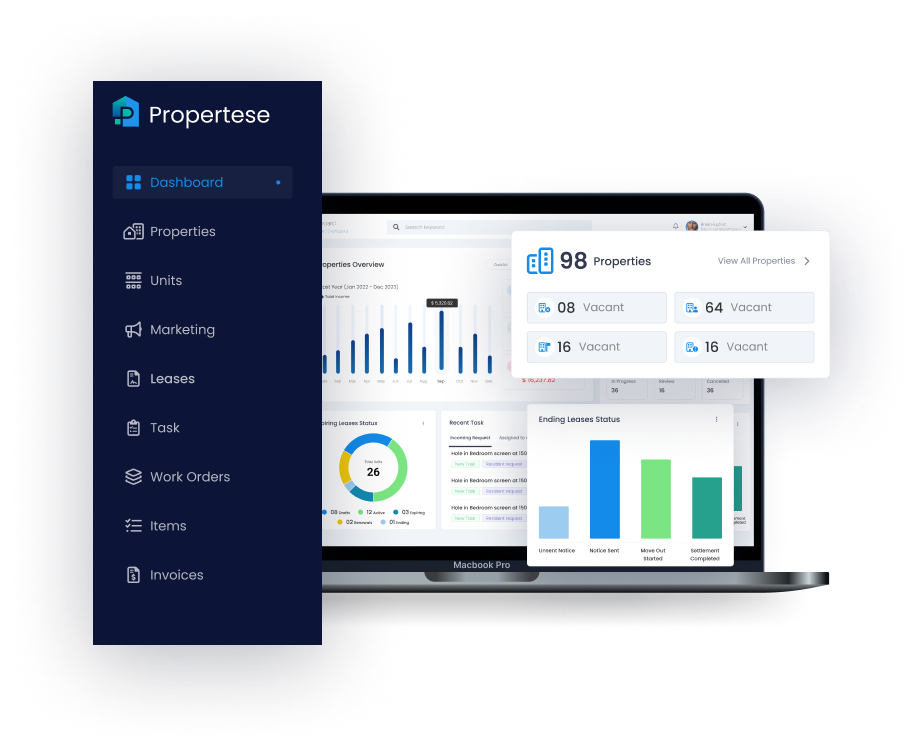
Automation reduces manual effort and error rates across the Trust Accounting in Property Management cycle, notably in bank feeds, reconciliations, and report preparation. Integrated platforms like Propertese enforce property-level tagging, attach digital documents to every transaction, and route payments through configurable approval workflows—all of which strengthen your audit trail. If you’re comparing platforms, review our best property management accounting software options compared and the pros and cons of free property management accounting software.
For mid-to-large operators, ERP integrations (e.g., NetSuite, Xero) synchronize general ledger data, vendor bills, and disbursements while preserving trust-account rules. E-signature integrations capture owner approvals and vendor authorizations in the same system of record.
Real-Time Reporting and Anomaly Detection
Real-time reporting means you can generate up-to-date financial statements, trust balances, and compliance reports on demand from a connected operating and accounting stack—an attainable standard with modern property management tools. Layering AI-assisted anomaly detection helps spot outliers such as duplicate invoices, misapplied deposits, or negative sub-ledgers before month-end. Dashboards that surface reconciliation status, pending disbursements, and exception queues give managers and owners a shared, transparent view.
Online Rent Collection and Owner Disbursements
Digital rent collection improves on-time payments, shortens deposit timelines, and reduces the data-entry errors that plague cash and checks. When funds clear electronically, you can disburse owner proceeds faster—often as soon as the next business day via ACH—tightening cash cycles and aligning with trust-account deposit rules. Payment features embedded in Propertese maintain the segregation and documentation required for compliance while delivering a better tenant and owner experience. For deeper guidance on categorizing and reporting payments, see our rental income accounting guide.
Implementing Trust Accounting Controls with Propertese
Propertese embeds trust accounting discipline into daily operations. The platform enforces account segregation and property-level tagging at the transaction level, guiding staff to the right trust account every time. Built-in three-way reconciliation, exception flags (e.g., negative owner balances), and approval workflows reduce errors and speed close.
Customizable dashboards surface real-time trust balances, unreconciled items, deposit aging, and disbursement queues. ERP integrations with systems like NetSuite and Xero keep your general ledger aligned without compromising trust rules, while audit-ready reports package ledgers, bank statements, and reconciliation evidence for regulators and owners. For tailored setup—chart of accounts, permissions, and compliance cadences—Propertese’s team helps you implement controls that fit your portfolio size and jurisdictional footprint.
Frequently Asked Questions
What Is the Purpose of Trust Accounting Legislation?
Trust accounting laws protect clients by requiring their funds to be kept separate, documented accurately, and used only for the intended purpose, ensuring transparency and reducing misuse.
What Records Are Required for Trust Accounting Compliance?
Maintain beneficiary ledgers, detailed transaction journals, bank statements, deposit records, invoices, and signed monthly three-way reconciliations to stay audit-ready.
How Does a Trust Ledger Differ from an Owner Statement?
A trust ledger is the detailed transaction record for a property or owner; an owner statement summarizes that activity into a periodic report.
What Are Best Practices to Prevent Trust Accounting Issues?
Use separate trust accounts, record transactions promptly, reconcile monthly, retain complete documentation, and enforce internal controls with dual approvals.
How Do Trust Reports Protect Property Owners?
They provide verifiable balances and a transaction trail, giving owners confidence that funds are secure, compliant, and disbursed correctly.
Table of Contents
Stay Updated
Subscribe to get the latest news, industry trends, blog posts, and updates...