Bonus Depreciation is one of the most powerful tax tools for real estate investors seeking to accelerate deductions and improve cash flow. This guide explains how the rule works, what property types qualify, the impact of the One Big Beautiful Bill Act (OBBBA), and how cost segregation studies can significantly boost first-year savings. With careful planning and documentation, investors can use depreciation of bonus to reduce taxable income while reinvesting in additional rental assets.
Key takeaways:
- BD allows immediate deduction of qualifying property costs instead of spreading them over decades.
- The OBBBA permanently reinstates 100% Bonus Depreciation for eligible property placed in service after January 19, 2025.
- Cost segregation studies identify assets eligible for accelerated depreciation.
- Accurate documentation and reporting are crucial for compliance and audit protection.
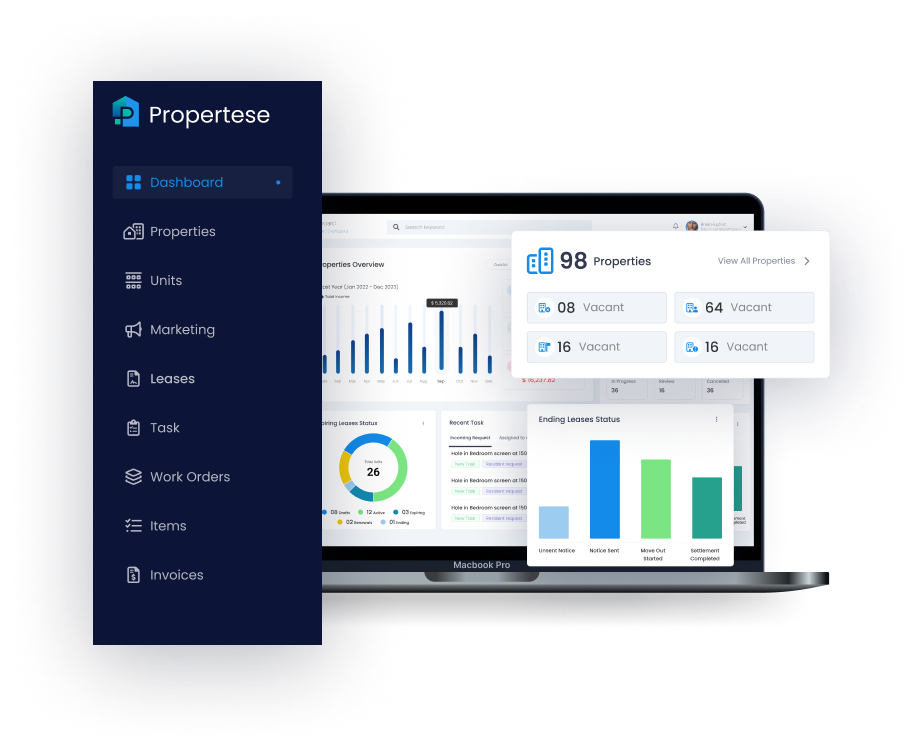
- Integrated property management platforms like Propertese make tracking and reporting depreciation more accurate and efficient.
What is Bonus Depreciation and why it matters for rental property investors
Depreciation of bonus under Section 168(k) of the Internal Revenue Code allows investors to deduct a large portion—often 100%—of qualifying asset costs in the year those assets are placed in service. In practical terms, it lets property owners write off tangible improvements like appliances, furniture, or HVAC systems immediately rather than depreciating them over 5, 7, or 15 years.
This accelerated method improves cash flow, enhances after-tax returns, and frees up capital for future acquisitions or renovations. With the OBBBA permanently restoring full Bonus Depreciation for qualifying property placed in service after January 19, 2025, this approach has become a cornerstone of modern rental property tax planning. For deeper insight, explore Propertese’s guide to depreciation of bonus and its benefits.
Key qualifying property types
Only certain components of a rental property qualify. The main rule: any tangible asset with a Modified Accelerated Cost Recovery System (MACRS) life of 20 years or less is eligible.
| Property class | Common examples | Recovery period |
|---|---|---|
| 5-year property | Appliances, furnishings, carpeting, small tools | 5 years |
| 7-year property | Office furniture, fixtures, equipment | 7 years |
| 15-year property | Land improvements (sidewalks, parking areas, landscaping) | 15 years |
Used property can also qualify if it’s new to the taxpayer and purchased from an unrelated party. For additional details, see Understanding BD on Rental Property.
How the One Big Beautiful Bill Act impacts BD rules
The One Big Beautiful Bill Act (OBBBA) reinstates 100% Bonus Depreciation for qualified assets placed in service on or after January 20, 2025. This marks a major win for investors who had experienced phasedown percentages in prior years.
| Year | BD percentage |
|---|---|
| Early 2025 (pre-OBBBA) | 40% |
| On/after Jan 20, 2025 | 100% (Permanent) |
Keep in mind that state conformity varies, and some states may still disallow federal BD adjustments.
Understanding cost segregation to maximize Bonus Depreciation
A cost segregation study separates building components into shorter recovery periods, allowing investors to identify which assets qualify for accelerated depreciation. For example, a $1 million rental property might yield over $230,000 in first-year deductions through a cost segregation analysis combined with depreciation of bonus.
Property types that derive the most value include multi-family developments, short-term rentals, and commercial assets with multiple building systems. A professionally performed cost segregation study can deliver significant ROI, often accelerating deductions many times faster than standard depreciation schedules.
Step-by-step guide to apply Bonus Depreciation on rental property
You can follow these steps:
- Confirm placed-in-service date: Verify when your property became operational under OBBBA rules.
- Identify qualifying components: Separate appliances, landscaping, and equipment eligible for accelerated treatment.
- Order a cost segregation study: Engage a qualified specialist to uncover all eligible components.
- Consult your CPA: Coordinate reporting accuracy and evaluate whether an election out is beneficial.
- Model the outcomes: Consider recapture risk and any potential net operating loss (NOL) implications.
- Document everything: Use integrated platforms like Propertese to track costs, service dates, and supporting data.
Important tax forms and reporting requirements
Bonus Depreciation is reported primarily on IRS Form 4562 (Depreciation and Amortization). Supporting documentation should include:
- Purchase invoices and placed-in-service confirmations
- Cost segregation reports
- Detailed depreciation schedules
- Election statements if opting out of BD
Strategic planning considerations for Bonus Depreciation
Timing is as important as eligibility. Investors should:
- Coordinate Bonus Depreciation with Section 179 deductions, which take priority.
- Assess if electing out in certain years helps balance taxable income.
- Model long-term impacts such as depreciation recapture at sale and NOL creation.
Strategic investors collaborate closely with advisors to align deductions with portfolio performance and acquisition plans.
State tax implications and variations
Because many states do not align with federal depreciation rules, investors may need to maintain separate depreciation schedules—one for federal and one for state filings. Some states defer or disallow Bonus Depreciation completely, making precise recordkeeping crucial. Platforms like Propertese automate dual schedules and reconciliation, providing clarity and compliance at every level.
Common risks and limitations: recapture, NOLs, and elections
While depreciation of bonus delivers immediate tax relief, it also has potential pitfalls:
- Depreciation recapture: When a property is sold, prior deductions may lead to taxable gains.
- NOL creation: Large accelerated deductions can produce net operating losses that take years to absorb.
- Election timing: Missing or misfiling an election can cause permanent inefficiencies.
- Non-qualifying property: Core structures like residential buildings (27.5 years) and commercial buildings (39 years) are not eligible.
Understanding these constraints helps investors avoid surprises during disposition or audit.
Leveraging property management tools to track depreciation and documentation
Modern property management software centralizes accounting, maintenance, and financial data—critical for accurate depreciation tracking. An integrated system should include:
- Auto-generated asset registers and schedules
- Parallel support for federal and state depreciation models
- Secure document storage and audit-ready organization
- Direct data access for CPAs and financial teams
With Propertese, teams manage depreciation and documentation within a unified platform linked to NetSuite and Xero, reducing manual adjustments and ensuring dependable compliance. For more insights, visit our complete guide to property management tax deductions.
FAQs
Can you take Bonus Depreciation on rental property?
Yes. You can apply it to qualifying personal property such as appliances or HVAC systems, not to the building itself.
What assets qualify for depreciation of bonus?
Assets with a 20-year or shorter recovery period—appliances, furniture, and land improvements—qualify.
Does the building itself qualify for Bonus Depreciation?
No. Only its components or improvements identified through cost segregation qualify.
Can used property qualify for depreciation of bonus?
Yes, if it’s new to you and acquired from an unrelated seller.
Is Bonus Depreciation now permanent for investors?
Yes. Under OBBBA, 100% depreciation of bonus is permanent for assets placed in service after January 19, 2025.
How does Section 179 differ from Bonus Depreciation?
Section 179 has caps and business-use conditions; depreciation of bonus has no limits and can produce larger deductions.
How does cost segregation maximize depreciation of bonus?
By reclassifying components into shorter recovery periods, cost segregation identifies assets eligible for immediate write-off.
Conclusion
Bonus Depreciation has become a defining opportunity for rental property investors looking to boost cash flow and streamline taxes. With the OBBBA ensuring full deductions long term, accurate documentation and proactive planning are key. Propertese equips investors and managers with automated depreciation tracking and integrated financial visibility, transforming compliance into a smooth, data-driven advantage across their real estate portfolios.
Table of Contents
Stay Updated
Subscribe to get the latest news, industry trends, blog posts, and updates...