Commercial leasing is central to both business occupancy and investment strategy. Understanding the different types of commercial leases helps owners and tenants structure agreements that balance risk, cost, and flexibility. From gross and net to percentage and absolute net models, each lease type defines how expenses are allocated and how predictable those costs will be. This guide explores each structure, its advantages, and how to align leasing terms with your operational goals for smarter decision-making.
Key takeaways:
- The main types of commercial leases include gross, modified gross, net, absolute net, and percentage leases.
- Each type defines how operating costs—taxes, insurance, and maintenance—are divided between tenant and landlord.
- Gross leases offer predictability, while net leases trade lower rent for higher responsibility.
- Understanding expense allocation and CAM clauses prevents hidden costs.
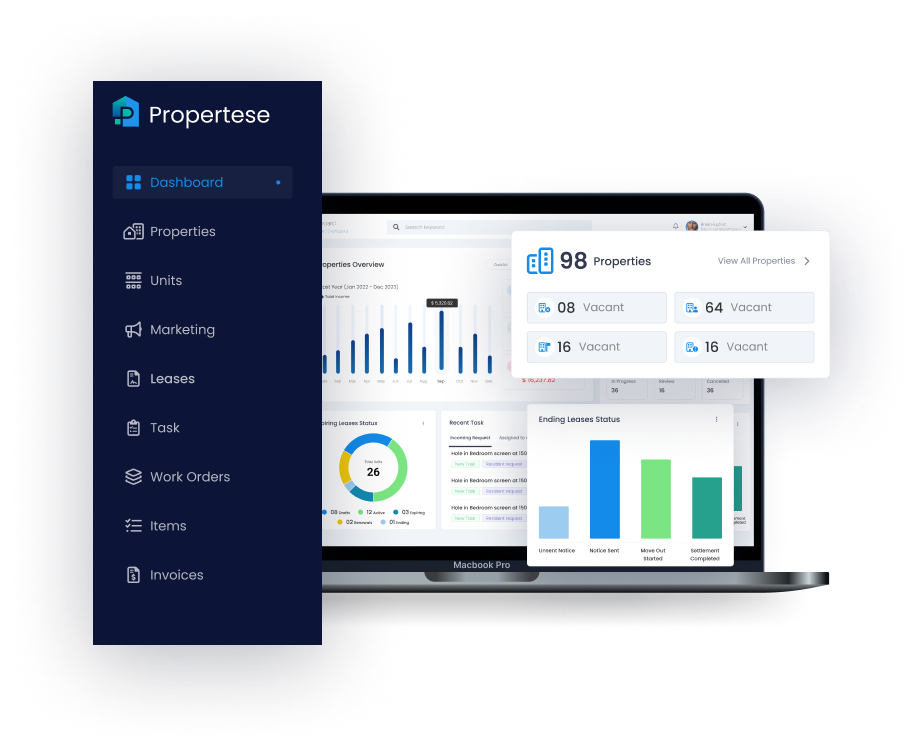
- Lease management platforms like Propertese make expense tracking and compliance far more efficient.
Overview of commercial lease types
Every commercial lease specifies how operating expenses are shared between parties. This split directly affects financial predictability, profitability, and control. The primary types of commercial leases include:
- Gross leases: The landlord covers most expenses and charges tenants a fixed rent.
- Modified gross leases: Costs are shared, allowing flexibility.
- Net leases (single, double, triple): The tenant pays increasing levels of taxes, insurance, and maintenance.
- Absolute net leases: Tenants assume complete responsibility for expenses and repairs.
- Percentage leases: Tenants pay rent plus a portion of sales revenue.
Choosing the right structure affects cash flow, maintenance priorities, and long-term asset value.
Gross leases: full-service and modified gross explained
In gross leases, tenants pay one all-inclusive rent while the landlord handles taxes, insurance, and maintenance. This model is common in multi-tenant offices because it simplifies budgeting and forecasting.
A modified gross lease splits certain costs, such as utilities or janitorial services, between both parties. This hybrid structure offers flexibility, which is increasingly valued in today’s flexible work environment.
| Lease Type | Primary Payer of Expenses | Typical Use Case |
|---|---|---|
| Full-Service Gross | Landlord | Office, multi-tenant buildings |
| Modified Gross | Shared | Smaller or short-term office leases |
Both lease types prioritize simplicity and predictability but differ in how costs are shared.
Net leases: single, double, and triple-net structures
A net lease requires tenants to pay some or all operating expenses in addition to rent, shifting a portion of risk from landlord to tenant. In return, tenants often benefit from lower base rent.
| Lease Type | Tenant Pays | Common Property Type |
|---|---|---|
| Single Net (N) | Rent + Property Taxes | Small offices, mixed-use |
| Double Net (NN) | Rent + Taxes + Insurance | Retail centers |
| Triple Net (NNN) | Rent + Taxes + Insurance + Maintenance | Free-standing retail, industrial |
Triple-net leases are among the most common commercial lease types for tenants seeking full control over space and transparency in operating costs.
Absolute net leases and tenant responsibilities
In an absolute net lease, also known as a bondable lease, the tenant assumes full financial responsibility for the property, including structural repairs and major capital costs. Landlords receive a stable income stream with minimal management involvement, while tenants gain long-term occupancy control and predictability.
These leases suit established, credit-strong businesses that value operational autonomy and can manage repair and maintenance obligations similar to ownership, without acquiring the title.
Percentage leases and retail property agreements
Percentage leases combine fixed rent with a variable rent component tied to a tenant’s sales performance. For example, a retailer might pay base rent plus a percentage of gross sales after a defined threshold.
This structure aligns landlord and tenant interests, motivating both parties to drive traffic and enhance sales performance. It is commonly used in malls, outlet centers, and other high-volume retail settings.
Expense allocation and common area maintenance in leases
Common area maintenance (CAM) costs represent shared expenses for spaces used by all tenants, such as lobbies, elevators, or parking areas. These costs are usually distributed proportionally based on each tenant’s leased square footage.
| Lease Structure | CAM Expense Responsibility | Notes |
|---|---|---|
| Gross Lease | Landlord | Included in fixed rent |
| Modified Gross | Shared | Negotiable per lease |
| Net Lease | Tenant | Defined in pass-through clauses |
Understanding how CAM, base-year reconciliations, and pass-through clauses work together is essential. Poorly defined formulas can erode profitability over time. See CAM reconciliation best practices for detailed guidance from Propertese experts.
Negotiating commercial leases: key considerations and risk management
Effective lease negotiation begins with clarity. Both parties should define CAM scopes, insurance responsibilities, escalation clauses, and termination rights early. Tenants should also secure audit rights for expense verification.
Always have lease agreements reviewed by state-specific experts to ensure compliance with local regulations. Clear, specific language minimizes disputes and unforeseen costs later in the term.
Market trends influencing lease preferences and structures
Market preferences have increasingly shifted toward flexible, tenant-responsive lease models. Modified gross and short-term leases are on the rise as businesses seek cost control without long commitments.
Environmental, Social, and Governance (ESG) priorities are also shaping lease clauses. “Green leases” now incorporate sustainability metrics and smart building technology to reduce operating costs, enhancing accountability for landlords and tenants alike.
Aligning lease choices with business strategy and cash flow goals
Selecting the right lease type should align with your organization’s cash flow goals and risk tolerance. Businesses prioritizing stability may choose gross leases, while those seeking autonomy often opt for NNN or absolute net structures.
Prioritize these actions:
- Assess your comfort with variable expenses.
- Review escalation and capital repair provisions.
- Consult legal and brokerage professionals during review.
Platforms like Propertese streamline lease lifecycle management by automating expense tracking, maintaining audit-ready compliance, and providing dashboards for real-time cost forecasting—all in one system. This allows property managers and owners to handle any lease structure with greater confidence and control.
Frequently asked questions
What distinguishes a triple-net lease from other net leases?
A triple-net (NNN) lease requires tenants to pay all property expenses—taxes, insurance, and maintenance—unlike single or double net leases that assign fewer costs.
How do gross leases benefit tenants and landlords differently?
Gross leases provide tenants predictable monthly costs since the landlord covers variable expenses, while landlords gain steady income but assume greater cost risk.
What is included in common area maintenance fees?
Common area maintenance (CAM) fees include shared costs for lobbies, parking areas, landscaping, and building systems in multi-tenant properties.
Which commercial lease type is most common for office versus retail spaces?
Gross or modified gross leases are most frequent in office buildings, whereas triple-net (NNN) leases are typical in retail and single-tenant properties.
How can tenants and landlords effectively negotiate lease expense responsibilities?
Both parties should clearly define expense responsibilities, request detailed terms, and seek guidance from qualified professionals to ensure fair, predictable agreements. Propertese can help centralize documents and track negotiated terms for compliance.
Conclusion
Understanding the types of commercial leases empowers property professionals to structure agreements that align expenses with business strategy. Each model offers a different balance of risk, flexibility, and control. Whether managing multiple assets or leasing your first commercial space, clarity on lease terms supports stronger financial outcomes.
For efficient lease oversight and compliance, explore how Propertese’s Lease Management Platform centralizes tracking, reconciliations, and reporting can help you manage every lease type with precision and ease.
Table of Contents
Stay Updated
Subscribe to get the latest news, industry trends, blog posts, and updates...