Key Takeaways:
✓ Strong vendor networks cut emergency response times by 40-50% and reduce annual maintenance costs by 15-25% through established relationships, priority scheduling, and volume pricing
✓ The vetting process prevents costly mistakes with credential verification, insurance checks, reference calls, and trial projects before adding vendors to your core network
✓ Long-term vendor partnerships deliver consistent results through clear communication, fair payment terms, performance tracking, and mutual growth opportunities
The difference between a $3,500 plumbing repair and a $22,000 flood damage claim often comes down to who answers your emergency call. Property managers with established vendor networks have qualified contractors on speed dial who respond within 90 minutes. Those without networks spend critical hours searching for available plumbers while water spreads across multiple units.
Your vendor network determines whether maintenance issues get resolved quickly at fair prices or escalate into expensive emergencies at premium rates. The contractors you work with directly impact tenant satisfaction, property condition, operating costs, and your ability to handle crises without chaos.
Most property managers build vendor relationships accidentally rather than strategically. They inherit contractors from previous managers, add whoever shows up first during emergencies, or pick names from online search results. This reactive approach guarantees inconsistent quality, inflated costs, and zero leverage when you need priority service.
Why a Strong Vendor Network Matters More Than You Think
Vendor relationships represent your second-largest expense category after payroll. Organizations with structured vendor programs reduce costs while building strategic partnerships that drive long-term value.
Yet most property managers build vendor networks reactively. They Google “emergency plumber near me” at midnight. They pick whoever answers the phone. They pay whatever rate gets someone on-site fastest.
This approach guarantees overpaying for services, inconsistent quality, and zero leverage for negotiations.
What proper vendor networks deliver:
Established rates agreed in advance (typically 20-30% below emergency call-out pricing)
Priority response when you need service (your calls answered first during busy periods)
Consistent quality from contractors who know your properties and standards
Faster repairs because vendors understand your systems and access procedures
Reduced tenant complaints through reliable, professional service
Better budget predictability with known costs for common repairs
The property managers building profitable portfolios don’t have more money to spend on vendors. They spend less because they’ve invested time building vendor networks that compete for their business rather than exploiting their emergencies.
The 5 Types of Vendors Every Property Manager Needs
1. Emergency Service Contractors
24/7 availability for plumbing emergencies, HVAC failures, electrical hazards, and lockouts. These vendors must respond within 60-90 minutes, regardless of day or time.
Critical trades:
- Emergency plumber (burst pipes, sewage backups, total water loss)
- Emergency electrician (power outages, sparking panels, exposed wiring)
- Emergency HVAC tech (no heat in winter, no AC during extreme heat)
- 24-hour locksmith (lockouts, broken locks, security breaches)
2. Routine Maintenance Providers
Regularly scheduled services prevent problems before they become emergencies.
Essential services:
- HVAC preventive maintenance (quarterly filter changes, annual inspections)
- Landscaping and lawn care (weekly mowing, seasonal cleanup)
- Snow removal (plowing, salting, walkway clearing)
- Pest control (quarterly treatments, emergency extermination)
- Gutter cleaning (twice annually minimum)
3. Specialty Repair Contractors
Non-emergency but skilled trades requiring licensing and specialized expertise.
Common needs:
- Appliance repair (refrigerators, dishwashers, washers, dryers)
- Carpet and flooring (cleaning, patching, replacement)
- Painting (interior touch-ups, exterior refreshes, full unit turns)
- Roofing (leak repairs, inspections, eventual replacement)
- Pool and spa service (cleaning, equipment repair, seasonal opening/closing)
4. Capital Improvement Contractors
Major projects require significant investment and longer timelines.
Project types:
- Roof replacement
- Parking lot resurfacing
- Siding and exterior envelope work
- Major HVAC or plumbing system upgrades
- Building additions or renovations
5. Professional Services
Administrative and compliance support vendors.
Support categories:
- Property insurance brokers
- Real estate attorneys
- Accountants and tax preparers
- Reserve study specialists (for associations)
- Code compliance consultants
How to Vet Vendors Before Adding Them to Your Network
Never add vendors to your network based on the lowest bid or fastest availability. Proper vetting prevents expensive mistakes.
Step 1: Verify Licenses and Credentials
Every state requires contractors in trades like plumbing, electrical, HVAC, and roofing to hold active licenses.
Verification process:
Search your state’s contractor licensing board website. Most states maintain public databases showing license status, issue dates, and disciplinary actions.
Confirm the license matches the business name and owner. Some contractors claim licenses held by others.
Check license types match services needed. General contractor licenses don’t authorize electrical or plumbing work.
Verify licenses haven’t expired. Outdated licenses mean uninsured work and code violations.
Step 2: Confirm Insurance Coverage
Vendor risk assessment research shows that comprehensive due diligence, examining financial, operational, and compliance stability, helps identify threats before they disrupt operations.
Required coverages:
General liability: $1 million per occurrence minimum, $2 million aggregate
Workers’ compensation: Statutory limits for your state
Commercial auto: $1 million if the vendor uses vehicles
Professional liability: $1 million for specialty trades
Verification steps:
Request certificates of insurance directly from the vendor’s insurance agent, not vendor-created documents.
Confirm you’re listed as “certificate holder” and “additional insured” on general liability policies.
Verify policy dates show current coverage, not expired policies.
Contact the insurance company if the certificates look suspicious or altered.
Step 3: Check References and Reviews
Reference calls:
Request three property management client references (not homeowners or commercial clients). Ask specific questions:
How long have you worked with this vendor?
What services do they provide?
How quickly do they respond to calls?
Do they show up when scheduled?
Is their work quality consistent?
Have you had billing disputes?
Would you use them again?
Online review research:
Google Business reviews
Better Business Bureau ratings and complaint history
Trade-specific sites (Angie’s List, HomeAdvisor, Thumbtack)
State attorney general consumer complaint databases
Step 4: Conduct Trial Projects
Never commit to long-term contracts or high-value projects with unproven vendors.
Testing approach:
Start with small, low-risk projects. One routine maintenance call. Single unit turnover. Minor repair in common areas.
Evaluate response time, work quality, billing accuracy, and communication.
Assess whether the vendor shows up when scheduled, completes work properly the first time, provides detailed invoices, and communicates professionally.
If trial projects go well, gradually increase project types and values. Three successful projects before considering major work or annual contracts.
Step 5: Verify Financial Stability
Contractors going bankrupt mid-project abandon your properties. Research financial health before commitments.
Warning signs:
Requiring large deposits (over 10-20%) before starting work
Pressuring for immediate decisions or signatures
Unwilling to provide references or insurance certificates
Multiple recent business name changes
Poor credit rating (if you’re extending payment terms)
Building Vendor Relationships That Last
Finding good vendors is only half the work. Keeping them requires deliberate relationship management.
Set Clear Expectations From Day One
Document these elements:
Scope of work for each service category
Response time requirements (emergency vs. routine)
Quality standards and warranty periods
Billing procedures and payment terms
Communication protocols (who to contact, preferred methods)
Performance metrics you’ll track
Put expectations in written service agreements, even for small vendors. Verbal understandings become disputes when memories differ.
Pay Invoices Promptly
Nothing damages vendor relationships faster than slow payment. Treating key vendors as strategic partners involves timely payment and mutual respect.
Payment practices that build loyalty:
Pay within agreed terms (Net 30 is standard, Net 15 builds goodwill)
Process correct invoices immediately, don’t wait until the month-end batch payments
Communicate if invoices have errors requiring correction before payment
Offer early payment discounts (2% for payment within 10 days incentivizes vendors to prioritize your work)
Never make vendors chase payment or call repeatedly about overdue invoices
Communicate Consistently
Regular communication keeps relationships strong even during slow periods.
Effective communication frequency:
Quarterly check-ins with primary vendors (discuss upcoming needs, address any concerns, review performance)
Annual meetings with key contractors (plan next year’s projects, negotiate updated pricing, strengthen partnerships)
Immediate feedback after every project (acknowledge good work, address issues while fresh)
Monthly or quarterly vendor newsletters (share portfolio updates, announce new properties, recognize outstanding performance)
Create Volume-Based Incentives
Vendors who see guaranteed revenue streams offer better pricing and service.
Volume structures that work:
“We manage 50 properties requiring 200+ plumbing calls annually. Provide 15% discount on your standard rates, and we’ll direct all non-emergency work to your company first.”
“Guarantee you $30,000 annual HVAC work across our portfolio. In exchange, provide priority emergency response and contractor pricing on equipment.”
“Contract you for all landscaping needs at our 12 multifamily properties. Single monthly invoice, paid promptly. You provide a bundled rate 20% below your standard per-service pricing.”
Track Performance Objectively
Vendor performance monitoring research emphasizes defining clear KPIs and metrics to ensure expected value and quality.
Metrics worth tracking:
Response time (emergency calls answered within 15 minutes, on-site within 90 minutes)
Completion rates (work finished on scheduled dates)
Quality scores (based on tenant feedback and inspection results)
Invoice accuracy (correct amounts, proper documentation, timely submission)
Safety incidents (injuries, damages, code violations)
Collect data consistently. Review quarterly with vendors. Use metrics for renewal decisions and rate negotiations.
Why Propertese Simplifies Vendor Network Management
Most property managers track vendors through scattered spreadsheets, email folders, and hope they remember which contractor does what. This creates gaps where critical information gets lost.
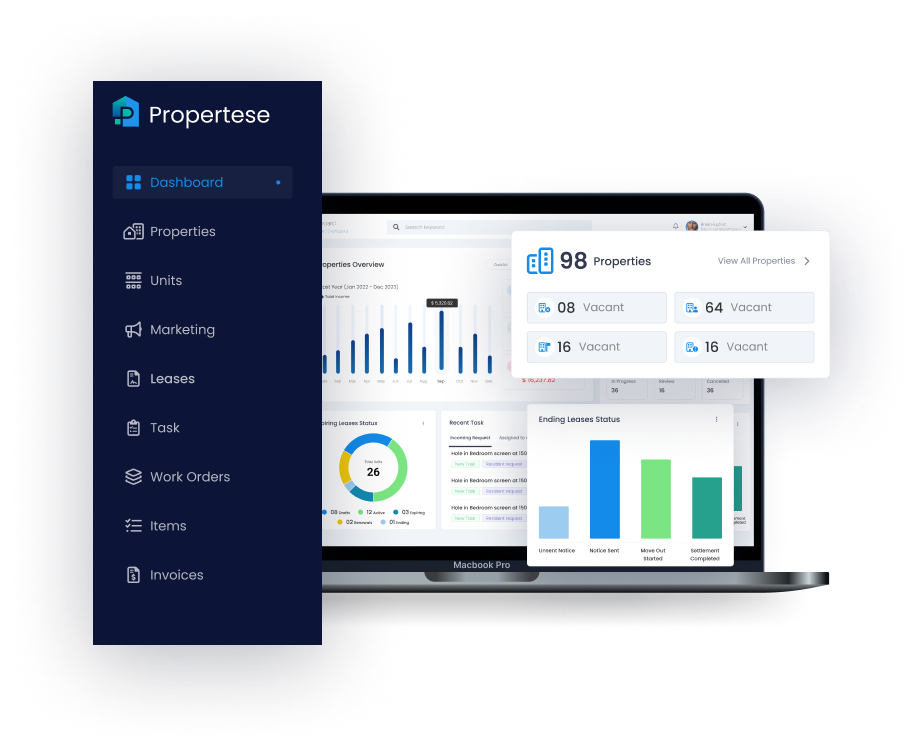
Propertese’s vendor tracking puts every vendor detail in one accessible system.
Store complete vendor profiles. Contact information, license numbers, insurance expiration dates, service categories, hourly rates, and contract terms all live in individual vendor profiles.
Get automatic insurance alerts. The system tracks insurance policy expiration dates and alerts you 60 and 30 days before expiration, so you never use vendors with lapsed coverage.
Dispatch work instantly. Assign maintenance requests to appropriate vendors with one click. They receive automatic notifications with property details, access codes, and tenant contact information.
Track performance with data. See response times, completion rates, tenant satisfaction scores, and spending by vendor. Identify top performers and underperformers using objective metrics.
Maintain full communication history. All vendor messages, work orders, invoices, and documents are attached to vendor profiles. Pull the complete history when renewing contracts or addressing disputes.
Properties using systematic vendor management report faster response times, lower costs, and fewer tenant complaints because the right vendor handles each job every time.
Common Vendor Management Mistakes That Cost Money
Mistake 1: Using Too Many Vendors in Each Category
Some property managers maintain five different plumbers, thinking competition keeps prices low. It backfires.
Why fewer vendors work better?
Volume with fewer contractors earns better rates than splitting work among many contractors
Vendors who know your properties work faster (familiar with systems, access, common issues)
Managing relationships with 3 vendors beats managing 15
You get priority service from contractors who see you as a major client
Better approach: Maintain one primary and one backup vendor per trade category.
Mistake 2: Choosing Based Solely on Price
The lowest bidder rarely delivers the best value. Expertise and specialization from vendors with industry experience address property needs more effectively than the cheapest option.
Hidden costs of low-bid vendors:
Poor quality requiring redo work at additional cost
Slow response times are causing extended vacancy or tenant disruption
Incorrect repairs are creating recurring problems
Uninsured work creates liability exposure
Better evaluation: Weight quality, reliability, and service alongside price. A midrange vendor completing jobs correctly costs less than a cheap vendor requiring callbacks.
Mistake 3: No Written Contracts or Agreements
Handshake deals seem efficient until disputes arise.
What verbal agreements cost:
No recourse when vendors don’t meet expectations
No proof of agreed rates when invoices arrive higher than discussed
No warranties or guarantees on completed work
No clear termination procedures when relationships fail
Better practice: Use written service agreements even for small vendors. Simple one-page contracts work better than nothing.
Mistake 4: Ignoring Vendor Feedback
Vendors see problems you don’t. Strategic vendor relationships involve regular structured meetings reviewing metrics and discussing upcoming needs.
What vendors can tell you:
Which building systems are reaching the end of life
Common problems indicating bigger issues (same unit calling repeatedly)
Preventive measures that would reduce emergency calls
More cost-effective approaches to recurring repairs
When property managers ignore vendor insights, they miss opportunities for proactive maintenance, preventing expensive failures.
Mistake 5: Keeping Underperforming Vendors Too Long
Loyalty is good. Loyalty to vendors who consistently disappoint is expensive.
When to end vendor relationships:
Three consecutive projects with quality issues requiring callbacks
Pattern of missed appointments or significant delays
Regular billing disputes or invoice inaccuracies
Refusal to provide required documentation (insurance, licenses, warranties)
Better options available at similar pricing with better performance
Replace underperformers quickly rather than hoping they improve.
Getting Started: Your 30-Day Vendor Network Action Plan
Week 1: Inventory Current Vendors
List every vendor you’ve used in the past 12 months. Include contact information, services provided, approximate annual spend, and whether you’d use them again.
Identify coverage gaps. Which essential categories lack reliable vendors?
Week 2: Research and Contact Candidates
Get referrals from other property managers, industry associations, and online reviews. Request quotes from 3-5 vendors per category you need to fill.
Week 3: Vet Top Candidates
Verify licenses and insurance for vendors you’re seriously considering. Call references. Review the contracts or service agreements they provide.
Week 4: Run Trial Projects
Select 2-3 new vendors and assign small test projects. Evaluate response, quality, billing, and communication. Add vendors who perform well to your core network.
Ongoing: Maintain and Optimize
Schedule quarterly performance reviews. Track metrics. Replace underperformers. Negotiate better terms with top performers.
Building strong vendor networks takes time. But property managers who invest three months in systematic network development spend the next three years with reliable contractors providing excellent service at fair prices.
Schedule a demo and discover how Propertese makes vendor management systematic instead of chaotic.
Table of Contents
Stay Updated
Subscribe to get the latest news, industry trends, blog posts, and updates...