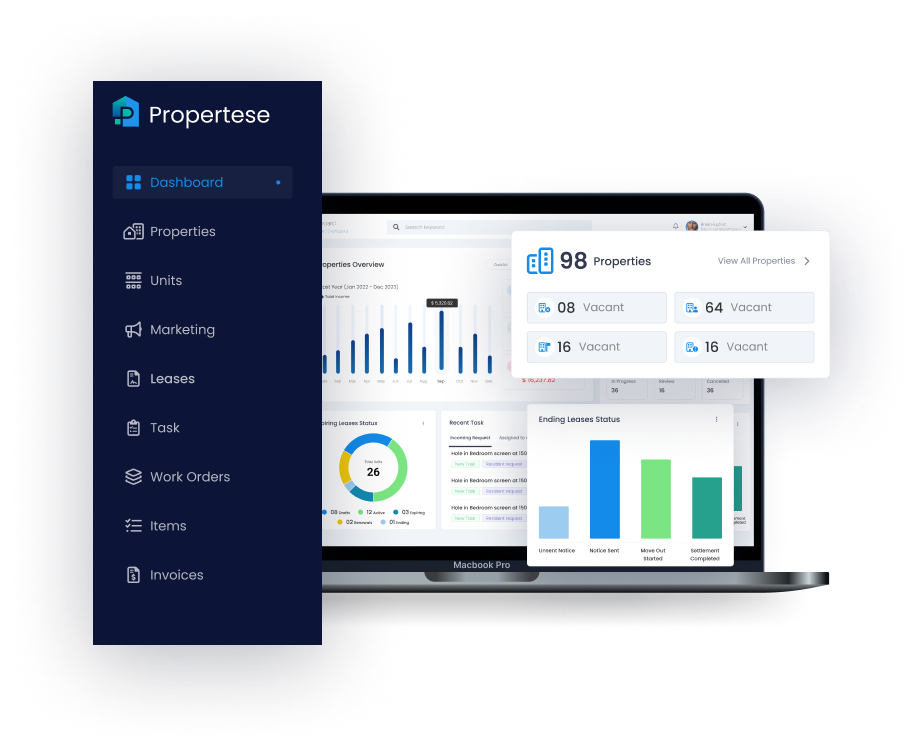
Accurate vacancy risk modeling depends on disciplined absorption rate analysis. In acquisition underwriting, knowing how fast space can lease and stabilize is critical to project revenue, value opportunity, and manage debt obligations responsibly. This guide walks through each stage of modeling, from data intake to lease-up scheduling, vacancy forecast, and stress tests. It highlights proven strategies and automation tools that add speed, precision, and defensibility to modern underwriting.
Key takeaways:
- Always rely on net demand rather than gross counts to show true leasing progress.
- For a plain intro to this core demand metric, see this resource.
- Set a time horizon that matches recent local lease-up cycles and the pipeline of incoming supply.
- Use an S curve to shape the lease up so the schedule reflects a slow start, a mid-cycle ramp, and a taper near stabilization.
- Translate the lease-up into monthly vacancy and credit loss, then test base, downside, and upside cases to size risk.
Collect and validate underwriting inputs
Reliable absorption modeling begins with validated, standardized inputs. A clean foundation of data minimizes compounding errors later in the underwriting process.
Start by identifying and organizing core source documents:
- Rent rolls: List active tenants, lease rates, and expiration dates.
- T12 financials: Capture trailing annual performance indicators.
- Lease expiration schedules: Reveal rollover patterns and future exposure.
Automated data extraction platforms such as Propertese, RedIQ, or Click.ai can parse these documents directly into structured spreadsheets, reduce human input error, and standardize assumptions across properties. Once the internal data is clean, benchmark the property against submarket net absorption trends, competitive supply, and comparable assets.
| Data Type | Source | Usage in Model |
|---|---|---|
| Rent Roll | Property management system | Current occupancy and rent structure |
| T12 | Accounting or ERP | Operating performance verification |
| Lease Expiration Schedule | Lease abstracts | Tenant rollover and renewal timing |
| Market Absorption | CoStar, CREXi | Baseline demand rate |
| Pipeline Deliveries | Local planning data | Future supply impact |
High-quality, validated data make absorption rate analysis defensible and repeatable rather than speculative. Propertese simplifies this process by integrating property data, leases, and financial performance within one platform.
Choose the absorption metric and horizon
Choosing the correct metric can make or break a vacancy projection. Net absorption measures the change in occupied space between two periods, and captures true demand after accounting for vacated units. Gross absorption tracks only the total leased area, which often inflates demand and can distort forecasts.
When setting the time horizon, base it on comparable lease-up events and forthcoming competitive inventory. For instance, in multifamily assets, leasing velocity can range from two to eight units per month, depending on market strength. Establish a realistic stabilization window rooted in recent local data to guard against overly optimistic assumptions.
| Metric | Definition | Usefulness |
|---|---|---|
| Gross Absorption | All new leases signed | Overstates demand if move outs are high |
| Net Absorption | Change in occupied space | Reflects true leasing progress |
Always underwrite using net absorption for vacancy risk, and align your horizon to actual market leasing cycles.
Build an absorption schedule with lease-up curves
A credible absorption forecast rarely follows a straight line. Professional underwriters use S-curve sigmoid modeling to reflect the natural rhythm of lease up: a slow start, acceleration mid-cycle, and taper as stabilization nears.
In practice, analysts generate this curve using tools like Excel’s NORM.DIST function or equivalent modeling features. The curve translates monthly absorption rates into a cumulative occupancy trajectory.
Typical steps include:
- Define total leasable units or space.
- Estimate total months to stabilization.
- Apply a sigmoid or bell curve weighting to distribute units leased each month.
- Accumulate monthly results to produce occupancy projections.
The output provides a realistic view of how fast income growth occurs and highlights cash flow gaps before stabilization. Platforms like Propertese can automate this data to model workflow through integrated leasing and occupancy analytics.
Translate absorption to vacancy and credit loss
Once absorption is modeled, the next task is to translate it into expected vacancy and credit loss, both essential for cash flow and risk analysis.
- Physical vacancy measures unoccupied space as a share of total inventory.
- Economic vacancy accounts for rent lost to concessions, non-payment, or bad debt.
Model these monthly during lease-up and set stabilized assumptions afterward. A typical underwriting base case might include 5% stabilized vacancy and 1% credit loss. Always stress test how slower absorption or higher concessions affect both metrics.
Continuous calibration with historical performance ensures forecasts align with operational realities. Propertese tracks these metrics in real time and helps asset managers compare modeled versus actual performance.
Conduct scenario and stochastic stress testing
Vacancy projections carry inherent uncertainty; scenario testing makes that uncertainty measurable.
Perform at least three primary simulations:
- Base case: Expected absorption and rent growth.
- Downside: Slower lease-up, elevated vacancy, softening rents.
- Upside: Faster absorption and improved rent roll velocity.
Monte Carlo simulation goes further by assigning probability distributions to uncertain variables and produces a range of potential outcomes rather than a single estimate. These approaches reveal potential tail risks, such as an extended stabilization timeline or capital strain.
| Scenario | Absorption Rate | Market Rent | Expected Outcome |
|---|---|---|---|
| Base | 4 units/month | Market avg | Normal cash flow timing |
| Downside | 2 units/month | 5% lower rent | Delayed stabilization |
| Upside | 6 units/month | 3% higher rent | Early covenant compliance |
Such stress tests also align with regulatory expectations for risk management and reinforce underwriting discipline.
Perform covenant and cash flow resilience checks
Financial covenants ensure the deal remains sound even if absorption lags. Monitoring them keeps sponsors and lenders aligned.
Key metrics include:
- Debt Service Coverage Ratio (DSCR): Net Operating Income ÷ Debt Service.
- Debt Yield: NOI ÷ Loan Amount.
- Loan to Value (LTV): Leverage measure versus appraised value.
- Break-even occupancy: (Operating Expenses + Debt Service) ÷ Gross Potential Income.
For example, an asset with a base DSCR of 1.17× and an 83% break even occupancy can withstand moderate lease-up delays. Reserve buffers and refinance contingency plans further protect against covenant breaches.
A basic covenant check should always accompany your final absorption schedule before investment committee review. Propertese’s integrated financial reporting supports continuous covenant monitoring alongside occupancy analytics.
Automation and tools for efficient absorption modeling
Automation improves underwriting efficiency when applied to the right steps, including data collection, abstraction, and scenario evaluation, not just raw calculation.
Key technology categories:
- Property and portfolio modeling: Propertese: centralizes property data, automates lease roll forward schedules, and syncs directly with NetSuite and Xero.
- Market data and comps: CREXi, Real Capital Analytics.
- Lease data abstraction: RedIQ, Click.ai, Lindy.
- End-to-end underwriting systems: Smart Capital Center, Yardi Investment Manager.
Still, AI outputs must be validated against physical leasing data and submarket comparables. Automation accelerates analysis, but expert oversight ensures accuracy.
| Platform | Primary Function | Benefit |
|---|---|---|
| Propertese | Property and portfolio modeling | Integrates lease, financial, and occupancy data in one system |
| Crexi | Market and comp analysis | Validates absorption assumptions |
| RedIQ | Lease abstraction | Reduces manual error |
| Smart Capital Center | Scenario modeling | Integrates stress testing |
Hybrid workflows, automation for processing, and analyst judgment for interpretation consistently yield the strongest underwriting results.
Key cautions in absorption rate-based vacancy modeling
Common errors in absorption modeling can undermine otherwise solid underwriting. Avoid these traps:
- Using gross absorption instead of net, overstating demand.
- Assuming overly fast lease up and omitting contingency buffers.
- Overlooking lease rollover clustering, which inflates future vacancy risk.
- Ignoring external shocks: economic downturns, new competitive supply, or management turnover.
Mitigation steps:
- Double your assumed timeline as a sensitivity buffer.
- Use rolling vacancy and rent variance data to recalibrate models periodically.
- Revalidate forecasts as leasing updates come in.
In short, treat absorption analysis as a living model, subject to updates as market and asset realities evolve.
Frequently asked questions
What is the difference between gross and net absorption rates?
Gross absorption measures all leased space regardless of move-outs, while net absorption reflects the actual change in occupied space after accounting for vacancies.
How does the absorption rate impact vacancy risk in underwriting?
It determines how quickly units fill, and affects revenue timing and debt coverage forecasts.
What is break-even occupancy, and why is it important?
Break-even occupancy represents the level needed to cover costs and debt service, and defines the vacancy threshold before losses occur.
How can scenario testing improve underwriting accuracy?
It shows how changes in leasing speed or rent growth alter outcomes and ensure more resilient assumptions.
What role do automation tools play in absorption rate analysis?
Platforms like Propertese automate data ingestion, lease abstraction, and scenario modeling, and deliver faster, more consistent vacancy risk projections.
Conclusion
Strong demand analysis and a clear lease-up plan reduce vacancy risk and smooth cash flow on the path to stabilization. If you want a single place to build schedules, track live performance, and run quick scenarios with clean inputs, Propertese can help. See how the platform brings your property data, leases, and financials together to support faster and more defensible decisions.
Table of Contents
Stay Updated
Subscribe to get the latest news, industry trends, blog posts, and updates...