Commercial leases estimate shared operating costs upfront, then true them up at year-end. That true-up is CAM reconciliation. It is the control point that makes sure tenants pay their fair share and landlords recover actual costs. Done well, it protects net operating income (NOI), reduces disputes, and builds trust. This guide explains the reconciliation process in property management from end to end, including how to classify expenses, calculate allocations, communicate outcomes, and automate the work. We also show how Propertese unifies lease, financial, and operational data so mid-to-large portfolios can reconcile faster with fewer errors.
Key takeaways
- CAM reconciliation ensures accurate year-end true-ups so both landlords and tenants settle fairly, protecting NOI and relationships.
- Clear lease language, accurate abstracts, and disciplined expense classification minimize disputes and audit risk.
- Transparent statements with supporting documentation speed reviews and resolutions.
- Automation and integrated data cut cycle time and errors while improving tenant communication.
Understanding CAM Reconciliation and Its Importance
This is the year-end process where landlords compare estimated Common Area Maintenance (CAM) charges billed to tenants against the property’s actual expenses for shared areas, issuing credits or bills to settle over- or under-payments and ensure equitable cost allocation across the property for the period.
Done correctly, common area maintenance reconciliation promotes fair cost recovery, minimizes disputes, and protects NOI; errors can distort NOI and erode tenant trust, especially when exclusions, caps, or base years are misapplied.
- Lease types impacted: triple-net (NNN), double-net (NN), modified gross, full-service gross with base year stop, percentage rent with CAM pass-throughs.
- Related terms you’ll see in leases and audits: common area maintenance reconciliation, CAM audit, cost allocation.
For a deeper background, see our complete guide for property managers.
Identifying Common Area Maintenance Expenses
CAM expenses are costs for shared spaces such as landscaping, upkeep, janitorial, utilities, repairs, and, if specified, property management fees. Getting this list right is foundational to fair cost allocation and clean audits, and the Propertese common area aintenance modul helps teams structure and track categories consistently.
For broader upkeep workflows, see our guide to property maintenance management systems.
Typical CAM inclusions vs. common exclusions
| Category | Typical inclusions (recoverable if allowed) | Common exclusions (unless expressly allowed) |
|---|---|---|
| Operations | Common-area utilities, janitorial, landscaping, snow removal, security, waste removal | Utilities for tenant premises, marketing/promotions specific to a tenant |
| Maintenance/repairs | Parking lot patching, lighting repairs, HVAC maintenance for common spaces, minor roof repairs | Capital replacements, betterments, structural repairs |
| Services/fees | Property management fees (if specified), common area pest control, fire/life-safety inspections | Leasing commissions, legal for lease negotiations, debt service, income taxes |
| Insurance/taxes | Common-area insurance premiums allocable to tenants, real estate taxes (as negotiated) | Landlord’s corporate insurance, penalties/fines for landlord negligence |
Precision in lease language, including CAM eligibility, inclusions/exclusions, caps, and administrative fees, prevents surprise charges and disputes.
How to Prepare Accurate Lease Abstracts
A lease abstract is a concise summary of key terms that drive CAM: pro-rata share, inclusions/exclusions, expense caps, base year or stop mechanisms, gross-up triggers, audit rights, notable carve-outs, and notice periods. Accurate abstracts reduce reconciliation errors and speed reviews.
What to capture every time:
- Tenant and rentable square footage; share of common areas if applicable
- Lease effective/commencement and expiration dates; rent commencement
- Pro-rata share methodology and any suite or building changes
- Explicit inclusions/exclusions, admin fee formulas, and caps/escalators
- Base year or expense stop details; gross-up thresholds and methods
- Audit rights, timelines, documentation standards, and dispute processes
Use a standardized template and checklist so terms are structured consistently portfolio-wide. For a working model, see our complete guide for property managers: see our complete guide for property managers and our commercial property management capabilities.
Classifying CAM Expenses Correctly
Misclassifying expenses is the top trigger for reconciliation disputes. Separate recoverable operating costs from non-recoverable or capital expenditures to bill tenants accurately and stay audit-ready.
Recoverable vs. non-recoverable/capital
| Type | Examples | Notes |
|---|---|---|
| Recoverable operating (CAM) | Common-area utilities, routine cleaning, landscaping, minor repairs, security, elevator servicing | Recoverability depends on the lease; admin fees often capped or formula-based |
| Non-recoverable | Landlord legal for negotiations, leasing commissions, financing costs, corporate overhead, penalties/fines | Typically excluded unless expressly allowed |
| Capital (non-recoverable or amortized if allowed) | Roof replacement, major HVAC units, structural replacements, energy retrofits | If recoverable, usually via amortization over useful life, sometimes net of savings per lease terms |
Establish GL-level mappings to CAM categories and lock them with review workflows.
Calculating Tenant Allocations and Adjustments
The standard allocation formula is straightforward: Tenant CAM fee = (tenant leasable sqft / total leasable sqft) × total CAM expenses.
Adjustments account for real-world changes:
- Proration for move-ins/move-outs mid-year
- Suite expansions/contractions and storage areas
- Caps (annual dollar limits or percentage increases)
- Gross-ups, which distribute CAM costs based on full occupancy assumptions if there are vacancies, normalize fixed/shared expenses
Example walkthrough
- A property incurs $500,000 in eligible CAM. Building rentable area is 100,000 RSF.
- Tenant A occupies 10,000 RSF from Jan–Jun and 15,000 RSF from Jul–Dec.
- Pro-rata shares: H1 = 10%; H2 = 15%.
- If fixed-cost pool is grossed up to 95% occupancy per lease, adjust the expense base first.
- Apply caps (e.g., 5% year-over-year on controllable CAM) to Tenant A’s charge per lease definition.
Creating Transparent Reconciliation Statements
Clear, itemized statements build confidence and speed resolution:
- Provide a summary page (estimates vs. actuals, credits/charges) and detailed schedules per expense category with math shown
- Attach supporting invoices, tax bills, insurance certificates, and allocation worksheets; include any gross-up and cap calculations
- Package tenant-specific PDFs with a standardized format and a cover letter describing key drivers of variance
Standardizing the format, documentation, and review workflow reduces errors and cycle time.
Managing Communication and Resolving Disputes
Proactive communication prevents escalation:
- Send estimated CAM budgets early; deliver final reconciliations on time with clear explanations
- Maintain a complete document trail and honor audit rights within contractual timeframes
- Establish a single point of contact and a documented Q&A/audit timeline
Common triggers include late statements, thin documentation, and unclear caps/base year math. Handle them by responding with timely evidence and aligning on the exact lease language.
Implementing Post-Reconciliation Controls and Improvements
After issuing statements:
- Record credits/charges in your accounting system and update next year’s budget/forecasts
- Refresh lease abstracts for amendments, area changes, or newly negotiated caps
- Run a post-mortem on disputes and errors; update templates, GL mappings, and instructions accordingly
- Publish an annual reconciliation calendar with milestones and owners
These steps mirror industry best practices.
Leveraging Technology to Automate CAM Reconciliation
Automation can compress cycle times, reduce errors, and strengthen audit trails. Modern platforms deliver GL-to-tenant allocation mapping, pro-rata and gross-up logic, cap handling, variance explanations, individualized statements, and digital notifications. Manual CAM work can be time-consuming, and large portfolios can realize significant savings through automation and AI.
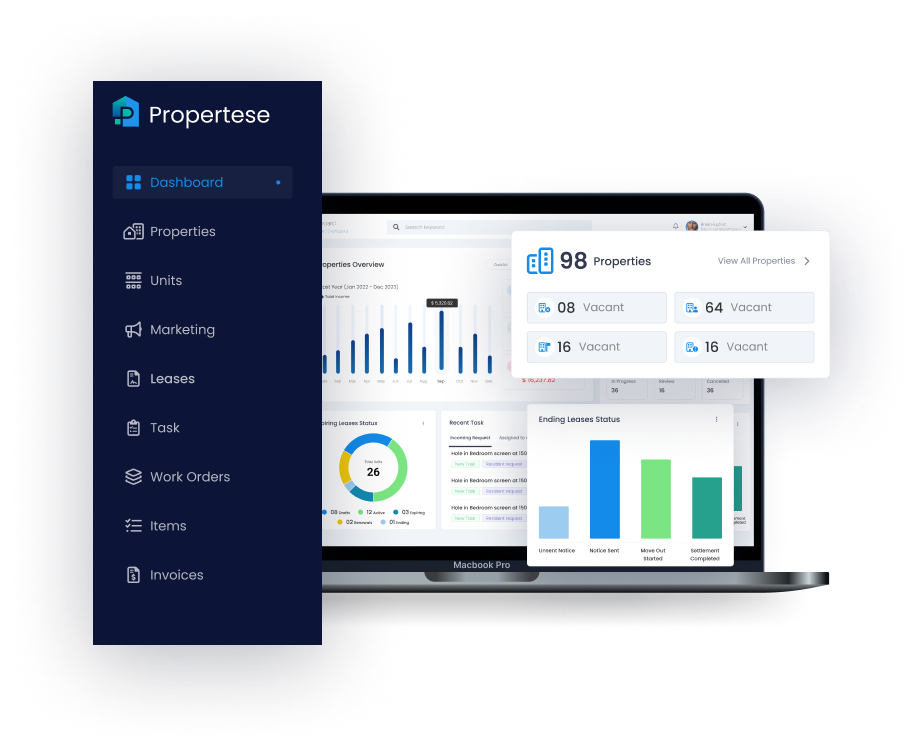
Propertese takes this further by unifying lease data, property operations, and finance in one platform:
- Native CAM engine with caps, base years, and gross-up scenarios
- Real-time GL sync and subsidiary roll-ups, with deep ERP synergy for NetSuite and Xero
- Automated tenant statements with attached backup, plus digital delivery and payment flows
Best Practices for Landlords and Tenants to Ensure Accuracy and Efficiency
- Standardize: Use portfolio-wide templates, GL mappings, and naming conventions; centralize files with version control.
- Maintain current lease abstracts, including exclusions, caps, gross-up rules, and audit windows.
- Preserve complete backup: invoices, tax bills, insurance, allocation workpapers, and variance notes.
- Negotiate clarity: define CAM categories, admin fees, controllable vs. uncontrollable, and caps/base-year terms.
- Report on time: deliver budgets and reconciliations with clear math and explanations.
- Use audit rights strategically and cooperatively. Share data, resolve discrepancies, and document outcomes.
- Automate: adopt software for allocations, statements, and audit trails; measure cycle time, error rates, and dispute rates.
Annual checklist
- Update lease abstracts and rentable areas
- Confirm GL-to-CAM mappings and expense classifications
- Finalize budget, estimates, and tenant notices
- Reconcile monthly; pre-close Q4 with projections
- Produce year-end statements with full backup
- Record credits/charges; update forecasts; conduct post-mortem
Frequently Asked Questions About CAM Reconciliation
What exactly is CAM reconciliation?
CAM reconciliation is the annual process in which landlords compare estimated Common Area Maintenance charges billed to tenants with actual shared property expenses, issuing credits or bills to settle any differences.
How are CAM costs divided among tenants?
CAM costs are typically allocated based on each tenant’s pro-rata share, calculated as their leased square footage divided by the total rentable area of the property.
What happens during reconciliation if estimates are off?
When actual expenses are higher or lower than estimated charges, tenants pay the difference or receive credits for overpayments, ensuring everyone pays their fair share.
What are common CAM expenses?
Common CAM expenses include maintenance and cleaning of shared areas, landscaping, property management fees, and utility costs associated with common spaces.
Do tenants have the right to audit CAM charges?
Tenants may have audit rights if their lease specifically grants them, allowing review of records that support the landlord’s reconciliation statement.
How can landlords avoid mistakes in CAM reconciliation?
Landlords can prevent errors by using consistent data, employing property management tools like Propertese for calculations, and tracking expenses and adjustments year-round.
What lease provisions protect tenants and landlords?
Lease provisions such as CAM caps, base year stops, and clear expense definitions help both tenants and landlords manage expectations and reduce the risk of disputes.
Why do reconciliation timelines slip, and how to fix it?
Reconciliation timelines often slip due to manual processes or complex portfolios; using digital solutions and standardized data from platforms like Propertese helps complete reconciliations efficiently.
Can CAM charges be negotiated?
Yes, tenants and landlords can negotiate CAM terms in the lease, including exclusions, caps, and audit provisions, to promote fairness and predictability.
Table of Contents
Stay Updated
Subscribe to get the latest news, industry trends, blog posts, and updates...