Commercial investors and tenants alike ask: What is NNN in commercial real estate, and why does it matter? A triple net lease (NNN) is a lease structure where the tenant pays base rent plus the three “nets” of property taxes, building insurance, and common area maintenance (CAM). In contrast to a gross lease, these operating costs are passed through to the tenant, reducing volatility for owners and clarifying obligations for occupiers. NNN leases are most common in single-tenant stand-alone retail and industrial assets, but they also appear in multi-tenant centers with costs allocated proportionally. This model can produce steadier net operating income (NOI) for landlords and greater operational control for tenants, provided both sides understand the components, the estimate-and-reconciliation cycle, and the risks embedded in each clause, as outlined below. For a deeper primer on the meaning and mechanics, see what a triple net lease is and how it works.
Key takeaways:
- A triple net lease shifts operating-cost volatility from landlord to tenant while clarifying day-to-day responsibilities.
- Careful definition of CAM inclusions/exclusions, caps, and allocation methods reduces disputes and surprises.
- The estimate → pay monthly → reconcile → audit cycle is central to budgeting and cash-flow predictability.
- Single-tenant assets can deliver stable income but concentrate credit and rollover risk.
Understanding Triple Net Lease (NNN)
“A triple net lease (NNN) is a commercial agreement where the tenant pays property taxes, building insurance, and CAM in addition to base rent and transfers operating-cost volatility to the tenant and supports more predictable NOI for owners.” The meaning of an NNN lease contrasts with gross or full-service structures, where landlords cover most or all operating expenses within the rent. Triple net leases are prevalent in single-tenant retail (e.g., pharmacies, QSRs), medical, and industrial properties, and can be adapted for multi-tenant assets with proportionate expense sharing. For readers evaluating NNN vs. other lease types, the key distinction is who bears taxes, insurance, and maintenance.
Components of NNN Leases
- Property taxes: The tenant pays its proportional share of real estate taxes assessed by local authorities, typically based on gross leasable area (GLA) or another agreed denominator. Leases should address reassessment timing, appeals, and allocations for new improvements or special assessments to avoid disputes.
- Building insurance: This covers the landlord’s policy on the structure (e.g., replacement cost, hazard, liability), and not the tenant’s contents or business interruption. Tenants may also carry required coverages (e.g., general liability), with minimum limits, named insureds, and waiver-of-subrogation language set in the lease.
- Common area maintenance (CAM): Shared operating expenses for common spaces (parking, lighting, landscaping, snow removal, exterior repairs, property management, and utilities for shared areas). Strong leases define inclusions, exclusions (e.g., capital improvements), caps, and service standards, and specify pro rata allocation methods for multi-tenant assets.
Table: The three “nets” at a glance
| Component | What it typically covers | Who pays under NNN | Common clarifications |
|---|---|---|---|
| Property taxes | Ad valorem taxes, special assessments | Tenant (pro rata) | Reassessments, appeals, new improvements |
| Building insurance | Structure insurance, landlord liability | Tenant (pass-through) | Policy types/limits, deductibles, waivers |
| CAM | Parking, landscaping, lighting, exterior, shared utilities | Tenant (pro rata) | Inclusions/exclusions, caps, gross-ups, audits |
In multi-tenant NNN leases, expenses are usually pro-rated by GLA or another denominator defined in the lease to allocate costs fairly across occupants.
How Triple Net Lease Work in Practice
In a triple net lease, the estimate-and-true-up cycle works as follows:
- Annual estimate: The landlord budgets taxes, insurance, and CAM for the coming year and sets monthly estimated charges. Assumptions, escalation formulas, and any caps should be transparent and documented.
- Monthly payments: Tenants pay base rent plus the monthly “nets.” Well-drafted leases specify due dates, late fees, and gross-up methodologies when occupancy is below a defined threshold.
- Ongoing tracking: Landlords track actual invoices and categorize expenses per the lease. Documentation (policies, tax bills, vendor contracts) should be retained for reconciliation and audit.
- Year-end reconciliation: Actuals are compared to estimates; overages are billed, and credits issued per the lease timeline with supporting backup.
- Audits and disputes: Tenants often have audit rights within a set window. Clear exclusions and definitions reduce CAM/OPEX disputes; ambiguous language tends to invite them.
Lifecycle (at a glance): estimate → pay monthly → track expenses → annual reconciliation → audit window (if any) → reset estimates.
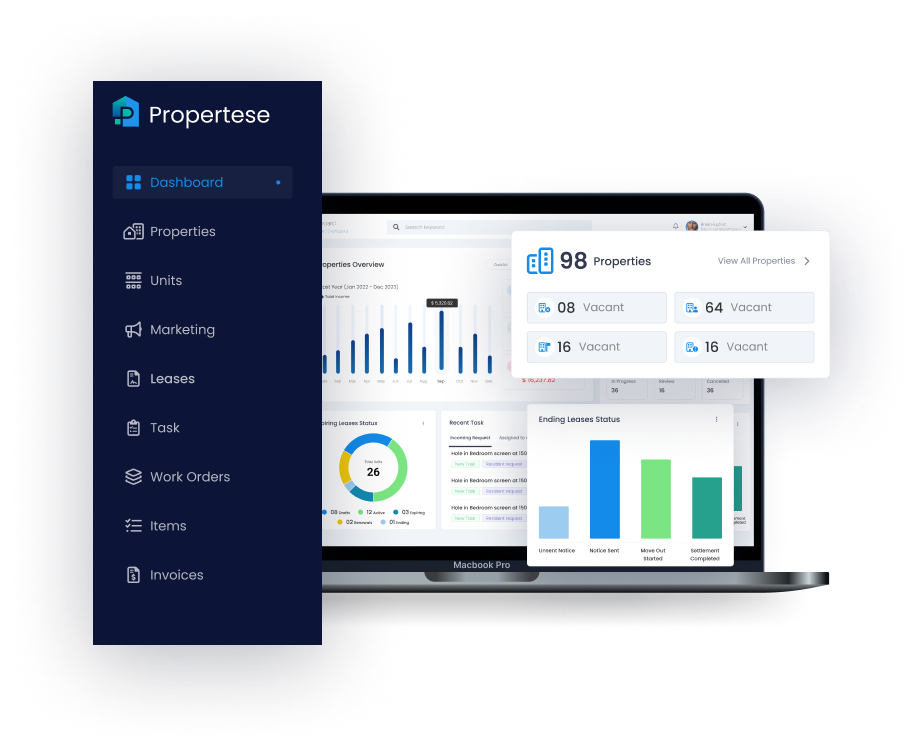
Pro tip: Centralized systems streamline this workflow. Platforms like Propertese unify lease abstraction, CAM reconciliation, and portfolio reporting to minimize errors and surface exceptions early.
Benefits of Triple Net Leases for Landlords and Tenants
NNN leasing can align incentives and reduce surprises.
- For landlords: More stable NOI, lower expense risk, and predictable cash flows with fewer day-to-day management burdens. NNN properties remain attractive for investors seeking steady income and low management responsibility.
- For tenants: In a triple net lease, potentially lower base rent relative to gross leases, control over maintenance quality and timing, and cost transparency—though total occupancy cost can be higher due to pass-throughs.
Comparison: Who benefits from what
| Perspective | Benefits |
|---|---|
| Landlords | Predictable NOI, reduced OPEX volatility, lighter management load, potentially higher asset liquidity for credit tenants |
| Tenants | Operational control, location optionality, transparent cost line items, potential rent trade-offs vs. gross structures |
Key Risks and Challenges of Triple Net Lease
- Concentration and credit risk: Single-tenant assets hinge on location strength and tenant covenant; a default or nonrenewal can reset value quickly.
- Clause ambiguity: Vague CAM definitions, exclusions, or repair obligations invite disputes and erode returns. Clear drafting and documentation discipline are essential.
- Maintenance underinvestment: Tenants controlling maintenance may defer spending; service levels, inspections, and capital/reserve language protect the asset.
- Market and financing risk: Rising cap rates, refinancing costs, or value swings can pressure returns; while NNN income durability helps, it does not immunize valuations.
- Reconciliation friction: CAM/OPEX true-ups can trigger challenges; audit rights, backup standards, and timing windows help keep the parties aligned.
Due diligence imperatives: verify tenant credit, commission a property condition assessment, test lease language for ambiguity, and analyze local demand, migration, and competitive supply before underwriting.
Emerging Trends Impacting Triple Net Lease
- Sale-leasebacks on the rise: With higher borrowing costs, corporations monetize real estate, expanding the pipeline of long-term NNN deals; investors gain stable income streams while occupiers preserve operating control.
- ESG and “green” lease clauses: Energy performance, data sharing, and EV charging cost allocations are appearing more frequently; proptech and AI for lease abstraction, CAM reconciliation, and oversight accelerate accuracy but still need human review.
- Macro drivers: Regional growth differences, shifting cap rates, demographics, and policy changes (e.g., evolving bonus depreciation rules) influence pricing and volume; investors should stress-test assumptions across rate and rent scenarios.
Practical Steps to Evaluate NNN Properties
Use this checklist for disciplined underwriting and negotiation:
- Lease review: Identify the three nets, definitions, inclusions/exclusions, caps, gross-up methodology, escalation (fixed or CPI), renewal/extension options, and audit rights.
- Tenant evaluation: Assess corporate credit, store/unit economics, industry resilience, and any sale-leaseback motives affecting strategic stickiness.
- Market analysis: Map trade-area demand, competition, migration and population trends, and zoning or development pipelines.
- Financial modeling: Sensitize cap rates, rent growth, downtime, financing terms, and tax impacts, including depreciation and potential incentives.
- Physical/legal diligence: Order a property condition report, environmental screening, title/survey, and review historic CAM/OPEX records and vendor contracts.
- Negotiate protections: Seek CAM exclusions, caps where appropriate, gross-up, service-level standards, notice/cure mechanics, and audit access.
Print and keep this as a working reference for asset managers and acquisitions teams.
Negotiating and Drafting Effective NNN Leases
Must-have provisions in any triple net lease:
- Precise definitions of taxes, insurance, and CAM, with detailed inclusions/exclusions and treatment of capital vs. operating expenses.
- Escalation mechanics: fixed bumps vs. CPI or hybrid, with floors/ceilings and notice requirements.
- Service standards: maintenance frequencies, response times, and vendor qualifications; inspection rights.
- Audit and reconciliation: documentation standards, look-back windows, dispute resolution, and interest/fee language.
- Repair and replacement: responsibility matrix for roof, structure, MEP, and casualty handling; deductibles and waivers.
Before finalizing, confirm any lease agreement requirements by state.
Common missteps to avoid:
- Vague pass-through language that blurs capital items, landlord overhead, or leasing costs.
- No audit rights or unclear reconciliation timing, creating friction and distrust.
- Ambiguous default, cure, and remedies; fuzzy renewal/termination terms that impair exit value.
NNN Lease Financial Considerations and Market Factors
- Cap rates and volume: Industry surveys reported softening transaction volume and outward cap rate movement amid a bid–ask gap and higher rates in 2022–2023, pressuring valuations and time to close.
- Debt maturities: A heavy wave of commercial maturities keeps lenders and investors selective, with refinancing risk and asset quality under sharper scrutiny.
- Credit and term: National-credit tenants and longer lease terms typically command tighter cap rates; shorter remaining terms or weaker credit require higher yields and deeper reserves.
- Property type nuance: Essential retail (e.g., grocery, pharmacy), medical, and mission-critical industrial often show resilient demand; specialty uses can widen yield but increase re-tenanting risk.
- Portfolio construction: Blend credit profiles, lease roll schedules, and geographies; stress-test interest coverage, re-leasing timelines, and value under multiple cap-rate and rent paths.
Frequently asked questions
What does NNN stand for in commercial real estate?
NNN means “triple net,” where tenants pay rent plus property taxes, building insurance, and common area maintenance in a triple net lease.
How is an NNN lease different from a gross lease?
In an NNN lease, tenants cover most operating expenses; in a gross lease, the landlord bundles taxes, insurance, and maintenance into the rent.
What types of properties commonly use NNN leases?
Single-tenant retail, medical, industrial, and franchise assets frequently use NNN to support long-term, stable cash flow.
What are typical costs included in NNN charges?
Tenant’s share of property taxes, building insurance, and CAM (e.g., parking, landscaping, exterior lighting), allocated by occupancy and reconciled annually.
What are the main risks of NNN leases?
Tenant default, unclear lease clauses, maintenance underinvestment, and market shifts that affect valuation or refinancing.
Can NNN leases include ‘green’ or ESG requirements?
Yes—modern NNN agreements increasingly add energy-efficiency standards, data sharing, or EV-charging provisions negotiated between parties.
Table of Contents
Stay Updated
Subscribe to get the latest news, industry trends, blog posts, and updates...