What You’ll Learn in This Guide:
✓ Recommended reserve fund percentages (10% of operating budget minimum, 70-100% funded for associations) and why these benchmarks exist
✓ How to calculate your property’s reserve needs using useful life analysis, component inventory, and property-specific risk factors that affect your funding requirements
✓ The real costs of underfunded reserves including special assessments averaging $1,500+ per unit, deferred maintenance that compounds exponentially, and property value declines that hurt sales and refinancing
A roof needs replacement. The cost is $45,000. Your property management reserve fund has $8,000. You have two options: hit owners with emergency special assessments or delay the replacement and hope the roof survives another year. Either choice damages owner relationships and property value.
This happens when property managers treat reserve funds as optional savings accounts rather than mandatory protection against predictable expenses. Every building component has a useful life. Roofs last 15-25 years. HVAC systems run 10-15 years. Parking lots need resurfacing every 7-10 years. These aren’t surprise expenses. They’re scheduled obligations.
What a Property Management Reserve Fund Actually Is
A reserve fund is money set aside specifically for major repairs and replacements of property components that wear out over time. This differs completely from operating budgets covering monthly expenses like utilities, routine maintenance, landscaping, and property management fees.
Think of reserves as a mandatory savings account for your property’s inevitable future needs. Operating budgets handle “this month’s needs.” Reserve funds handle “next year’s and next decade’s needs.”
What reserve funds should cover:
Roof replacement or major repairs
HVAC system replacements
Parking lot resurfacing and restriping
Exterior painting and siding repairs
Elevator modernization and major repairs
Pool equipment and deck resurfacing
Building structural repairs
Plumbing and electrical system upgrades
What reserves should NOT cover:
Monthly utility bills
Routine lawn care and landscaping
Regular cleaning services
Property management fees
Minor repairs under $1,000
Day-to-day operational costs
According to reserve fund research for HOAs and condos, a reserve fund equal to 10% of the annual operating budget helps ensure owners won’t face last-minute assessments for critical failures.
Industry-Standard Reserve Fund Benchmarks
The 10% Minimum Rule
The most widely accepted baseline is maintaining reserves equal to 10% of your annual operating budget at all times.
Example calculation:
Annual operating budget: $250,000
Minimum reserve requirement: $25,000
This 10% minimum provides basic protection against single major component failures. However, it’s rarely sufficient for properties with multiple aging systems or deferred maintenance backlogs.
FHA, Fannie Mae, and Freddie Mac all require associations to maintain reserves equal to at least 10% of annual budgets for properties to qualify for conventional financing. Properties falling below this threshold face financing restrictions that hurt sales and property values.
The 70-100% Funded Target for Associations
For HOAs and condominiums, experts recommend funding reserves at 70-100% of calculated needs. According to California HOA reserve requirements, most professionals recommend funding at a minimum 70% levels.
What “percent funded” means:
Fully funded balance is the amount needed based on each component’s age and remaining useful life.
Current reserve balance divided by fully funded balance equals percent funded.
Example:
$100,000 roof halfway through 20-year life: fully funded balance is $50,000
Current reserves: $35,000
Percent funded: 70% ($35,000 / $50,000)
Properties below 50% funded face higher risks of special assessments and deferred maintenance.
Property Type Variations
Single-family rentals: 6-8% of gross rental income monthly. For a property earning $2,000 monthly rent, set aside $120-160 monthly for reserves.
Small multifamily (2-10 units): $3,000-$5,000 per unit, depending on property age and condition.
Large multifamily and commercial: Formal reserve studies conducted by professionals determine specific needs based on component inventory and replacement schedules.
Reserve fund calculations for landlords suggest common benchmarks ranging from 6-8% of gross rental income or fixed amounts of $3,000-$5,000 per unit, depending on property age.
How to Calculate Your Property’s Specific Reserve Needs
Generic formulas provide starting points. Accurate reserve planning requires property-specific analysis.
Step 1: Create Component Inventory
List every major building component requiring eventual replacement:
- Roofing systems
- HVAC units (by location)
- Elevators
- Parking surfaces
- Exterior painting/siding
- Pool and spa equipment
- Common area flooring
- Building envelope components
- Major plumbing systems
- Electrical systems
Step 2: Determine Useful Life for Each Component
Research on capital expenditures vs. repairs shows typical useful life spans for major components. Consult manufacturer specifications, contractor estimates, and industry standards.
Common useful life ranges:
Composition shingle roofs: 15-20 years
Metal roofs: 30-50 years
HVAC residential units: 10-15 years
Commercial HVAC systems: 15-20 years
Asphalt parking lots: 15-20 years
Concrete parking: 25-30 years
Exterior paint (wood siding): 5-7 years
Elevators (modernization): 20-25 years
Step 3: Estimate Replacement Costs
Get contractor estimates for current replacement costs. Adjust for inflation (typically 3-5% annually).
Example:
Current roof replacement cost: $45,000
Expected replacement in 8 years
Inflation adjustment: 3% annually
Estimated cost at replacement: $57,000
Step 4: Calculate Annual Funding Needs
For each component, divide the estimated replacement cost by the remaining useful life to determine the annual contribution needed.
Example:
Component: Roof
Replacement cost (adjusted): $57,000
Years until replacement: 8
Annual funding needed: $7,125
Repeat for all major components. The sum of annual needs to determine the total annual reserve contribution required.
Step 5: Assess Current Reserve Position
Compare the current reserve balance to the fully funded balance (the amount you should have saved based on component ages).
Current position calculations:
Total fully funded balance needed: $150,000
Current reserve balance: $85,000
Funding deficiency: $65,000
Percent funded: 57%
Properties significantly underfunded need catch-up contributions beyond normal annual funding to reach healthy reserve levels.
Why Underfunded Reserves Create Expensive Problems
Property managers who chronically underfund reserves face predictable consequences that always cost more than proper planning would have.
Special Assessments Damage Owner Relationships
When reserves can’t cover needed repairs, special assessments become necessary. Owners receiving $5,000-$15,000 special assessment bills react poorly.
Special assessments create:
- Owner frustration and loss of trust in management
- Board member conflicts and potential turnover
- Difficulty selling units (pending assessments disclosed to buyers)
- Financing complications (lenders view assessments as red flags)
- Potential legal challenges from owners
Average special assessments for deferred major repairs range from $1,500-$5,000+ per unit, depending on project scope and property size.
Deferred Maintenance Compounds Exponentially
Delaying roof replacement from year 20 to year 23 doesn’t save three years of contributions. It adds emergency repairs, interior water damage, insurance claims, and temporary fixes that don’t extend useful life.
Deferred capital improvements typically cost 2-3x more than timely replacements when you factor in:
- Emergency repair premiums (after-hours rates, expedited materials)
- Collateral damage from component failures (water damage from failed roofs)
- Temporary fixes that don’t prevent final failure
- Lost property value from visible deferred maintenance
Property Values Decline Measurably
Properties with visibly deferred maintenance and low reserve funding face market penalties.
Buyers and their lenders scrutinize reserve studies. Properties below 50% funded face:
- Buyer hesitation and lower offer prices
- Lender restrictions or outright financing denials
- Required reserve funding conditions before loan approval
- Higher interest rates due to perceived risk
Well-maintained properties with healthy reserves command 5-10% premiums over comparable properties with deferred maintenance and low reserves.
Insurance and Lending Complications
Insurance companies and lenders both care about reserve funding levels.
Insurers may:
- Increase premiums for properties with aging, unmaintained systems
- Require property improvements as conditions of coverage
- Exclude coverage for components with deferred maintenance
Lenders may:
- Deny financing for properties below 10% reserve minimums
- Require higher down payments or interest rates
- Mandate reserve funding increases as loan conditions
How Propertese Helps Property Managers Track and Fund Reserves Properly
Most property managers track reserves through spreadsheets that quickly become outdated as budgets change and components age. Manual tracking creates errors, missed projections, and underfunding that shows up years later.
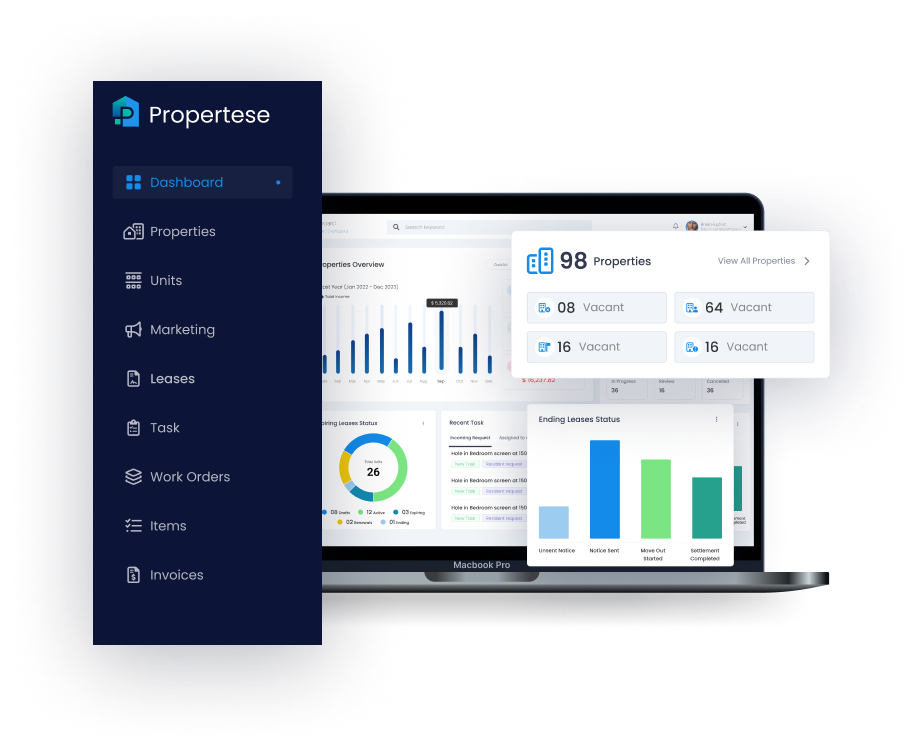
Propertese’s financial management tools provide property managers with automated reserve tracking integrated into overall portfolio management.
Component tracking is built into property profiles. Add major building components to each property with purchase dates, useful lives, and replacement costs. The system tracks component ages automatically and flags upcoming replacement needs.
Automated funding calculations. Based on component inventories and replacement schedules, Propertese calculates required monthly and annual reserve contributions. You see exactly how much to set aside rather than guessing.
Reserve fund balance monitoring. Track reserve account balances separately from operating accounts. The system shows whether you’re on track with funding targets or falling behind schedule.
Forecast future needs. Generate 5-year, 10-year, and 20-year reserve spending forecasts showing when major expenditures will hit. This visibility helps owners and boards plan for future assessments or contribution increases.
Budget vs. actual reporting. Compare planned reserve contributions against actual deposits. Identify months where contributions were skipped or reduced, creating funding gaps requiring correction.
Properties using automated reserve tracking report better compliance with funding targets, fewer surprise capital needs, and improved owner satisfaction through transparent financial planning.
Common Reserve Fund Mistakes Property Managers Make
Mistake 1: Treating Reserves as Optional
Some property managers view reserve contributions as discretionary line items that can be skipped when operating budgets are tight.
This creates accumulating underfunding that eventually forces special assessments or emergency loans. Reserve contributions should be treated as mandatory as mortgage payments.
Mistake 2: Raiding Reserves for Operating Shortfalls
When operating budgets run short mid-year, the temptation is to borrow from reserves to cover the gap.
California reserve fund regulations require that any funds transferred from reserves to operating accounts be restored within one year. Most states have similar restrictions.
Raiding reserves for operations creates:
- Violation of fiduciary duties to owners
- Reserve funding deficiencies
- Potential state regulatory violations
- Future cash flow problems when borrowed funds must be repaid
Mistake 3: Ignoring Inflation in Projections
Calculating reserve needs using today’s replacement costs without inflation adjustments guarantees underfunding.
A roof costing $45,000 today will cost $57,000+ in 8 years at 3% annual inflation. Failing to adjust for inflation means your reserves will be $12,000 short when replacement is needed.
Mistake 4: No Professional Reserve Studies
Properties relying on managers’ best guesses about component useful lives and replacement costs, rather than professional studies, often miss major needs.
Professional reserve studies conducted by certified specialists provide:
- Accurate component inventories (finding items managers overlooked)
- Industry-standard useful life expectations
- Current market-based replacement cost estimates
- Detailed funding plans with multiple scenario options
Studies cost $2,000-$5,000 for typical multifamily properties but prevent far more expensive mistakes from poor planning.
Mistake 5: Not Updating Studies Regularly
Reserve studies aren’t one-time documents. Component conditions change. Costs fluctuate. Useful life estimates require adjustment.
Most states require reserve study updates every 3-5 years. Properties going longer without updates face outdated projections that no longer reflect reality.
Building Healthy Reserves From Underfunded Positions
Many property managers inherit properties with insufficient reserves. Getting from underfunded to adequately funded requires deliberate planning.
Option 1: Gradual Catch-Up Contributions
Increase annual reserve contributions beyond normal funding needs to close funding gaps over time.
Example:
Current reserves: $40,000
Fully funded target: $100,000
Deficiency: $60,000
Normal annual funding: $15,000
Catch-up contribution: $10,000 additional
Total annual contribution: $25,000
This approach spreads catch-up costs over 6 years, reaching fully funded status without massive one-time assessments.
Option 2: One-Time Special Assessments
Hit owners with immediate special assessments to bring reserves to target levels quickly.
This creates owner dissatisfaction but addresses funding deficiencies immediately, protecting against near-term major expenses.
Option 3: Combination Approach
Implement moderate special assessment for partial catch-up ($30,000 in example above) combined with elevated annual contributions ($20,000) to reach the target over 3-4 years.
Balances immediate funding improvement with manageable ongoing increases.
Option 4: Reserve Study-Based Funding Plans
Professional reserve studies provide specific funding recommendations tailored to property needs.
Studies typically offer multiple funding scenarios:
Baseline funding: Minimum contributions to avoid special assessments for scheduled replacements
Threshold funding: Contributions maintaining a stable reserve balance covering upcoming needs
Full funding: Contributions bringing reserves to 100% funded status over a defined period
Reserve Funds vs. Operating Reserves vs. Capital Reserves
Property managers sometimes confuse three distinct reserve concepts.
Operating reserves cover 3-6 months of operating expenses as a cash flow buffer for vacancy and unexpected operating costs. These protect against income shortfalls.
Capital reserves (discussed in this article as “reserve funds”) cover major component replacements and significant repairs. These protect against predictable long-term needs.
Contingency reserves provide an additional buffer above capital reserve calculations for unexpected component failures or cost overruns. Many properties maintain 10-15% contingency above calculated capital needs.
All three serve different purposes. Well-managed properties maintain adequate levels of each reserve type.
When to Increase Reserve Contributions
Certain situations trigger the need for reserve contribution increases beyond initial funding plans.
Component failures earlier than expected: If roofs only last 15 years instead of the projected 20, increase contributions to account for shorter useful lives.
Cost escalation beyond inflation: Construction costs sometimes spike beyond general inflation. Major increases require contribution adjustments.
Deferred maintenance catch-up: Properties with historical underfunding need elevated contributions until reserve positions strengthen.
Regulatory changes: New building codes or safety requirements can mandate unexpected upgrades requiring reserve funding.
Board/owner policy changes: Decisions to upgrade rather than replace in-kind (premium materials, enhanced amenities) require increased reserves.
Making Reserve Planning Easier
Property management reserve funds protect property values, prevent special assessments, and maintain owner confidence in financial management. Proper reserve planning isn’t complicated, but it requires discipline and systematic tracking.
Calculate your property’s specific reserve needs based on component inventory, useful lives, and replacement costs. Don’t rely on generic percentages alone.
Fund reserves are consistently maintained every month. Treat contributions as mandatory, not optional expenses.
Update reserve studies every 3-5 years to keep projections current.
Never raid reserves for operating shortfalls without immediate repayment plans.
Use professional reserve specialists for comprehensive reserve studies on properties with over 20 units.
See how Propertese helps property managers track reserve funding with automated component age tracking, reserve balance monitoring, and multi-year capital expenditure forecasting.
Schedule a demo and discover how Propertese makes reserve fund planning systematic instead of guesswork.
Table of Contents
Stay Updated
Subscribe to get the latest news, industry trends, blog posts, and updates...