
NetSuite for Real Estate, Delivered
Through Propertese
Propertese is the real estate operations layer built on Oracle NetSuite, the world's leading cloud ERP. NetSuite handles your financial system of record. Propertese handles property operations, leases, tenants, and maintenance.


The Real Estate ERP, Trusted by Property Teams and Finance Leaders
Propertese is the #1 choice for Real estate companies in the US, UK, and the Middle East. Built to automate property and finance operations, all in one place.














Choose Your Propertese and NetSuite Implementation Path
Already using NetSuite? Add Propertese to your existing environment. Need an ERP? Implement Propertese
and NetSuite together through one coordinated implementation.
Add the real estate operations layer your business needs without changing financial systems. Propertese installs as a SuiteApp inside your existing NetSuite environment, with lease, rent, vendor, and property data flowing in real time between both systems.
Propertese is implemented together with NetSuite as a single end-to-end solution. One implementation, one team, one platform covering both real estate operations and financial management from day one.

Propertese and NetSuite, Working as
One Real Estate ERP
See how Propertese extends NetSuite for real estate, including property and lease management, two-way data synchronization,
and multi-entity operations within the same ERP environment.

What data syncs between Propertese and NetSuite?
Lease records, rent invoices, vendor bills, payments, contacts, and property data sync between Propertese and NetSuite in real time, in both directions. This makes Propertese the netsuite property management layer that completes a real estate business's ERP setup.

Do I need to already have NetSuite to use Propertese?
No. Propertese can be implemented together with NetSuite as a single combined solution for businesses without an ERP. For businesses already running NetSuite, Propertese installs into the existing environment as a SuiteApp.

Does Propertese support multi-entity real estate operations?
Yes. Propertese manages multiple companies and subsidiaries from a single login within the same platform. Each entity maintains its own records, users, and financial configuration, with no additional cost per entity added.
What NetSuite for Real Estate
Adds When Propertese Is the Operational Layer
NetSuite provides the financial foundation, while Propertese adds the real estate operations needed to manage properties, leases, tenants, maintenance, and rent within the same ERP environment.
End-to-End Property Management Integrated
with NetSuite Financials
Propertese connects every property operation directly to NetSuite financials across six core capability areas
Financial Intelligence and Multi-Entity Management
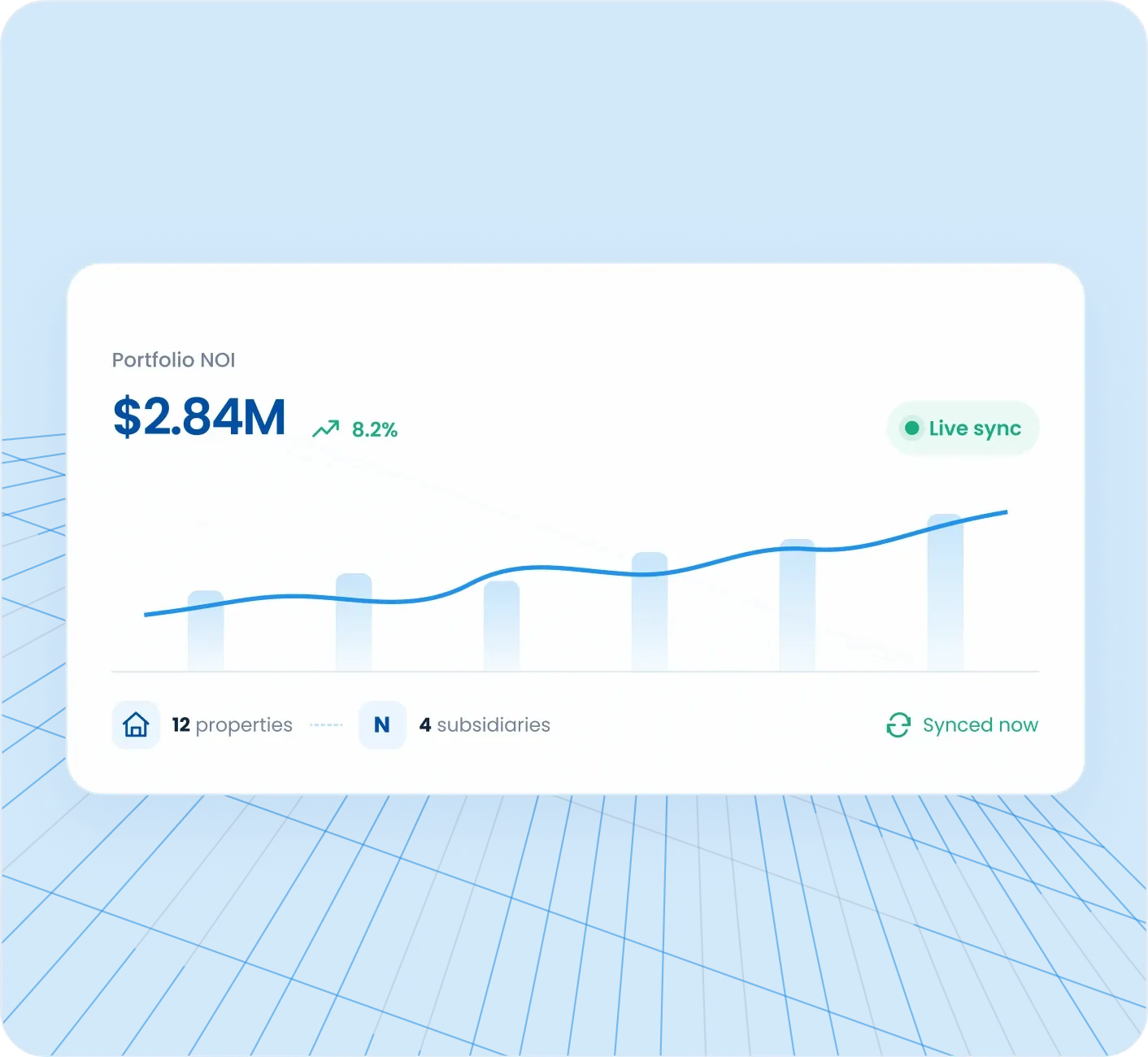
Property financials and entity structure connected to NetSuite in real time
Propertese maps every property operation to the correct NetSuite entity, subsidiary, and GL account from the moment data is created. Revenue, expenses, and NOI sync automatically. Finance teams get income statements, rent rolls, and AR aging reports without manual consolidation across systems.
- Sync revenue, expenses, and NOI across the portfolio to NetSuite
- Map Propertese companies to their corresponding NetSuite subsidiaries
- Set subsidiary-specific GL accounts at the property and unit level
- Push financial data by subsidiary, property, and unit automatically
- Generate income statements and rent rolls from within the platform
- Track rent collections, bounced cheques, and AR aging in real time
Smart Occupancy Management
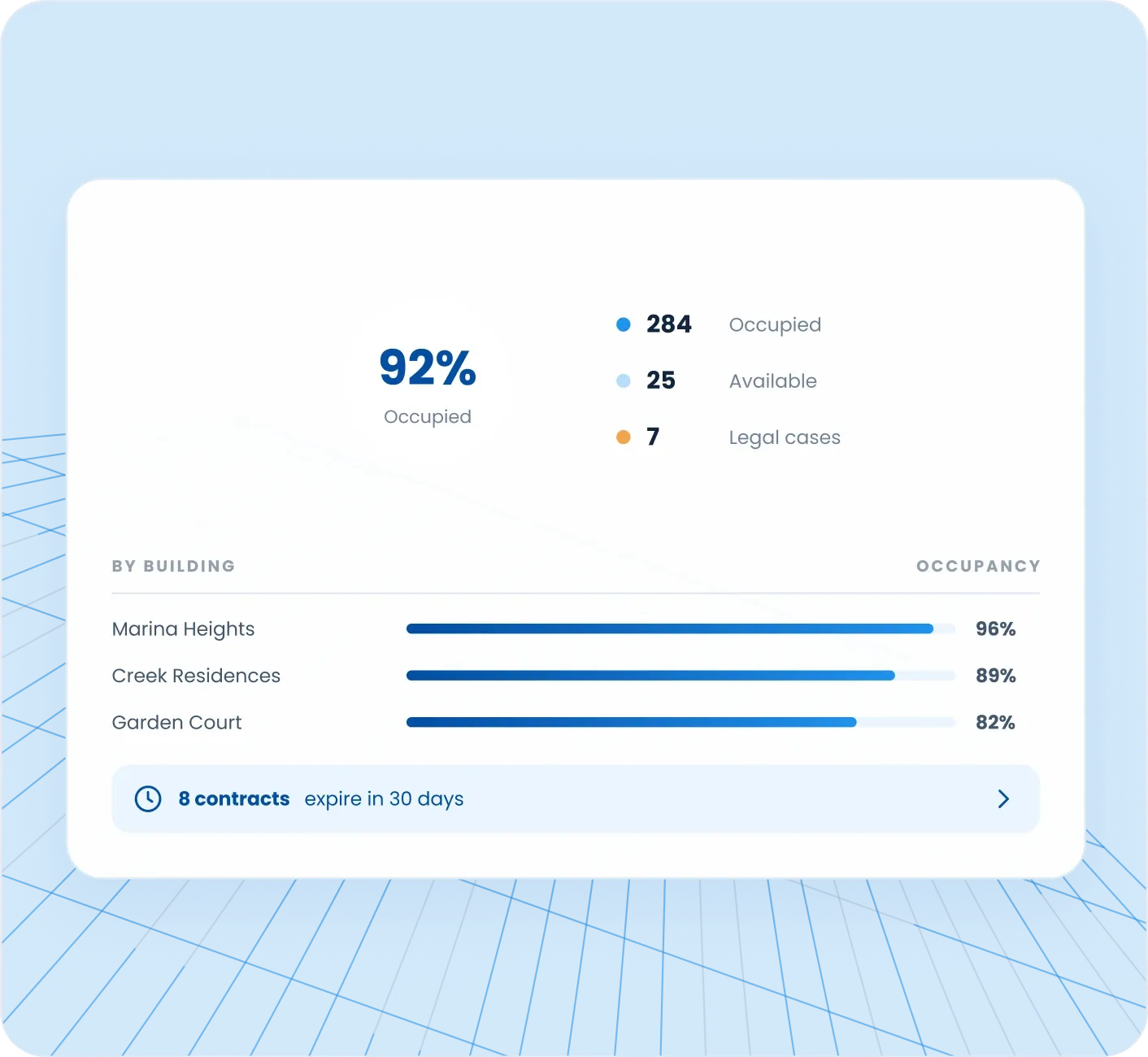
Live occupancy data connected to financial performance tracking
Propertese tracks occupancy at the building and unit level and surfaces the data where finance and operations teams need it, without manual status updates or spreadsheet reports.
- Monitor building-wise occupancy ratios in real time
- Track sub-units under legal cases separately
- Receive automated alerts for contracts approaching expiry
- Generate occupancy reports across the entire portfolio
Advanced Revenue Recognition
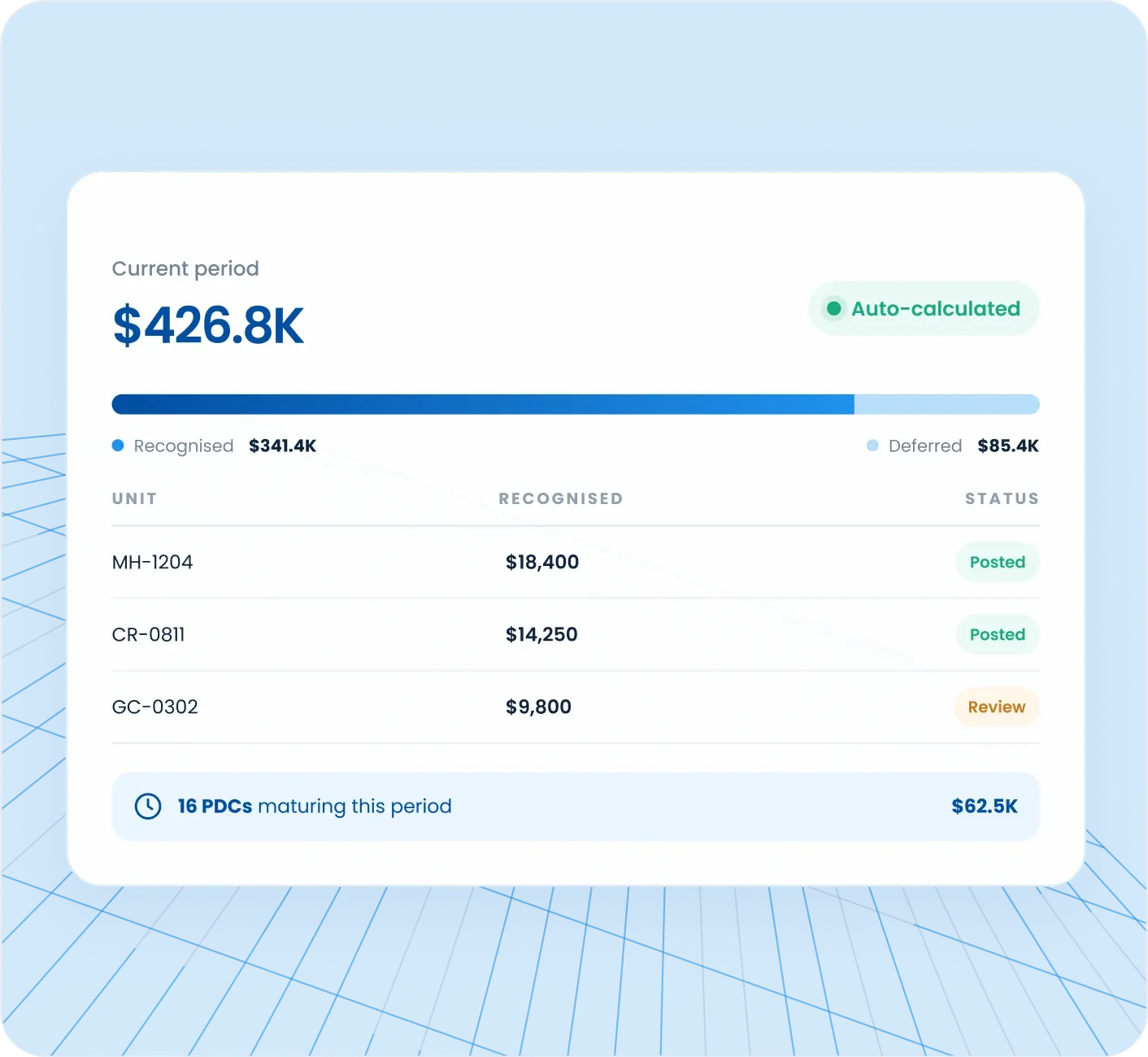
Recognised and unrecognised revenue tracked automatically by unit
Revenue recognition for lease income requires tracking what has been earned versus what is deferred, period by period. Propertese calculates this automatically at the unit level and maintains the receivables and cheque management records required for audit compliance.
- Automatically calculate recognised versus unrecognised revenue by unit
- Monitor post-dated cheques maturing within the current period
- Maintain receivables tracking with automated cheque management
- Generate revenue reports ready for audit review
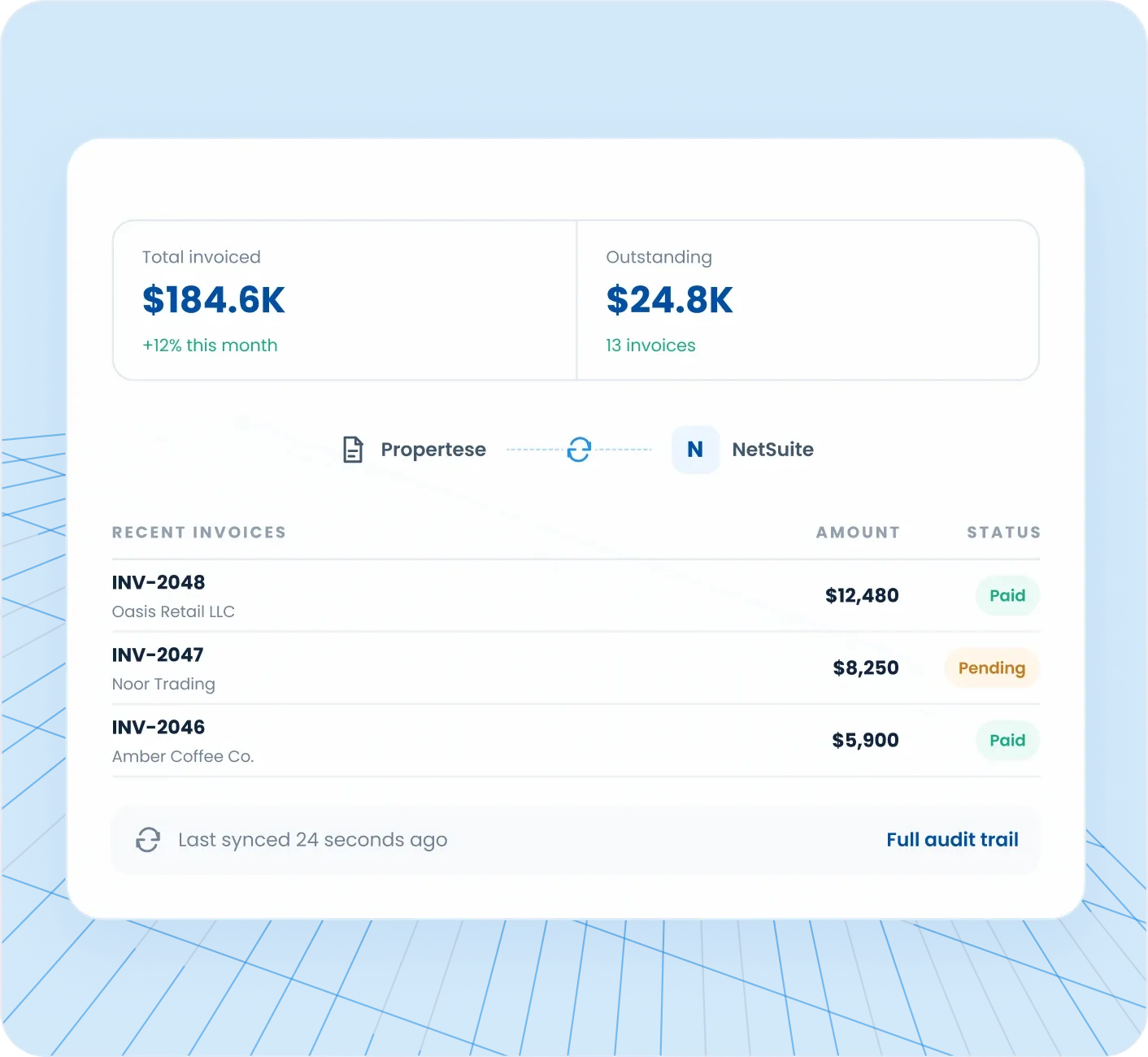
Seamless Invoice Management
Invoices created in Propertese, synced to NetSuite automatically
Every invoice raised in Propertese, whether for rent, deposits, parking, or fees, syncs to NetSuite automatically. Payment status updates flow back in real time so both systems always reflect the same position without manual reconciliation.
- Create and manage invoices with automatic NetSuite sync
- Map invoice line items including rent, deposits, parking, and fees flexibly
- Process payments with real-time status updates across both systems
- Sync tenant payments and cancellations bidirectionally
- Generate and print receipts directly from NetSuite
- Maintain a full audit trail across every invoice and payment
Intelligent Expense Management
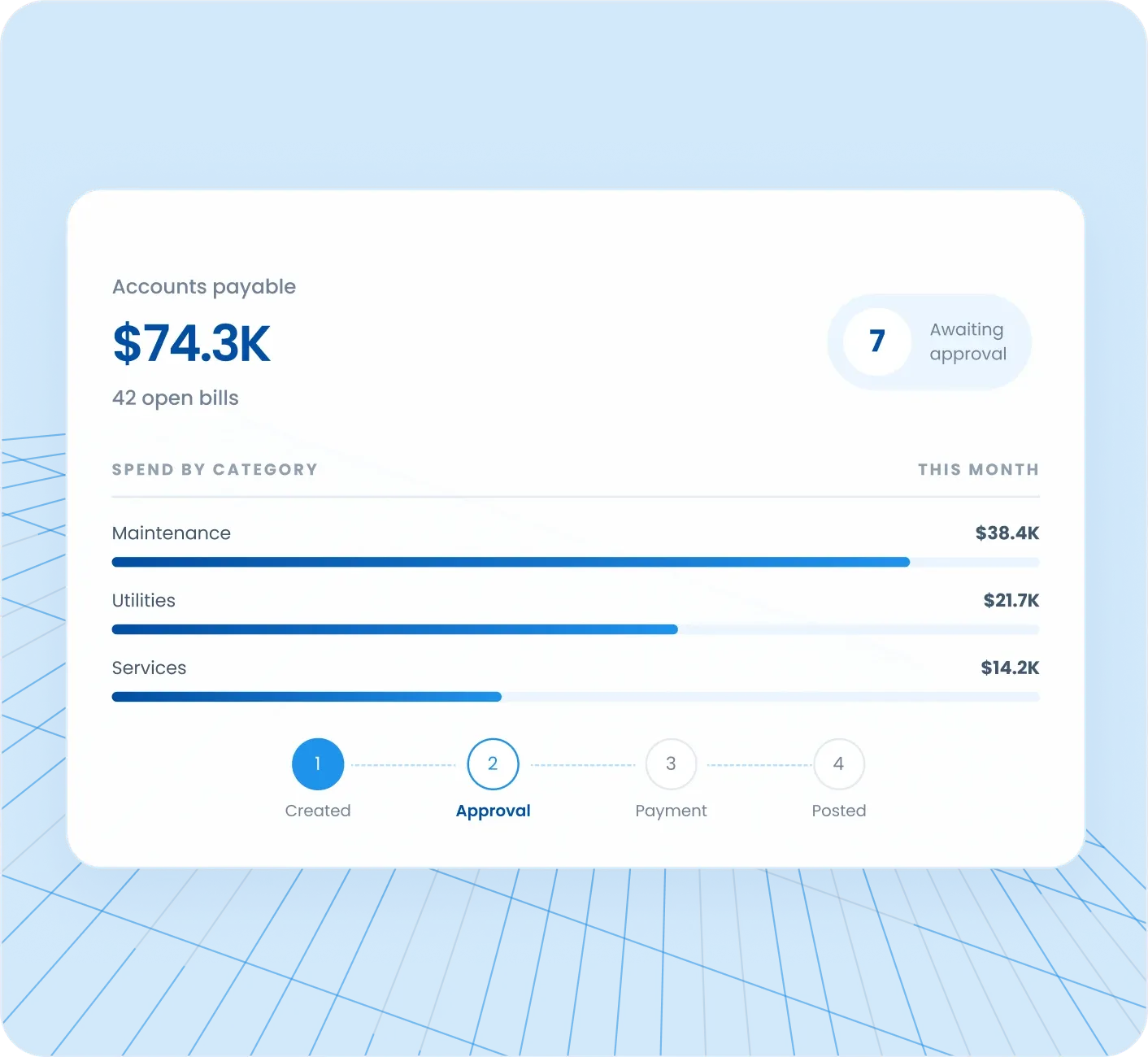
Vendor bills tracked from creation to payment with full AP visibility
Vendor costs raised from maintenance work orders in Propertese sync to NetSuite for accounts payable processing. Approval workflows, payment tracking, and the AP register all stay current without manual data entry between systems.
- Create and manage vendor bills with automatic NetSuite sync
- Track unit-specific or property-wide costs separately
- Maintain AP registers with automated payment tracking
- Process vendor payments through configured approval workflows
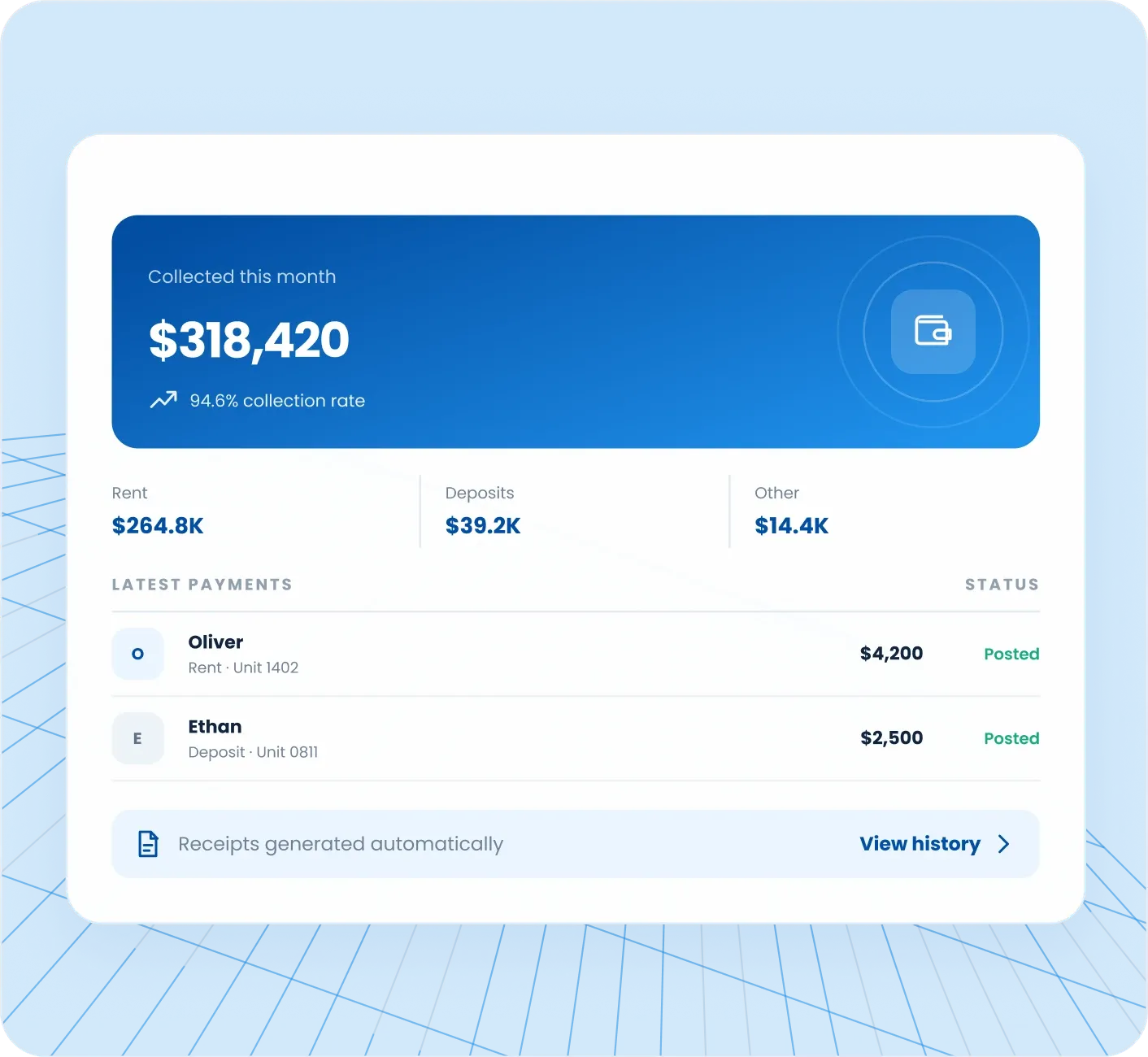
Complete Payment Processing
Tenant payments processed and synced bidirectionally with NetSuite
Every tenant payment processed in Propertese syncs to NetSuite automatically. Deposits, rent payments, and partial payments all update in real time with instant receipt generation and a complete payment history available across both systems.
- Process tenant payments with automatic status sync to NetSuite
- Successful payments auto-synced and posted to the correct NetSuite account
- Deposit and manage tenant payments with bidirectional sync
- Generate instant customer receipts from within the platform
- Track payment history and outstanding balances across the portfolio
How NetSuite for Property Management Works in Practice
Propertese is built as a hybrid SuiteApp inside NetSuite, with no third-party middleware between the two systems. Data flows in real time across four core areas.
Lease and Rent Data
Lease records, rent invoices, and rent schedules are created and managed in Propertese, then sync to NetSuite as customer invoices automatically. Payment status updates flow back to Propertese as payments are recorded against the relevant NetSuite invoice.
Vendor Bills and Maintenance Costs
Vendor bills generated from maintenance work orders in Propertese sync to NetSuite for accounts payable processing. Bank reconciliation, payment approval, and GL posting all happen in NetSuite. Propertese reflects the latest status without manual entry.
Subsidiary, Branch, and GL Accounts
NetSuite remains the source of truth for the chart of accounts, subsidiary structure, and entity configuration. Propertese pulls this configuration in so every property record is mapped to the right subsidiary, branch, and account from the start.
Properties, Units, and Tenants
Property data, unit records, and tenant contacts are managed in Propertese and reflected in NetSuite as the customer and item structure the financial layer requires.
For Businesses
Already on NetSuite
For real estate businesses already running NetSuite, Propertese installs directly into the existing NetSuite environment as a SuiteApp. No data migration to a new accounting platform. No parallel systems to maintain. No rebuilding of the chart of accounts or subsidiary structure. The Propertese implementation team configures the real estate operations layer around the existing NetSuite setup, and the two systems begin exchanging data immediately.

For Businesses
Without an ERP
Real estate businesses without an existing ERP can adopt Propertese and NetSuite together as a single end-to-end netsuite real estate solution. The same implementation team configures both layers, the NetSuite financial foundation and the Propertese real estate operations layer, in a coordinated rollout designed around how the business actually operates. This avoids the standard problem of implementing an ERP separately from a property management tool and then trying to connect them afterwards.

Who the Combined Platform Is Built For
Give property, finance, and investment teams the tools they need for their part of the business, while property operations in Propertese
stay connected to financial management in NetSuite.

Property Owners and Investors
Get a full operational view of every property and entity in Propertese while financial reporting and consolidation happen in NetSuite where the books are already kept.

Finance Teams
Eliminate manual reconciliations between property operations and accounting. Every transaction posts directly to the correct NetSuite record from the moment it is created in Propertese.

Property Managers
Work entirely inside Propertese for day-to-day operations without ever needing to log into the accounting system.

Investment Managers and REIT-Like Operators
Get consolidated group reporting across multiple subsidiaries and entities in NetSuite while Propertese handles the full operational layer across the portfolio.
Frequently Asked Questions

Yes. Propertese is the real estate operations layer built on top of NetSuite. NetSuite handles financial management. Propertese handles property operations, lease management, tenant communication, and maintenance tracking. The two work together as one connected platform.